

The shortlist for the 2026 Stella Prize has been announced, celebrating six incredible books from Australian women and non-binary writers.
The 2026 Stella Prize Chair of Judges, Sophie Gee, said of the shortlist:
'These six wonderful books reflect the creative vitality, literary rigor, and expressive richness of Australian women’s and non-binary writing. The 2026 shortlist comprises poetry, a graphic novel, a work of hybrid critical and creative writing, a memoir and two novels. Each of these gives readers an irresistible sense of being new, while at the same time showing the writers’ deep engagement and skill with their chosen genre. We encounter the thrill of innovation alongside the enduring pleasures of literary form.'
Discover the six shortlisted, highly recommended books below!
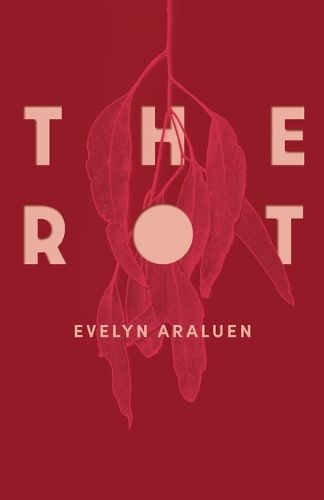
The Rot
Evelyn Araluen
The Rot is a recalcitrant study of the decaying romances, expired hopes and abject injustices of the world. A liturgy for girlhood in the dying days of late-stage capitalism, these poems expose fraying nerves and tendons of a speaker refusing to avert their gaze from the death of Country, death on Country, and the bloody violence of settler colonies here and afar.
Across sleepless nights, fractured alliances and self-destructive coping strategies, The Rot is what happens when poetry swallows more rage than it can console, quiet or ironise – this book demands you ready yourself for a better world.
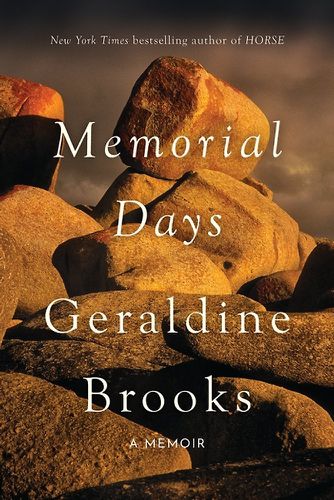
Memorial Days
Geraldine Brooks
Many cultural and religious traditions expect those who are grieving to step away from the world. In contemporary life, we are more often met with red tape and to-do lists. This is exactly what happened to Geraldine Brooks when her partner of more than three decades, Tony Horwitz – just sixty years old and, to her knowledge, vigorous and healthy – collapsed and died on a Washington, DC street. The demands on Geraldine were immediate and many. Without space to grieve, the sudden loss became a yawning gulf.
Three years later, she booked a flight to remote Flinders Island off the coast of Tasmania with the intention of finally giving herself the time to mourn. In a shack on the island's pristine, rugged coast she often went days without seeing another person. There, she pondered the various ways in which cultures grieve, and what rituals of her own might help to rebuild a life around the void of Tony's death.
A spare and profoundly moving memoir that joins the classics of the genre, Memorial Days is a portrait of a larger-than-life man and a timeless love between souls that exquisitely captures the joy, agony and mystery of life.
Read our review of Memorial Days.
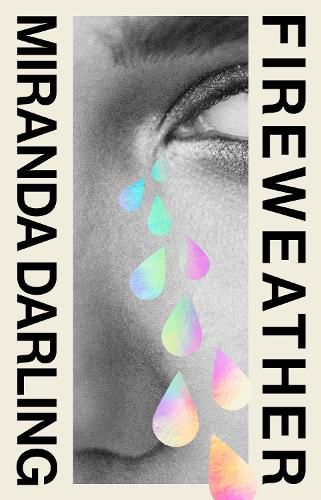
Fireweather
Miranda Darling
It all began when they started running away …
Life for Winona Dalloway is not as it should be. Her husband is no longer her husband, her children are not at home with her, and the city in which she lives is besieged by fires. Black ash falls like snow, songbirds screech like dinosaurs, and the doctors are calling her mad …
In this looking-glass world, Winona is forced to prove she is a sane, rational human being. As the pronouncements of the professionals grow more insistent, so too do the voices crowding inside Winona's head. She seeks solace in the company of plants and animals, and begins to imagine an entirely other way of being – one that might make whole her broken heart.
Read our review of Fireweather.
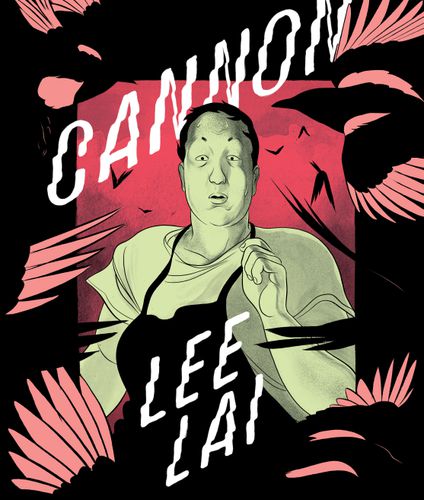
Cannon
Lee Lai
We arrive to a wreckage – a restaurant smashed to rubble, with tables and chairs upended riotously. Our protagonist, Cannon, was supposed to be closing the restaurant for the night, but instead, she destroyed it. The horror-scape left in her wake is not unlike the films Cannon and her best friend, Trish, watch together.
Cooking dinner and digging into deep cuts of Australian horror movies on their scheduled weekly hangs has become the glue in their relationship. In high school, they were each other's lifeline – two queer second-generation Chinese nerds trapped in the suburbs. Now, when our stoic and unbendingly well-behaved Cannon finds herself very uncharacteristically surrounded by smashed plates, it is Trish who shows up to pull her out.
In Cannon, Lee Lai's follow-up to the critically acclaimed and award-winning Stone Fruit, the full palette of a nervous breakdown is just a part of what is on offer. Lai's sharp sense of humour and sensitive eye produce a story that explores the intimacy of queer friendship and weight of family responsibility, and breaks open the question of what we owe both to each other and to ourselves.
Read our review of Cannon, or hear Lee Lai on The Readings Podcast.
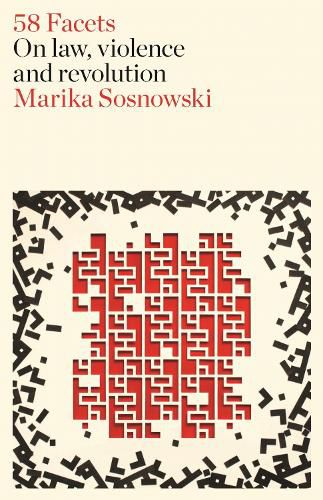
58 Facets
Marika Sosnowski
58 Facets is like a beautifully cut jewel, the kind Marika Sosnowski’s grandfather would have bought, cut and sold after he arrived in Melbourne in 1947, having passed through a checkpoint minutes ahead of Nazi occupiers, via a Japanese internment camp in Java and a migrant accommodation camp just outside of Brisbane. If you hold it up to the light you will catch different stories in each of its many facets.
You will have the table, the bezel, the star and the upper girdle, the lower girdle, the pavilion and the culet. You will have the dreams, the checkpoints, the documents, the bribes, the camps, the occupation and the resistance.
Part memoir, part exposé, 58 Facets weaves together the narratives of Holocaust survivors and Israeli war criminals with Syrian activists, revolutionaries and dissenters. It challenges us to go beyond the links we see in our lives to our felt experiences of the law, violence and revolution, and how these experiences travel across bodies, space and time.
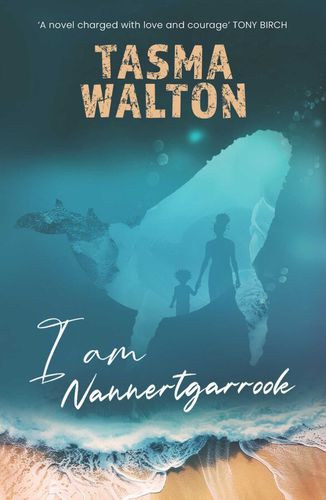
I am Nannertgarrook
Tasma Walton
Based on the true story of Tasma Walton’s ancestor, a powerful, heart-wrenching novel about maternal love that endures against pitiless odds.
From her idyllic life in sea country in Nerrm (Port Phillip Bay, Victoria), Nannertgarrook is abducted and taken to a slave market, leaving behind a husband, daughter and son. Pregnant when seized, she soon gives birth to another son, whom she raises with the children of her fellow captives.
Nannertgarrook is separated not only from her Boonwurrung family, but from her birthright – the ceremonies she once was so joyously part of, the majestic whales who are her totem, the land and sky and sea country and its creatures. All these things she loves as deeply as she does her blood kin. But now, as her reality becomes profoundly different, she must keep that family and her old life alive in her mind.
This sweeping novel asks us to consider who, in colonial history, were the real savages, and what it truly means to be civilised.
Read our review of I am Nannertgarrook.
The winning book will be announced on 13 May, and will be awarded $60,000; each author on the shortlist will receive $5,000 in prize money.
Already read the shortlisted books? Revisit the 2026 longlist, or pick up a past winner of the Stella Prize!
