

Discover the new nonfiction books our booksellers are recommending this month!

The Shortest History of Innovation
Andrew Leigh
Andrew Leigh is one of those people who make you feel a little small; when he’s not running marathons, looking after his family, or being the Assistant Minister for Productivity, Competition, Charities and Treasury, he’s writing books about the policy areas that he’s interested in. His PhD was on poverty and inequality, and his many books reflect that interest – he is always seeking to understand what policies can deliver the best outcomes for the most people and deliver a free and democratic society.
Leigh is basically an optimist, believing that we can solve society’s problems. Understanding the drivers of change can help us develop and support policies that have a positive impact; in his previous book, The Shortest History of Economics, he examined how economics has impacted the world and, in his new book, he turns his attention to innovation. Innovation has changed people’s lives, mostly for the better. How does innovation happen? How can we make it happen? How can we make it happen so that it benefits society? What happens when innovations go ‘rogue’?
Leigh’s mastery of his topic is impressive as he ranges across all types of human innovation. It’s a common myth that a lot of innovation is the result of one person’s ‘Eureka moment’. Leigh shows that the best innovation comes about through societies that encourage openness and collaboration. When people work together with good will, amazing things happen. With a lively and engaging narrative, the book is peppered with Eureka examples, as well as charming, corny jokes.
Reviewed by Mark Rubbo.
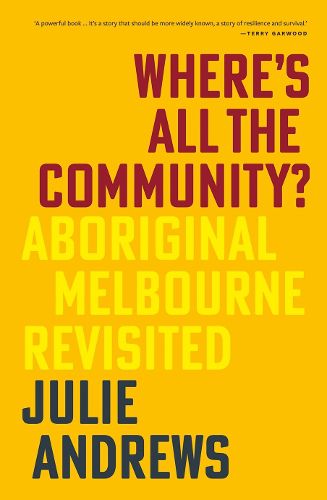
Where’s All the Community? Aboriginal Melbourne Revisited
Julie Andrews
‘We acknowledge the traditional custodians of this land and pay our respects to the Wurundjeri people of the Kulin nation.’ No doubt you’ve heard an acknowledgement like this countless times, maybe even said it yourself or put it in your email signature. What you mightn’t know so well is the history behind that acknowledgement or the complex and diverse perspectives that make up Melbourne’s Aboriginal present. If those questions fascinate you, or you just want to understand your own city a little better, then Julie Andrews’ new book Where’s All the Community? offers an inviting yet comprehensive overview of Aboriginal Melbourne.
Drawing from her doctoral research, Andrews details Melbourne’s steady transformation from a colony that segregated and disempowered its original inhabitants on missions and reserves into a modern city increasingly committed to valuing and championing Aboriginal voices. In the process, it becomes clear that every small development was fought for and every change was fiercely debated. The Aboriginal community is no monolith and Andrews’ writing dispels that notion with a wealth of interviews and archival material. This is a book brimming with voices and rich with experience, especially Andrews’ own, growing up deeply embedded in a community that was committed to its own advocacy on every front.
Indeed, Andrews’ book answers the question of its own title with a sense of emphatic celebration: community is all around, whether in the early organisations that arranged days of mourning and set up educational institutions and medical services or in the broader pan-Aboriginal connections that define contemporary Melbourne. Culturally informed playgroups lay foundations that make kids into activists, while Aboriginal people living on the street enjoy their own sense of solidarity as ‘parkies’. There is community everywhere Andrews looks, but crucially it only exists thanks to the tireless work of Aboriginal Melburnians past and present – something absolutely worth acknowledging.
Reviewed by Joe Murray.

Pearls: Memoir Strands
Tracy Crisp
Tracy Crisp’s episodic memoir Pearls is a soft, bittersweet collection of personal anecdotes and stories which were originally performed as a series of monologues at Adelaide Fringe, debuting in 2018 and staged again last year.
Crisp is a true multi-hyphenate: librarian-meets-writer, stand-up comedian-meets-funeral celebrant, and loving mother embracing and embodying all those by whom she has been loved. Throughout her book there is a beautiful through-line and sentiment of carrying with us the lives of those who came before – our parents, and their own parents before them, and so on. Crisp invites us into her life and asks us to stay awhile. The first thing that strikes me is how her memories, particularly her childhood spent in Port Pirie, are deeply connected to sensory experiences. She recalls various scents, smells that remind her of her mother – green apple shampoo, Oil of Ulan, Marlboro Reds. Every story is heavy with nostalgia. It feels as if we are taken back in time, and shadowing Crisp as she revisits the past.
Her writing is conversational and clever, building from moment to moment with intention – leading us as readers gently to follow her as she grapples with her own identity and what to make of it, and her own realisations about coming home to Adelaide after spending many years travelling and overseas. Each piece is charged and emotional on the page, powerful in written form even though all were first intended for live storytelling.
This beautiful chronology of work offers a small glimpse into a big, full life defined by family relationships, motherhood, and grief; a life that confronts the reality of working out who you are, and the ache of understanding who you could be.
Reviewed by Ocean Trimboli.
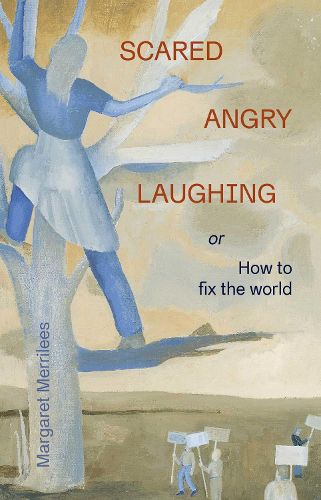
Scared Angry Laughing, or How to Fix the World
Margaret Merrilees
This slim volume of essays is a pithy, poignant, humorous and sobering collection that gives a delightful insight into the life of the author and some of her escapades, as well as providing a glimpse of her own philosophy and her reflections on where the future of humanity is heading.
In the introductory essay, ‘A place in the sun’, we learn about Margaret ‘Mag’ Merrilees’ life as a lesbian feminist activist in Adelaide in the 1970s. She works in women’s health collectives, protests against nuclear energy and violence, plays in a soccer team called The Armpits and becomes part of a community: ‘a composting sort of process’.
While her mother laments, ‘Do you have to be on the wrong side of every fence?’, Merrilees gloriously laps up life while maintaining her rage against capitalism, unfettered development, fossil fuels and the patriarchs who profit from them. She describes her arrest in Alice Springs and subsequent night in the lock up after protesting against Pine Gap. She talks of the wrongs done to Indigenous Australians and advocates for truth-telling: ‘Truth has its own momentum’.
Her timely essay ‘Inconvenient’ delves into the current debate about protests. She reminds us that women only ever achieved the right to vote by protesting and by having ‘the guts to risk upsetting people’.
This feisty author goes on to describe other aspects of her life – dealing with menstruation and abortion, deciding not to have children, encounters with medical misogyny, the after-effects of war, the privatisation of services, the degradation of the natural world, the complications of ageing and the looming ‘slow-motion disaster’ of climate change.
An enlivening and heartfelt collection that tracks one woman’s lifetime of activism, Scared Angry Laughing manages to look both back with wisdom and forward with urgency as Mag continues on her quest to wake us out of our comfortable slumber and our ‘rich well-padded lives’ and do something to save the planet – and ourselves.
Reviewed by Pauline Hopkins.
Also noteworthy are:

Rasputin
Antony Beevor
How could a barely literate peasant from Siberia determine the fate of the world? Undoubtedly, the so-called 'mad monk' Rasputin bewitched Tsar Nicholas II and his wife, Alexandra. Yet their strange and scandalous relationship conceals a riddle, one that casts an intriguing light on the controversial 'great man' theory of history.
Rasputin was a devoted monarchist, not a revolutionary. He had no official position, no forces at his command. Nevertheless, he contributed more to the fall of the Romanov dynasty than any other individual. So demoralised was the Tsarist officer corps by stories of corruption, to say nothing of the rumours of his debauchery with the Empress – and even her daughters – that when the February Revolution broke out, not a sword was raised in defence of the regime.
Just as Rasputin cast a spell over the Romanovs, his legend has bewitched historians. More than a century later, we still fail to comprehend fully the collapse of the greatest autocracy on Earth. Was there any truth to the wild tales that brought down the empire? Or was his true legacy an unsettling lesson on the potency of myth?
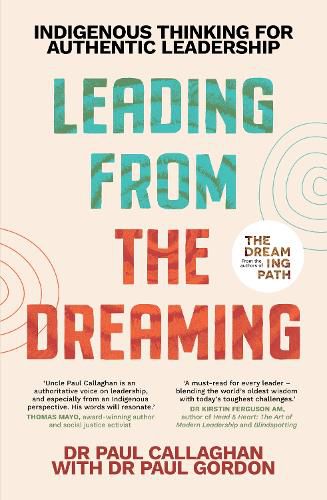
Leading from the Dreaming
Paul Callaghan
Paul Callaghan, bestselling author of The Dreaming Path, shares how the key to mindset, lifelong learning and leadership excellence exists within Indigenous knowledge systems.
First Nations peoples have known for tens of thousands of years that we are all born to learn and continue learning until we take our last breath, from everyone and everything around us – from teachers, lecturers, books, courses, Elders, children, babies, strangers, friends, life and nature.
In Leading from the Dreaming, Paul Callaghan draws on his business experience and cultural knowledge to walk you through the 8 Rs of Leadership: responsibility, relationships, respect, recognition, reflection, results, resilience and renewal. By developing this adaptable, curious mindset, you will set yourself up for leadership excellence in your personal and professional lives.
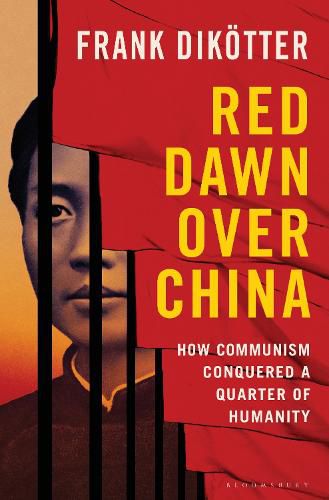
Red Dawn Over China
Frank Dikoetter
The history of modern China has long been portrayed as a tale of Communists fighting in the hills for freedom, gradually gaining popular support by taking land from the rich and giving it to the poor. Drawing on a wealth of archival evidence, Red Dawn Over China reveals how unlikely the Party's victory actually was, had it not been for financial and military support from the Soviet Union.
Established in 1921 under the direct guidance of Moscow, for the best part of a decade the Communist Party left a trail of destruction, besieging towns and plundering the countryside. When the Communists managed to hold territory, they reduced the villagers to a state of servitude, undermining belief in their cause as well as the local economy. By 1936 they had the same popular appeal as an obscure religious sect. A brutal war of occupation by Japan allowed them to survive far behind enemy lines. After Soviet troops invaded Manchuria in 1945 and provided more money and munitions, the Communists at long last prevailed through a pitiless war of attrition, driven by an unflinching will to conquer at all costs.
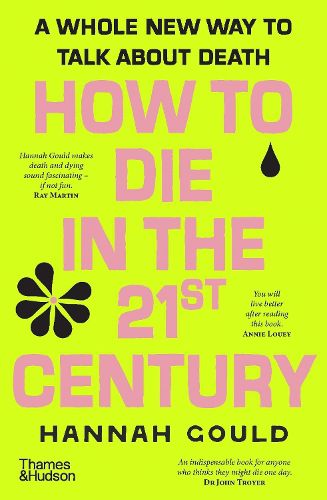
How to Die in the 21st Century
Hannah Gould
Talking about death won't kill you. Yet in today's world, death remains one of our greatest taboos. As religion declines and rituals fade, we are left without guidance for one of life's only certainties. This book is your handbook for death in the 21st century – a compassionate, practical and surprisingly hopeful guide to understanding mortality.
From cremation to green burials, from grieving a pet to navigating tricky memorial etiquette, anthropologist and death scholar Hannah Gould answers the questions most of us are too afraid to ask. As we enter an era of 'peak death', this book challenges us to stop avoiding the inevitable and instead embrace it as part of a good life. Honest, witty and deeply reassuring, Gould invites readers to confront mortality not with fear, but with curiosity and courage.
If you have ever wondered about alternative funerals, modern grief, sustainable burial options or simply how to begin the conversation about death, this is the book you've been waiting for.
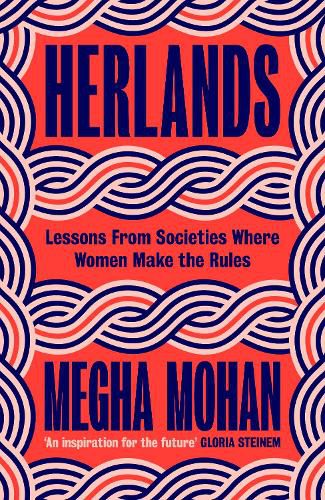
Herlands
Megha Mohan
Society isn't working for women – or any of us. But what if the rules were different? Imagine a world in which women have all the power. A world in which they work together to shape their societies and their futures.
In reality, women's communities have always existed, and continue to thrive. In this vital and groundbreaking book, Megha Mohan goes in search of their roots, discovering a vibrant global history, brought together here for the first time. She also takes us into today's women-led spaces, where women live on their own terms, showing us how we can rethink society for new ways of living, working and collaborating.
Through extensive research and exclusive first-hand reporting, and inspired by her great-grandmother's own matrilineal community in South India, Mohan introduces us to fascinating and diverse groups of women. From the controversial feminist online trolls of South Korea, to older women co-housing in Paris and North London, and the Rain Queens of South Africa, this is a truly global look at women's community.
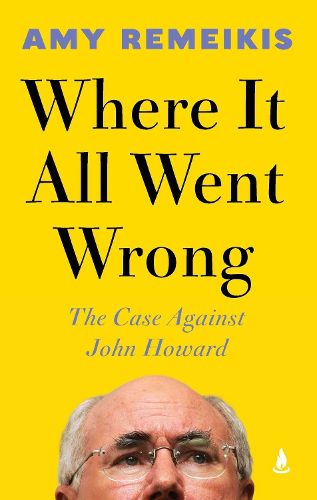
Where It All Went Wrong
Amy Remeikis
John Howard is often revered as one of the great Australian prime ministers (1996–2007): economically prudent, politically astute, ‘relaxed and comfortable’ with Australia’s identity, venerated by the Liberal Party and grudgingly admired by the Left. Why then – just twenty years later after his government ended – are we in such a mess?
Amy Remeikis is one of our most astute and convincing political commentators, and here she argues for a complete revision of how we see Howard’s tenure, for the first time holding him to account against the future he created. Of our modern crises, most are caused by his policies. Housing crisis? Guilty. Work insecurity? Guilty. Giving away gas? Guilty. Climate denial? Guilty. Rise of the far right? Guilty. American lapdog in foreign relations? Guilty. Jingoistic tracksuits and flag-wrapping? Guilty and convicted.
Far from being ‘great economic managers’, the Howard government bought Boomer votes with franking credits and negative gearing, sacrificing the generations now inheriting the nation. They sold out their children and grandchildren for mining billionaires, investment properties and annual cruises. Amy Remeikis is the highly informed voice of these dispossessed generations. In showing us where it all went wrong, she illuminates the path to a better future.
For more new and engaging nonfiction, see our collection here.
