

With the weather turning cooler and the days growing shorter, our outgoing Teen Advisory Board have put together their recommendations for classic novels that make a perfect read at this time of year. From a small novella that's less than a hundred pages to an epic that's over seven hundred, these are books you've probably heard of and always meant to read – but now's the perfect time!
Annalisa recommends
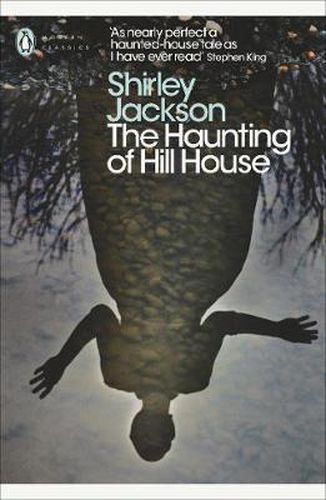
The Haunting of Hill House
Shirley Jackson
The Haunting of Hill House appears at first glance as your standard Gothic horror novel. It follows 32-year-old, unmarried and isolated Eleanor Vance as she joins a small group investigating paranormal activity at the grand and mysterious Hill House. However, the seemingly conventional haunted house narrative is soon disturbed by the blurring of the lines between the psychological and the supernatural; the centre of terror is shifted from Hill House’s turreted towers and bloody history to the instability of Eleanor’s own contradictory mind, as it's preyed upon by Hill House.
Jackson’s writing is elegant yet modern, leaving her narrative largely unbroken by unfamiliar turns of phrase or words. However, this is not to be mistaken for simplicity. The novel resists simple categorisation, becoming less a story about ghosts and more an exploration of patriarchal structures in 1950s America – of the domestic sphere, motherhood, queer desire, and heternormativity – all underpinned by loneliness, longing, and the destabilising search for belonging.
Camryn recommends:
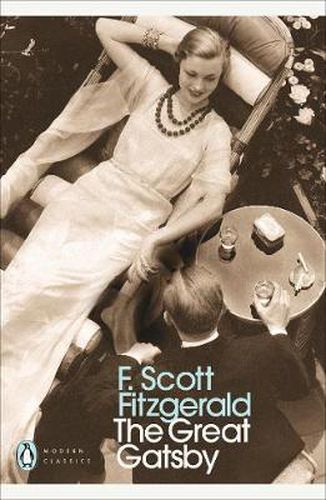
The Great Gatsby
F. Scott Fitzgerald
I am writing this with a tattered copy of The Great Gatsby in my hands. The margins are scrawled with notes and all of the best quotes have been highlighted and embellished with inky scribbles. This is a testament to the writing of F. Scott Fitzgerald, whose portrayal of 1920s New York has become one of the most beloved classics around the world.
Long Island is divided into the East Egg and the West Egg – the old money and the new money, those driven by wealth and status, and those driven by love and devotion. This is the crux of Jay Gatsby’s problems. Fuelled by his love for the gorgeous and dazzling Daisy Buchanan, Gatsby works to gain the status and wealth that will leave her with no other option but to run back to the first and only man she ever truly loved – him. However, not even Gatsby’s grand mansion and extravagant parties can change reality, leaving us to question the priorities of the sparkling Jazz Age.
An honest reflection of the roaring twenties, Fitzgerald draws readers into the glitz and glamour of the time period, but leaves them to question what is truly important when it comes to love and wealth.
Tina recommends:
The Fall
Albert Camus, translated by Robin Buss
Consistent with his other works, Camus utilised The Fall as a vessel to explore his absurdist ideals through the speeches of his protagonist, the judge-penitent Jean-Baptiste Clamence. The novel recounts the protagonist’s interaction with an unnamed lawyer in an eccentric bar in Amsterdam, where the reader is able to take a glimpse into the judge’s eventful life, exclusively through a one-sided transcript of the dialogue between the two companions. From helping a person cross the street to covert art thefts, the adventures of Clamence escalate quickly, never ceasing to amaze the reader; and the details of these events are further enhanced by Camus’ vivaciously prosaic style.
As the story progresses, Clamence reflects upon his own virtues and challenges the readers to follow suit. This is a short and insightful novel that invites introspection in an engaging way. It is perfect for those who are grappling with absurdism and crave intellectually-intense books.
Freddie recommends
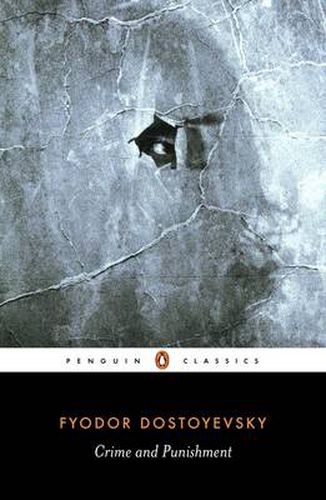
Crime and Punishment
Fyodor Dostoyevsky, translated by David McDuff
St Petersburg, a sprawling graveyard of sorrows, nightmare-fuel and dysphoria, is the setting for Dostoevsky’s grim classic. Standing in the middle of this labyrinth of torments is Rodion Romanovich Raskolnikov.
Raskolnikov, fed up with God, fed up with life and fed up with his own hideous destitution, distorts morality in his favour and kills an old woman, a miserly pawnbroker whom everybody hates and whom no-one will miss. He plans to steal her ill-obtained riches and seize control over his life once more.
One act of violence, however, unavoidably leads to another unplanned one, and before Raskolnikov realises it he has plunged himself into a dark, bleak world of confusion and confrontation, strange men and troubled women, a world in which the line between the everyday and the monstrous is horribly blurred.
I don't, in all honesty, know if you’ll enjoy Crime and Punishment quite as much as I did. For an aspiring interlocutor it’s a must-read – I’ve learnt 13 new words from it – but it’s a tale of destitution, desperation, deprecation and damnation, undeniable in its status as a classic, unapologetic in its direct, bleak and cruel insight into cruel reality.
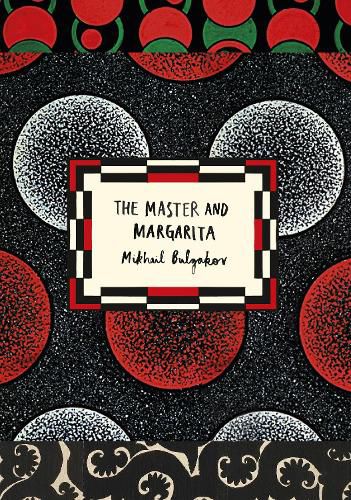
The Master and Margarita
Mikhail Bulgakov, translated by Michael Glenny
One genre we sadly do not see enough of in classic literature is surrealism. It’s portrayed often enough in art and cinema but more rarely in books. The Master and Margarita is essentially the surrealist novel. It’s not the weirdest book, or the most nightmarish, or the most complicated; but it is fun and bold – particularly for its time.
We can only imagine the message that Mr Bulgakov was trying to convey whilst writing The Master and Margarita, but how many non-female writers of that era wrote novels featuring heroines as brave and fiery as our beloved Margarita? How many danced through the nights above the city of Moscow, or attended strange balls with talking cats and tricky demons and none other than the Devil himself? Surrealism requires distinct imagery, and The Master and Margarita achieves that in a way paralleled only (in my opinion) by Lewis Carroll’s dreamlike Alice’s Adventures in Wonderland. I am sure that few people who experienced Margarita’s vengeful flight over Moscow will soon forget it.
Whether you’ve ever expressed any interest at all in Russian literature or Margarita is just one of those books that’s been recommended to you for years, this book is for you.
Annalisa, Camryn, Tina and Freddie are members of the 2025-2026 Readings Teen Advisory Board.
Are you a teen who loves books, or know one who does?
We’re currently looking for a new intake of teenagers to join our Teen Advisory Board! The board will meet once a month starting in April 2026 and running until early 2027. Find more information on what's involved and how to apply here.
