

‘Yikes, I’m still stunned’— Helen Garner on winning the Baillie Gifford Award.
After a career spanning over 50 years, it’s this refreshingly fearless take on life that has engaged her readers over all this time. It’s the disarming honesty, vulnerability, and curiosity with which Garner approaches her work that makes her writing special.
She’s hard to pigeonhole; while she can get cross with what she sees, she’s open to change, to take a position that you might not expect. Her work crosses genres, from fiction, to reportage, to memoir; her first book was Monkey Grip, published in 1977, and her most recent, The Mushroom Tapes, is a collaboration with two other writers. With so much to choose from, where does one start?
I think you need to read some fiction, some reportage and then some memoir; her fiction is often based on her own experiences and it's interesting to compare with her reportage and memoirs. In her reportage, her reactions and her opinions are an integral part of the story she’s telling, and her diaries give you an insight into her fiction and the way she thinks about things. All three forms will deliver great rewards.
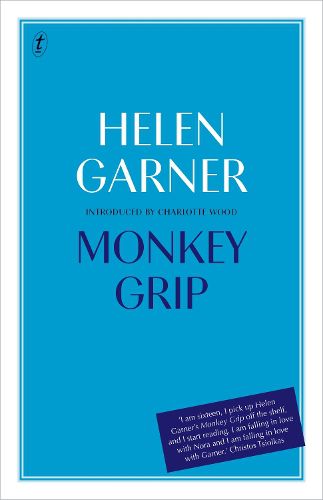
First: Monkey Grip
Helen reputedly wrote Monkey Grip in the State Library after she’d been dismissed from her teaching position at Fitzroy High School for writing about an impromptu sex education class she’d conducted. It’s the story of Nora, a single mother experimenting with love and with new ways of living and bringing up children; it’s also the story of Nora’s relationship with Javo who’s struggling, unsuccessfully, to get off heroin.
I just reread this book and it still feels fresh and relevant. It’s interesting to compare this with her later work where I feel she comes across as more confident in her writing.
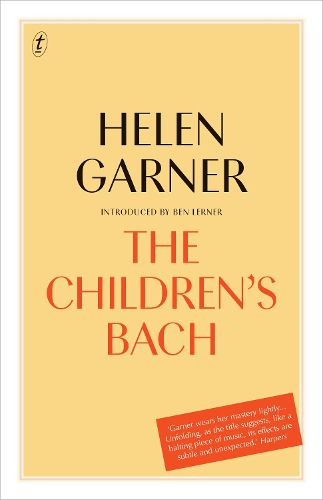
Second: The Children’s Bach
In this short, almost perfect novel, you can see Garner’s writing maturing and her distinctive, spare style evolving. Once again, she’s exploring relationships and how we organise our lives, and how fragile these structures of family and friendships can be.
Critic Don Anderson was effusive in his praise for this book calling it one of the four perfect short novels in the English language, with the others being Ford Madox Ford's The Good Soldier, Scott Fitzgerald's The Great Gatsby and Hemingway's The Sun Also Rises.
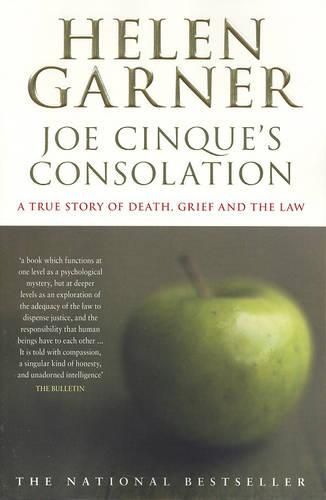
Third: Joe Cinque’s Consolation
This is Garner’s second examination of a trial. The first was The First Stone about a sexual harassment case against the master of Ormond College in Melbourne. In this second case, Anu Singh and her friend Madhavi Rao were accused of murdering Singh’s boyfriend, Joe Cinque.
Singh drugged Cinque and then administered a lethal dose of heroin. She was studying law at ANU and came from an ambitious middle-class Indian-Australian family; Cinque came from a working-class Italian-Australian family. Garner examines the concepts of right and wrong and culpability, and how she feels Cinque has been wronged in the trial process. It’s powerful stuff.
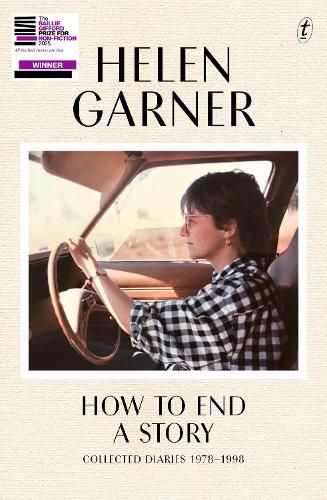
Fourth: How to End a Story: The Collected Diaries 1978-1998
This is the book for which Garner won the prestigious Baillie Gifford Prize. It was originally published in Australia in three separate volumes. Garner used her diaries as a way to develop her writing and to test her ideas; in them she records the events and people in her life. She lays bare her self-doubt both as a person and as a writer; she’s judgemental, kind and generous, self-indulgent, afraid and cocky.
The diaries are refreshing in their honesty but also a delight to read. It feels like a privilege to be let into someone’s life and not only its banality but its drama and triumphs.
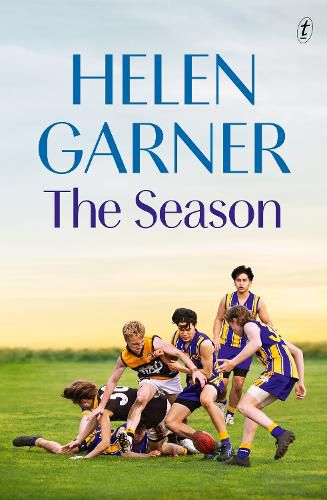
Fifth: The Season
This is the most tender of all her books and it came out of the blue – Garner had thought her last books were behind her. Her beloved grandson was on the cusp of becoming a man and she knew that their relationship was going to change. She’d always loved watching him play footy and decided to really get involved, going not only to the games but the training sessions too, observing him and his friends growing and becoming a cohesive, committed little group. Out of that came this moving book.
In a recent conversation, Helen confided that she was delighted by Nick Hornby’s recent review in The New York Times: ‘... this enchanting, perceptive book about so many things ends with a triumph it richly deserves.’
Additional reading:
A Writing Life: Helen Garner and Her Work (2017) by Bernadette Brennan. This is the closest book to a biography of Garner. I found it fascinating.
Helen Garner: Writers on Writing (2022) by Sean O’Beirne. Writer and critic, O’Beirne takes a very personal and idiosyncratic look at Garner’s work.
And for a bit of fun catch Helen Garner as a meth-head in the film Pure Shit … your local library may have a DVD.
Find more of Garner's books here.
