Readings Newsletter
Become a Readings Member to make your shopping experience even easier.
Sign in or sign up for free!
You’re not far away from qualifying for FREE standard shipping within Australia
You’ve qualified for FREE standard shipping within Australia
The cart is loading…


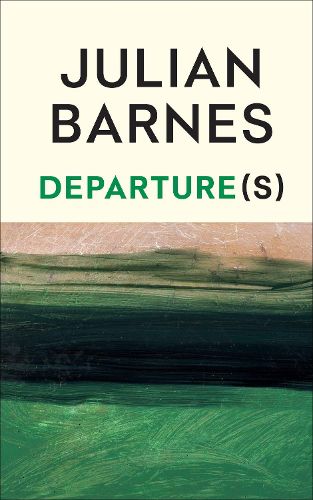
Julian Barnes has been writing for more than four decades, and throughout that time he has played in various ways with form and narrative. Departure(s), his latest – and final! – novel continues this impulse. Divided into five sections, it is a fiction/nonfiction hybrid in which the narrator, Julian Barnes – there’s no attempt at complicating his identity – reflects on life as an ageing man with cancer. He also meditates on the relationship between two friends, who become a couple as students at Oxford and, after a long absence, reconnect decades later, exploring their complicated love story and conflicting personalities in two very different eras of their lives.
Barnes uses this relationship to think about love and romance in our “post-tragic” times, and the fact that age and experience don’t necessarily lead to wisdom: we may learn from our mistakes, but often that just means failing differently. He interrogates the writer’s uneasy position when turning real people into characters, and fiction’s inherent contradictions – its way of achieving artistic truth while also misleading, getting things wrong, or leaving important things out. At one point, a friend says to Barnes, exasperated: ‘Oh stop saying wise things that aren’t true.’
Where Departure(s) came most alive for me was when Barnes turned his attention fully to himself, ruminating on memory, consciousness, time and death. Memory, in particular, has long been one of his obsessions, and in this novel it is pursued with full force. Deeply irreligious, he puts his life in perspective again and again by returning to the impersonal nature of existence – ‘it’s just the universe doing its stuff’ – an idea whose pathos quietly intensifies as the novel progresses.
My greatest pleasure in reading Departure(s) was simply being with Barnes as he thinks on the page: wry, elegant, pragmatic and self-aware. He is a warm and generous writer, and he made me feel as though I were in the room with him, pondering life’s biggest questions together. I rarely cry when reading, but by the end Barnes had me tearing up. This book will be treasured by his longtime readers, and for those new to him, it’s an excellent place to start.
Discover more recommendations from our expert booksellers.



Search our extensive online catalogue.