Readings Newsletter
Become a Readings Member to make your shopping experience even easier.
Sign in or sign up for free!
You’re not far away from qualifying for FREE standard shipping within Australia
You’ve qualified for FREE standard shipping within Australia
The cart is loading…


This title is printed to order. This book may have been self-published. If so, we cannot guarantee the quality of the content. In the main most books will have gone through the editing process however some may not. We therefore suggest that you be aware of this before ordering this book. If in doubt check either the author or publisher’s details as we are unable to accept any returns unless they are faulty. Please contact us if you have any questions.
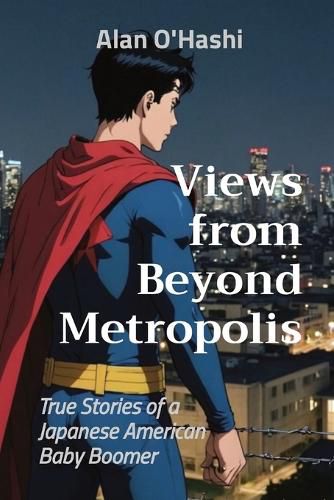
Author Alan O'Hashi reimagines Superman's American Way in his memoir Views from Beyond Metropolis: True Stories of a Japanese American Baby Boomer. He provides the reader with practical techniques to become more aware of their biases, how to undo them, and equip themselves to evolve in a growing multicultural world.
The once-vibrant Japanese neighborhood on the 500 and 400 blocks of West 17th Street in Downtown Cheyenne, Wyoming, is the backdrop for his memoir. Alan and his family lived in the middle of nowhere Wyoming and avoided the War Relocation Camp experience. They still had to deal with overt and subtle racism during and after World War II. Alan learned how to be civil and developed practical cultural competency techniques from his experiences growing up in a strong extended family, living in a college dorm, purchasing his first home as a co-op, and living in a mixed-use urban neighborhood before it was trendy.
Alan looks at the history of legalized oppression in the United States through a cultural competency lens. The dominant culture enslaved African tribal members to drive the growing colonial economy. As the population grew and land was scarce, President Thomas Jefferson opened the West to aggressive settlement.
Through a cultural competency lens, Alan examines the history of legalized oppression in the United States, which typified the American obsession with racial and ethnic homogeneity that dates back to the 16th century. The dominant culture enslaved African tribal members to drive the growing colonial economy. As the population grew, President Thomas Jefferson opened the West to aggressive conquest of Native American lands. Alan asserts that long-standing racism toward Asians was exacerbated after the Empire of Japan bombed Pearl Harbor on December 7, 1941. Americans feared that domestic Japanese might be spies. President Franklin Delano Roosevelt signed Executive Order 9066, which led to the mass incarceration of 120,000 West Coast Japanese in 10 Relocation Camps.
What can we learn from the experiences of Japanese Americans who endured societal racism supported by discriminatory government policies during and after World War II? Can we become more culturally competent and reimagine Superman's American Way as one of sharing and collaboration rather than individual wealth accumulation and acceptance of all for who they are instead of assimilation by exclusion?
$9.00 standard shipping within Australia
FREE standard shipping within Australia for orders over $100.00
Express & International shipping calculated at checkout
Stock availability can be subject to change without notice. We recommend calling the shop or contacting our online team to check availability of low stock items. Please see our Shopping Online page for more details.
This title is printed to order. This book may have been self-published. If so, we cannot guarantee the quality of the content. In the main most books will have gone through the editing process however some may not. We therefore suggest that you be aware of this before ordering this book. If in doubt check either the author or publisher’s details as we are unable to accept any returns unless they are faulty. Please contact us if you have any questions.
Author Alan O'Hashi reimagines Superman's American Way in his memoir Views from Beyond Metropolis: True Stories of a Japanese American Baby Boomer. He provides the reader with practical techniques to become more aware of their biases, how to undo them, and equip themselves to evolve in a growing multicultural world.
The once-vibrant Japanese neighborhood on the 500 and 400 blocks of West 17th Street in Downtown Cheyenne, Wyoming, is the backdrop for his memoir. Alan and his family lived in the middle of nowhere Wyoming and avoided the War Relocation Camp experience. They still had to deal with overt and subtle racism during and after World War II. Alan learned how to be civil and developed practical cultural competency techniques from his experiences growing up in a strong extended family, living in a college dorm, purchasing his first home as a co-op, and living in a mixed-use urban neighborhood before it was trendy.
Alan looks at the history of legalized oppression in the United States through a cultural competency lens. The dominant culture enslaved African tribal members to drive the growing colonial economy. As the population grew and land was scarce, President Thomas Jefferson opened the West to aggressive settlement.
Through a cultural competency lens, Alan examines the history of legalized oppression in the United States, which typified the American obsession with racial and ethnic homogeneity that dates back to the 16th century. The dominant culture enslaved African tribal members to drive the growing colonial economy. As the population grew, President Thomas Jefferson opened the West to aggressive conquest of Native American lands. Alan asserts that long-standing racism toward Asians was exacerbated after the Empire of Japan bombed Pearl Harbor on December 7, 1941. Americans feared that domestic Japanese might be spies. President Franklin Delano Roosevelt signed Executive Order 9066, which led to the mass incarceration of 120,000 West Coast Japanese in 10 Relocation Camps.
What can we learn from the experiences of Japanese Americans who endured societal racism supported by discriminatory government policies during and after World War II? Can we become more culturally competent and reimagine Superman's American Way as one of sharing and collaboration rather than individual wealth accumulation and acceptance of all for who they are instead of assimilation by exclusion?
Search our extensive online catalogue.
