Readings Newsletter
Become a Readings Member to make your shopping experience even easier.
Sign in or sign up for free!
You’re not far away from qualifying for FREE standard shipping within Australia
You’ve qualified for FREE standard shipping within Australia
The cart is loading…


This title is printed to order. This book may have been self-published. If so, we cannot guarantee the quality of the content. In the main most books will have gone through the editing process however some may not. We therefore suggest that you be aware of this before ordering this book. If in doubt check either the author or publisher’s details as we are unable to accept any returns unless they are faulty. Please contact us if you have any questions.
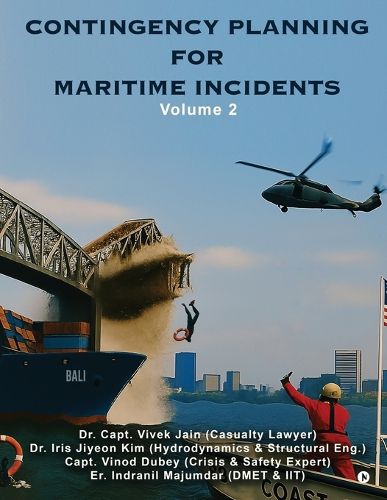
Is it possible to eliminate the occurrence of maritime incidents? All parties engaged in maritime commerce endeavour to reduce both the probability and impact of maritime incidents, acknowledging the significant ramifications such events hold for all stakeholders.
This book states that contingency planning differs from crisis planning and traditionally has not covered post-casualty recovery within the concept of business continuity. The lack of clarity around this concept highlights a gap in industry contingency planning literature and training. This two-volume book introduces a new contingency planning model, applies it to 22 maritime incidents, and offers guidance on training, hydrodynamics, towage/salvage, maritime law, and general average issues in contingency planning.
These chapters provide comprehensive guidance for managing maritime incidents, minimising the need to consult multiple resources. Each chapter includes both theoretical analyses of maritime scenarios and case study research, with a dedicated section on LNG ships. The content aims to assist readers in understanding effective strategies for addressing maritime incidents
The book is suitable for shipboard and shore-based professionals, maritime lawyers, loss prevention specialists, surveyors, general average practitioners, researchers, regulatory authorities, classification societies, and other stakeholders. It is expected to become the industry's standard reference on maritime incidents.
$9.00 standard shipping within Australia
FREE standard shipping within Australia for orders over $100.00
Express & International shipping calculated at checkout
Stock availability can be subject to change without notice. We recommend calling the shop or contacting our online team to check availability of low stock items. Please see our Shopping Online page for more details.
This title is printed to order. This book may have been self-published. If so, we cannot guarantee the quality of the content. In the main most books will have gone through the editing process however some may not. We therefore suggest that you be aware of this before ordering this book. If in doubt check either the author or publisher’s details as we are unable to accept any returns unless they are faulty. Please contact us if you have any questions.
Is it possible to eliminate the occurrence of maritime incidents? All parties engaged in maritime commerce endeavour to reduce both the probability and impact of maritime incidents, acknowledging the significant ramifications such events hold for all stakeholders.
This book states that contingency planning differs from crisis planning and traditionally has not covered post-casualty recovery within the concept of business continuity. The lack of clarity around this concept highlights a gap in industry contingency planning literature and training. This two-volume book introduces a new contingency planning model, applies it to 22 maritime incidents, and offers guidance on training, hydrodynamics, towage/salvage, maritime law, and general average issues in contingency planning.
These chapters provide comprehensive guidance for managing maritime incidents, minimising the need to consult multiple resources. Each chapter includes both theoretical analyses of maritime scenarios and case study research, with a dedicated section on LNG ships. The content aims to assist readers in understanding effective strategies for addressing maritime incidents
The book is suitable for shipboard and shore-based professionals, maritime lawyers, loss prevention specialists, surveyors, general average practitioners, researchers, regulatory authorities, classification societies, and other stakeholders. It is expected to become the industry's standard reference on maritime incidents.
Search our extensive online catalogue.
