Readings Newsletter
Become a Readings Member to make your shopping experience even easier.
Sign in or sign up for free!
You’re not far away from qualifying for FREE standard shipping within Australia
You’ve qualified for FREE standard shipping within Australia
The cart is loading…


This title is printed to order. This book may have been self-published. If so, we cannot guarantee the quality of the content. In the main most books will have gone through the editing process however some may not. We therefore suggest that you be aware of this before ordering this book. If in doubt check either the author or publisher’s details as we are unable to accept any returns unless they are faulty. Please contact us if you have any questions.
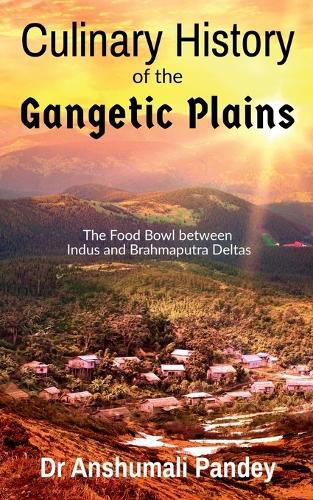
The world population has grown by about five billion since the beginning of the Green Revolution and many believe that, without the Revolution, there would have been greater famine and malnutrition. Population movements increase urban populations and reduce rural populations. This reduces labor productivity in agricultural areas and causes these areas to remain inactive and increases the pressure of urban development on these areas. Keeping above in view the I present this book "Culinary History of the Gangetic Plains" has been attempted.
Agriculture is extremely important as it not only provides food and a sense of livelihood to many people in India, but also is a source of employment for many. Being a relatively poorer in certain parts of India, the jobs created as a result of agriculture contribute majorly to people's incomes and livelihoods. As a result, agricultural industries greatly add to the Gross Domestic Product of India and consequently lead to benefits to the economy such as an increased multiplier effect.
Historically, the civilizations established on fertile lands with assure supply of water for livelihood as well as for crops and animals. In India too Indo Gangetic plains bestowed with fertile land as well as adequate supply and availability of water for humans and animals; and irrigation purposes. Therefore, as expected in past history the population density increased more in the Indo Gangetic Plains due to favorable soils and water availability.
$9.00 standard shipping within Australia
FREE standard shipping within Australia for orders over $100.00
Express & International shipping calculated at checkout
Stock availability can be subject to change without notice. We recommend calling the shop or contacting our online team to check availability of low stock items. Please see our Shopping Online page for more details.
This title is printed to order. This book may have been self-published. If so, we cannot guarantee the quality of the content. In the main most books will have gone through the editing process however some may not. We therefore suggest that you be aware of this before ordering this book. If in doubt check either the author or publisher’s details as we are unable to accept any returns unless they are faulty. Please contact us if you have any questions.
The world population has grown by about five billion since the beginning of the Green Revolution and many believe that, without the Revolution, there would have been greater famine and malnutrition. Population movements increase urban populations and reduce rural populations. This reduces labor productivity in agricultural areas and causes these areas to remain inactive and increases the pressure of urban development on these areas. Keeping above in view the I present this book "Culinary History of the Gangetic Plains" has been attempted.
Agriculture is extremely important as it not only provides food and a sense of livelihood to many people in India, but also is a source of employment for many. Being a relatively poorer in certain parts of India, the jobs created as a result of agriculture contribute majorly to people's incomes and livelihoods. As a result, agricultural industries greatly add to the Gross Domestic Product of India and consequently lead to benefits to the economy such as an increased multiplier effect.
Historically, the civilizations established on fertile lands with assure supply of water for livelihood as well as for crops and animals. In India too Indo Gangetic plains bestowed with fertile land as well as adequate supply and availability of water for humans and animals; and irrigation purposes. Therefore, as expected in past history the population density increased more in the Indo Gangetic Plains due to favorable soils and water availability.
Search our extensive online catalogue.
