Readings Newsletter
Become a Readings Member to make your shopping experience even easier.
Sign in or sign up for free!
You’re not far away from qualifying for FREE standard shipping within Australia
You’ve qualified for FREE standard shipping within Australia
The cart is loading…


This title is printed to order. This book may have been self-published. If so, we cannot guarantee the quality of the content. In the main most books will have gone through the editing process however some may not. We therefore suggest that you be aware of this before ordering this book. If in doubt check either the author or publisher’s details as we are unable to accept any returns unless they are faulty. Please contact us if you have any questions.
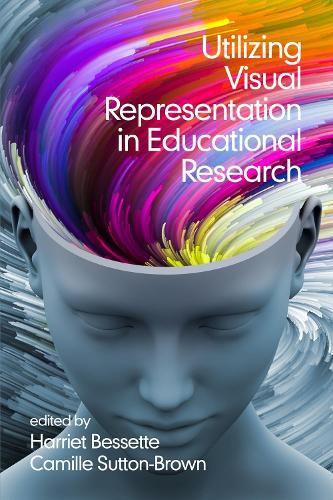
This edited volume focuses on visual and image-based methodologies that can be used to expand how educators approach, design, and innovate research for the purpose of informing and improving teaching and learning. Exploring how data can be utilized, collected, and rendered useful in the education arena is of utmost importance to those oriented towards utilizing research with the aim of improving educational practice. Innovative methodologies are important for preparing future researchers/scholars and teachers in developing and sustaining professional knowledge. To date, while visual methodologies are explored in various volumes related to general areas of social science, few texts exist where visual methodologies are explained or well-understood in the field of education, specifically.
This work centers on the functions, cultures, and outcomes of teaching and learning using visual data (i.e., participant-generated drawings, photo-elicitation, film, etc.) and the methods that frame this approach. It is intended for teachers, researchers, and teacher-researchers - in higher education as well as at PK-12 levels - who are ready to engage with innovative, and often compelling, research methods that make data collection across data sources both accessible and equitable. This volume illustrates how various scholars have conceptualized, generated, and executed research utilizing visual data in their own schools, classrooms, and/or districts, and what they learned from these investigations.
This edited volume is organized according to four main strands: Conducting research as visual endeavor: Assessing the nature of visual methodology, Conducting research as visual endeavor: Pedagogical innovation, What can visual data in educational research reveal: Student engagement, motivation, selfdetermination, metacognition, and mindfulness, and Conducting research as visual endeavor: Critical perspectives-critical exploration of issues in education and visual data's engagement with, and impact on, marginalized and/or disenfranchised participants.
The chapters within each section, authored by established scholars in their fields of study, focus on some of today's key educational practices and the ways in which visual methodologies can provide innovation in the design of educational research. Each chapter within the volume reflects the importance of using credible, confirmable, reliable, and triangulated interpretations as a foundation for any claims, findings, or assertions related to pedagogical innovation, student mindfulness, and critical pedagogy. In summary, this edited volume is critically engaged, innovative, and contributes to advances in qualitative inquiry, visual research methodologies, and alternative ways of 'seeing' and 'knowing'.
$9.00 standard shipping within Australia
FREE standard shipping within Australia for orders over $100.00
Express & International shipping calculated at checkout
Stock availability can be subject to change without notice. We recommend calling the shop or contacting our online team to check availability of low stock items. Please see our Shopping Online page for more details.
This title is printed to order. This book may have been self-published. If so, we cannot guarantee the quality of the content. In the main most books will have gone through the editing process however some may not. We therefore suggest that you be aware of this before ordering this book. If in doubt check either the author or publisher’s details as we are unable to accept any returns unless they are faulty. Please contact us if you have any questions.
This edited volume focuses on visual and image-based methodologies that can be used to expand how educators approach, design, and innovate research for the purpose of informing and improving teaching and learning. Exploring how data can be utilized, collected, and rendered useful in the education arena is of utmost importance to those oriented towards utilizing research with the aim of improving educational practice. Innovative methodologies are important for preparing future researchers/scholars and teachers in developing and sustaining professional knowledge. To date, while visual methodologies are explored in various volumes related to general areas of social science, few texts exist where visual methodologies are explained or well-understood in the field of education, specifically.
This work centers on the functions, cultures, and outcomes of teaching and learning using visual data (i.e., participant-generated drawings, photo-elicitation, film, etc.) and the methods that frame this approach. It is intended for teachers, researchers, and teacher-researchers - in higher education as well as at PK-12 levels - who are ready to engage with innovative, and often compelling, research methods that make data collection across data sources both accessible and equitable. This volume illustrates how various scholars have conceptualized, generated, and executed research utilizing visual data in their own schools, classrooms, and/or districts, and what they learned from these investigations.
This edited volume is organized according to four main strands: Conducting research as visual endeavor: Assessing the nature of visual methodology, Conducting research as visual endeavor: Pedagogical innovation, What can visual data in educational research reveal: Student engagement, motivation, selfdetermination, metacognition, and mindfulness, and Conducting research as visual endeavor: Critical perspectives-critical exploration of issues in education and visual data's engagement with, and impact on, marginalized and/or disenfranchised participants.
The chapters within each section, authored by established scholars in their fields of study, focus on some of today's key educational practices and the ways in which visual methodologies can provide innovation in the design of educational research. Each chapter within the volume reflects the importance of using credible, confirmable, reliable, and triangulated interpretations as a foundation for any claims, findings, or assertions related to pedagogical innovation, student mindfulness, and critical pedagogy. In summary, this edited volume is critically engaged, innovative, and contributes to advances in qualitative inquiry, visual research methodologies, and alternative ways of 'seeing' and 'knowing'.
Search our extensive online catalogue.
