Readings Newsletter
Become a Readings Member to make your shopping experience even easier.
Sign in or sign up for free!
You’re not far away from qualifying for FREE standard shipping within Australia
You’ve qualified for FREE standard shipping within Australia
The cart is loading…


This title is printed to order. This book may have been self-published. If so, we cannot guarantee the quality of the content. In the main most books will have gone through the editing process however some may not. We therefore suggest that you be aware of this before ordering this book. If in doubt check either the author or publisher’s details as we are unable to accept any returns unless they are faulty. Please contact us if you have any questions.
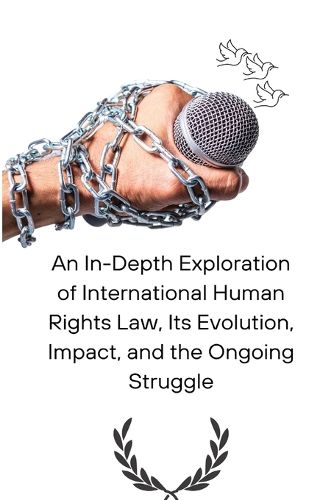
The present dissertation addresses the right to truth in the field of international human rights
law. The objective is to verify the outlines of this right that make it unique, and which justify its
own (disputable) existence in the human rights scenario as a legally binding norm. Departing
from a historical perspective of the emergence of this right in International Law, the intent is to
analyze the multiple debates that have marked the development of the right to truth throughout
the past decades. It is explored, therefore, how the a priori abstract notion of truth became a
right and the strict relation this has with the social mobilizations of victims of gross violations
of human rights. To accomplish this, the dissertation spans across the struggle, in particular,
of the relatives of disappeared victims during the 1970's and 1980's when the dictatorships
reigned in Latin America. It follows on the expansion of the right to truth during what has been
known as the fight against impunity, until it reaches the main human rights courts. To finalize,
it discusses the inclusion of the right to truth in the International Convention on the Protection
of All Persons from Enforced Disappearance and the measures more commonly used to
realize such right. The dissertation concludes that the right to truth carries a singularity that is
crucial for the protection of victims of gross human rights violations.
$9.00 standard shipping within Australia
FREE standard shipping within Australia for orders over $100.00
Express & International shipping calculated at checkout
Stock availability can be subject to change without notice. We recommend calling the shop or contacting our online team to check availability of low stock items. Please see our Shopping Online page for more details.
This title is printed to order. This book may have been self-published. If so, we cannot guarantee the quality of the content. In the main most books will have gone through the editing process however some may not. We therefore suggest that you be aware of this before ordering this book. If in doubt check either the author or publisher’s details as we are unable to accept any returns unless they are faulty. Please contact us if you have any questions.
The present dissertation addresses the right to truth in the field of international human rights
law. The objective is to verify the outlines of this right that make it unique, and which justify its
own (disputable) existence in the human rights scenario as a legally binding norm. Departing
from a historical perspective of the emergence of this right in International Law, the intent is to
analyze the multiple debates that have marked the development of the right to truth throughout
the past decades. It is explored, therefore, how the a priori abstract notion of truth became a
right and the strict relation this has with the social mobilizations of victims of gross violations
of human rights. To accomplish this, the dissertation spans across the struggle, in particular,
of the relatives of disappeared victims during the 1970's and 1980's when the dictatorships
reigned in Latin America. It follows on the expansion of the right to truth during what has been
known as the fight against impunity, until it reaches the main human rights courts. To finalize,
it discusses the inclusion of the right to truth in the International Convention on the Protection
of All Persons from Enforced Disappearance and the measures more commonly used to
realize such right. The dissertation concludes that the right to truth carries a singularity that is
crucial for the protection of victims of gross human rights violations.
Search our extensive online catalogue.
