Readings Newsletter
Become a Readings Member to make your shopping experience even easier.
Sign in or sign up for free!
You’re not far away from qualifying for FREE standard shipping within Australia
You’ve qualified for FREE standard shipping within Australia
The cart is loading…


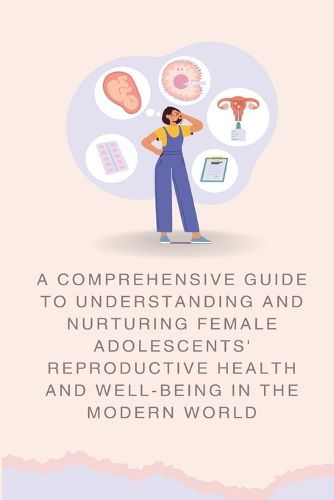
This title is printed to order. This book may have been self-published. If so, we cannot guarantee the quality of the content. In the main most books will have gone through the editing process however some may not. We therefore suggest that you be aware of this before ordering this book. If in doubt check either the author or publisher’s details as we are unable to accept any returns unless they are faulty. Please contact us if you have any questions.
Adolescence is a phase of life where transformation from
childhood to adulthood takes place. Puberty, as the marker of this
phase, presents a significant opportunity to lay a foundation for
reproductive health of young people. Pubertal development affects
female adolescents differently to their male counterparts. Within
this period, the young female will experience significant changes in
her body and will start her reproductive journey. It is essential that
young females are prepared to ensure a smooth transition and a
positive puberty experience. However, little is known about young
females' knowledge of reproductive health during puberty or their
sources of information about reproductive health during this critical
time. Globally, research focuses on adolescents aged 15 years and
above, and there is limited data on early adolescents, specifically
young female adolescents age 12 to 15 years. Studies conducted with
Indonesian adolescents tend to focus on sexual behaviour as a poor
reproductive health outcome and fail to consider the importance of
exploring adolescents' knowledge of reproductive health during
puberty. This PhD study was designed to address these gaps in the
literature by providing an exploration into young females' knowledge
of reproductive health and the sources of information regarding
reproductive health during puberty.
$9.00 standard shipping within Australia
FREE standard shipping within Australia for orders over $100.00
Express & International shipping calculated at checkout
Stock availability can be subject to change without notice. We recommend calling the shop or contacting our online team to check availability of low stock items. Please see our Shopping Online page for more details.
This title is printed to order. This book may have been self-published. If so, we cannot guarantee the quality of the content. In the main most books will have gone through the editing process however some may not. We therefore suggest that you be aware of this before ordering this book. If in doubt check either the author or publisher’s details as we are unable to accept any returns unless they are faulty. Please contact us if you have any questions.
Adolescence is a phase of life where transformation from
childhood to adulthood takes place. Puberty, as the marker of this
phase, presents a significant opportunity to lay a foundation for
reproductive health of young people. Pubertal development affects
female adolescents differently to their male counterparts. Within
this period, the young female will experience significant changes in
her body and will start her reproductive journey. It is essential that
young females are prepared to ensure a smooth transition and a
positive puberty experience. However, little is known about young
females' knowledge of reproductive health during puberty or their
sources of information about reproductive health during this critical
time. Globally, research focuses on adolescents aged 15 years and
above, and there is limited data on early adolescents, specifically
young female adolescents age 12 to 15 years. Studies conducted with
Indonesian adolescents tend to focus on sexual behaviour as a poor
reproductive health outcome and fail to consider the importance of
exploring adolescents' knowledge of reproductive health during
puberty. This PhD study was designed to address these gaps in the
literature by providing an exploration into young females' knowledge
of reproductive health and the sources of information regarding
reproductive health during puberty.
Search our extensive online catalogue.
