Readings Newsletter
Become a Readings Member to make your shopping experience even easier.
Sign in or sign up for free!
You’re not far away from qualifying for FREE standard shipping within Australia
You’ve qualified for FREE standard shipping within Australia
The cart is loading…


This title is printed to order. This book may have been self-published. If so, we cannot guarantee the quality of the content. In the main most books will have gone through the editing process however some may not. We therefore suggest that you be aware of this before ordering this book. If in doubt check either the author or publisher’s details as we are unable to accept any returns unless they are faulty. Please contact us if you have any questions.
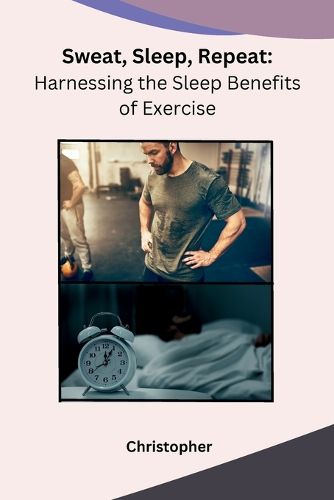
Understanding the Sleep-Exercise ConnectionRegular exercise has long been celebrated for its numerous health benefits, from maintaining a healthy weight and reducing the risk of chronic diseases to improving mood and boosting overall well-being. But did you know that exercise also plays a crucial role in enhancing the quality and duration of your sleep? In this subchapter, we will delve into the fascinating connection between sleep and exercise, shedding light on how physical activity can positively impact your sleep patterns and ultimately lead to a more rejuvenating rest.Sleep and exercise share a bidirectional relationship, meaning that each can influence the other. Engaging in regular physical activity can help regulate your sleep-wake cycle, also known as your circadian rhythm. When you exercise, your body temperature rises, and afterward, it gradually cools down, signaling to your brain that it's time to wind down and prepare for sleep. Moreover, exercise promotes the production of endorphins and serotonin, which are neurotransmitters associated with relaxation and improved mood, further priming your body for a restful night's sleep.On the other hand, a good night's sleep can significantly enhance your exercise performance and recovery. During sleep, your body repairs and rebuilds tissues, strengthens the immune system, and consolidates memories. Adequate rest also helps regulate hormone levels, including those related to appetite and metabolism, which can impact weight management goals. Furthermore, sleep deprivation has been linked to decreased motivation and increased risk of injuries during physical activity.To maximize the sleep benefits of exercise, it is important to establish a consistent routine. Aim for at least 150 minutes of moderate-intensity aerobic activity or 75 minutes of vigorous activity per week, spread across several days. However, be mindful of timing your workouts appropriately. Exercising too close to bedtime can leave you feeling energized and make it harder to fall asleep. Instead, try to finish your workout at least a few hours before your desired bedtime to allow your body to cool down and transition into a more relaxed state.
$9.00 standard shipping within Australia
FREE standard shipping within Australia for orders over $100.00
Express & International shipping calculated at checkout
Stock availability can be subject to change without notice. We recommend calling the shop or contacting our online team to check availability of low stock items. Please see our Shopping Online page for more details.
This title is printed to order. This book may have been self-published. If so, we cannot guarantee the quality of the content. In the main most books will have gone through the editing process however some may not. We therefore suggest that you be aware of this before ordering this book. If in doubt check either the author or publisher’s details as we are unable to accept any returns unless they are faulty. Please contact us if you have any questions.
Understanding the Sleep-Exercise ConnectionRegular exercise has long been celebrated for its numerous health benefits, from maintaining a healthy weight and reducing the risk of chronic diseases to improving mood and boosting overall well-being. But did you know that exercise also plays a crucial role in enhancing the quality and duration of your sleep? In this subchapter, we will delve into the fascinating connection between sleep and exercise, shedding light on how physical activity can positively impact your sleep patterns and ultimately lead to a more rejuvenating rest.Sleep and exercise share a bidirectional relationship, meaning that each can influence the other. Engaging in regular physical activity can help regulate your sleep-wake cycle, also known as your circadian rhythm. When you exercise, your body temperature rises, and afterward, it gradually cools down, signaling to your brain that it's time to wind down and prepare for sleep. Moreover, exercise promotes the production of endorphins and serotonin, which are neurotransmitters associated with relaxation and improved mood, further priming your body for a restful night's sleep.On the other hand, a good night's sleep can significantly enhance your exercise performance and recovery. During sleep, your body repairs and rebuilds tissues, strengthens the immune system, and consolidates memories. Adequate rest also helps regulate hormone levels, including those related to appetite and metabolism, which can impact weight management goals. Furthermore, sleep deprivation has been linked to decreased motivation and increased risk of injuries during physical activity.To maximize the sleep benefits of exercise, it is important to establish a consistent routine. Aim for at least 150 minutes of moderate-intensity aerobic activity or 75 minutes of vigorous activity per week, spread across several days. However, be mindful of timing your workouts appropriately. Exercising too close to bedtime can leave you feeling energized and make it harder to fall asleep. Instead, try to finish your workout at least a few hours before your desired bedtime to allow your body to cool down and transition into a more relaxed state.
Search our extensive online catalogue.
