Readings Newsletter
Become a Readings Member to make your shopping experience even easier.
Sign in or sign up for free!
You’re not far away from qualifying for FREE standard shipping within Australia
You’ve qualified for FREE standard shipping within Australia
The cart is loading…


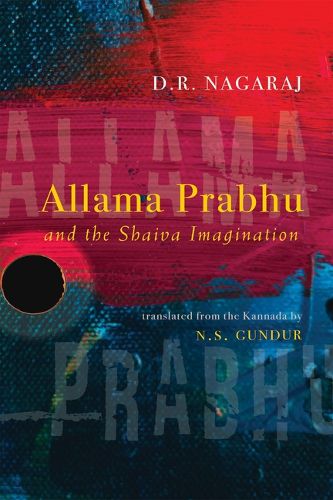
Engages with the life and ideas of the twelfth-century Shaiva mystic and philosopher-poet Allama Prabhu.
In his last, profoundly innovative work, D. R. Nagaraj (1954-1998) engages with the twelfth-century Shaiva mystic and philosopher-poet Allama Prabhu, whose enigmatic writings have perplexed many and thus resisted analysis. Nagaraj situates Allama in three intellectual contexts: the medieval philosophical world built around the worship of Shiva; the pan-Indian bhakti tradition; and, most broadly, Indian mystical thought. This framework enables a reconstruction of Allama through the poet's engagement with fellow poet-spiritualists (vachanakaras) such as Basava, as well as with the Kashmiri Shaiva philosopher Abhinavagupta and the founder of Hindu monasticism Gorakhnath. Nagaraj's close readings of Allama's vachanas offer a vision of Shaiva bhakti that seems to contradict the erotic and romantic expressive modes of Sringara rasa while tracing the limits of language for an understanding of the divine. Allama, Nagaraj suggests, is an epistemological iconoclast who expands the horizons of language and thought.
Through these explorations, Nagaraj decolonizes the standard modes of inquiry and critiques certain settled notions in Indian philosophy, revealing himself as a postcolonial scholar whose "hermeneutics of suspicion" leads to a novel understanding of Indian texts and traditions. Unifying literary criticism with critical theory, philosophical inquiry, and the history of ideas, the book's focus on a specific religious tradition-Virashaivism-is never singular, making it as much a work for scholars of Indian spiritualism and religious thought as for those interested in frameworks that transgress Eurocentricism. Translated into English by Kannada philosopher N. S. Gundur, this is a major contribution to studies of Indian philosophy and literature.
$9.00 standard shipping within Australia
FREE standard shipping within Australia for orders over $100.00
Express & International shipping calculated at checkout
Stock availability can be subject to change without notice. We recommend calling the shop or contacting our online team to check availability of low stock items. Please see our Shopping Online page for more details.
Engages with the life and ideas of the twelfth-century Shaiva mystic and philosopher-poet Allama Prabhu.
In his last, profoundly innovative work, D. R. Nagaraj (1954-1998) engages with the twelfth-century Shaiva mystic and philosopher-poet Allama Prabhu, whose enigmatic writings have perplexed many and thus resisted analysis. Nagaraj situates Allama in three intellectual contexts: the medieval philosophical world built around the worship of Shiva; the pan-Indian bhakti tradition; and, most broadly, Indian mystical thought. This framework enables a reconstruction of Allama through the poet's engagement with fellow poet-spiritualists (vachanakaras) such as Basava, as well as with the Kashmiri Shaiva philosopher Abhinavagupta and the founder of Hindu monasticism Gorakhnath. Nagaraj's close readings of Allama's vachanas offer a vision of Shaiva bhakti that seems to contradict the erotic and romantic expressive modes of Sringara rasa while tracing the limits of language for an understanding of the divine. Allama, Nagaraj suggests, is an epistemological iconoclast who expands the horizons of language and thought.
Through these explorations, Nagaraj decolonizes the standard modes of inquiry and critiques certain settled notions in Indian philosophy, revealing himself as a postcolonial scholar whose "hermeneutics of suspicion" leads to a novel understanding of Indian texts and traditions. Unifying literary criticism with critical theory, philosophical inquiry, and the history of ideas, the book's focus on a specific religious tradition-Virashaivism-is never singular, making it as much a work for scholars of Indian spiritualism and religious thought as for those interested in frameworks that transgress Eurocentricism. Translated into English by Kannada philosopher N. S. Gundur, this is a major contribution to studies of Indian philosophy and literature.
Search our extensive online catalogue.
