Readings Newsletter
Become a Readings Member to make your shopping experience even easier.
Sign in or sign up for free!
You’re not far away from qualifying for FREE standard shipping within Australia
You’ve qualified for FREE standard shipping within Australia
The cart is loading…


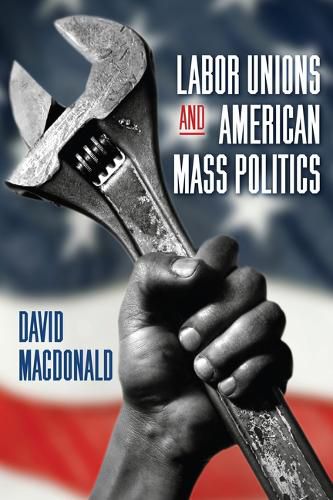
A comprehensive exploration of how labor unions, broadly conceived, shape party loyalties in the American mass public.
How and why do labor unions matter for American mass party loyalties, specifically party identification and vote choice? Labor Unions and American Mass Politics marshals a wide range of survey data to test two different ways through which labor unions can shape mass party loyalties. The first is via people's personal affiliation with organized labor, such as a current/former member or household resident, while the second is via people's attitudes toward organized labor, such as whether they favor vs. disfavor unions in general. Overall, author David Macdonald shows that both are capable of shaping mass support for the Democratic Party and its various political candidates and that such relationships are also conditioned by whether people perceive labor unions and Democrats to be political allies, a connection that is lacking among a sizeable minority of Americans. Overall, Macdonald provides not only a timely analysis of mass labor politics on the early twenty-first-century United States but also shows that labor unions are politically consequential, even after decades of decline.
$9.00 standard shipping within Australia
FREE standard shipping within Australia for orders over $100.00
Express & International shipping calculated at checkout
Stock availability can be subject to change without notice. We recommend calling the shop or contacting our online team to check availability of low stock items. Please see our Shopping Online page for more details.
A comprehensive exploration of how labor unions, broadly conceived, shape party loyalties in the American mass public.
How and why do labor unions matter for American mass party loyalties, specifically party identification and vote choice? Labor Unions and American Mass Politics marshals a wide range of survey data to test two different ways through which labor unions can shape mass party loyalties. The first is via people's personal affiliation with organized labor, such as a current/former member or household resident, while the second is via people's attitudes toward organized labor, such as whether they favor vs. disfavor unions in general. Overall, author David Macdonald shows that both are capable of shaping mass support for the Democratic Party and its various political candidates and that such relationships are also conditioned by whether people perceive labor unions and Democrats to be political allies, a connection that is lacking among a sizeable minority of Americans. Overall, Macdonald provides not only a timely analysis of mass labor politics on the early twenty-first-century United States but also shows that labor unions are politically consequential, even after decades of decline.
Search our extensive online catalogue.
