Readings Newsletter
Become a Readings Member to make your shopping experience even easier.
Sign in or sign up for free!
You’re not far away from qualifying for FREE standard shipping within Australia
You’ve qualified for FREE standard shipping within Australia
The cart is loading…


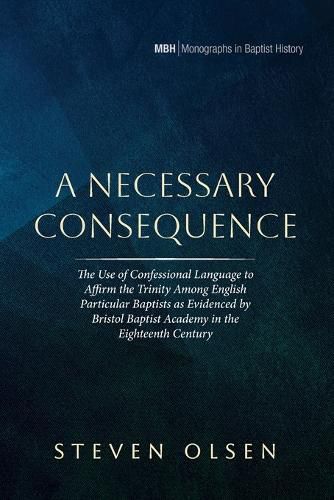
Is agreement on the language of Scripture sufficient to determine agreement on doctrines? Or is it possible for individuals with differing doctrines to agree on the language of Scripture? If so, how can we ascertain what another truly believes? A Necessary Consequence is a historical study and evaluation of the necessity of using confessional language to clarify one's beliefs based on Scripture. English Baptists in the seventeenth century witnessed the rise of antitrinitarianism. In response, General Baptists used only scriptural language to discuss the Trinity, thereby weakening their doctrine as antitrinitarian views were tolerated. However, Particular Baptists entered the eighteenth century stronger having clearly stated their belief with confessional trinitarian language. The Salters' Hall Debates in 1719 highlighted the divide in these two approaches. In 1720, Broadmead Church inaugurated Bristol Baptist Academy with the conviction of imparting sound confessional doctrine to its alumni.
$9.00 standard shipping within Australia
FREE standard shipping within Australia for orders over $100.00
Express & International shipping calculated at checkout
Stock availability can be subject to change without notice. We recommend calling the shop or contacting our online team to check availability of low stock items. Please see our Shopping Online page for more details.
Is agreement on the language of Scripture sufficient to determine agreement on doctrines? Or is it possible for individuals with differing doctrines to agree on the language of Scripture? If so, how can we ascertain what another truly believes? A Necessary Consequence is a historical study and evaluation of the necessity of using confessional language to clarify one's beliefs based on Scripture. English Baptists in the seventeenth century witnessed the rise of antitrinitarianism. In response, General Baptists used only scriptural language to discuss the Trinity, thereby weakening their doctrine as antitrinitarian views were tolerated. However, Particular Baptists entered the eighteenth century stronger having clearly stated their belief with confessional trinitarian language. The Salters' Hall Debates in 1719 highlighted the divide in these two approaches. In 1720, Broadmead Church inaugurated Bristol Baptist Academy with the conviction of imparting sound confessional doctrine to its alumni.
Search our extensive online catalogue.
