Readings Newsletter
Become a Readings Member to make your shopping experience even easier.
Sign in or sign up for free!
You’re not far away from qualifying for FREE standard shipping within Australia
You’ve qualified for FREE standard shipping within Australia
The cart is loading…


This title is printed to order. This book may have been self-published. If so, we cannot guarantee the quality of the content. In the main most books will have gone through the editing process however some may not. We therefore suggest that you be aware of this before ordering this book. If in doubt check either the author or publisher’s details as we are unable to accept any returns unless they are faulty. Please contact us if you have any questions.
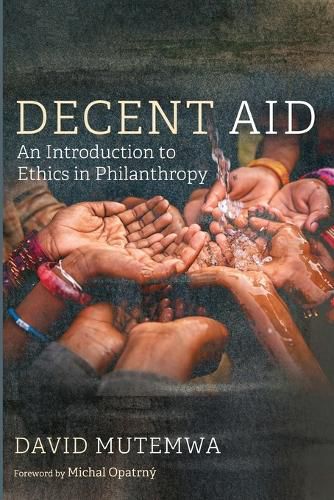
This book, Decent Aid: An Introduction to Ethics in Philanthropy, by David Mutemwa is a tour de force in the realm of philanthropic ethics research as it invites scholars, practitioners, and policymakers alike to engage in thoughtful dialogue on the ethical imperatives that should guide philanthropic strategies in developing regions, particularly in Africa. At its apex, it contributes toward making aid provision an ethical matter as the author proposes a model for ethical evaluation of philanthropic strategies from an interdisciplinary perspective comprising social work, common law, and practical theology.
Besides its significance in the current field of discourse and research, this book also exposes the global influence on African regions exerted through some so-called international charitable or non-governmental organizations (NGOs). The author employs a combination of Western theories and methodological approaches and traditional African philosophy, making it possible to understand the ethical dimensions of philanthropy both in an African context and from a Western perspective. This will help charitable organizations to avoid implementing strategies that could be unethical from the local perspective, a critical aspect for both local communities and international organizations as it guides them in the best practices to adopt while implementing their projects in African contexts.
$9.00 standard shipping within Australia
FREE standard shipping within Australia for orders over $100.00
Express & International shipping calculated at checkout
Stock availability can be subject to change without notice. We recommend calling the shop or contacting our online team to check availability of low stock items. Please see our Shopping Online page for more details.
This title is printed to order. This book may have been self-published. If so, we cannot guarantee the quality of the content. In the main most books will have gone through the editing process however some may not. We therefore suggest that you be aware of this before ordering this book. If in doubt check either the author or publisher’s details as we are unable to accept any returns unless they are faulty. Please contact us if you have any questions.
This book, Decent Aid: An Introduction to Ethics in Philanthropy, by David Mutemwa is a tour de force in the realm of philanthropic ethics research as it invites scholars, practitioners, and policymakers alike to engage in thoughtful dialogue on the ethical imperatives that should guide philanthropic strategies in developing regions, particularly in Africa. At its apex, it contributes toward making aid provision an ethical matter as the author proposes a model for ethical evaluation of philanthropic strategies from an interdisciplinary perspective comprising social work, common law, and practical theology.
Besides its significance in the current field of discourse and research, this book also exposes the global influence on African regions exerted through some so-called international charitable or non-governmental organizations (NGOs). The author employs a combination of Western theories and methodological approaches and traditional African philosophy, making it possible to understand the ethical dimensions of philanthropy both in an African context and from a Western perspective. This will help charitable organizations to avoid implementing strategies that could be unethical from the local perspective, a critical aspect for both local communities and international organizations as it guides them in the best practices to adopt while implementing their projects in African contexts.
Search our extensive online catalogue.
