Readings Newsletter
Become a Readings Member to make your shopping experience even easier.
Sign in or sign up for free!
You’re not far away from qualifying for FREE standard shipping within Australia
You’ve qualified for FREE standard shipping within Australia
The cart is loading…


This title is printed to order. This book may have been self-published. If so, we cannot guarantee the quality of the content. In the main most books will have gone through the editing process however some may not. We therefore suggest that you be aware of this before ordering this book. If in doubt check either the author or publisher’s details as we are unable to accept any returns unless they are faulty. Please contact us if you have any questions.
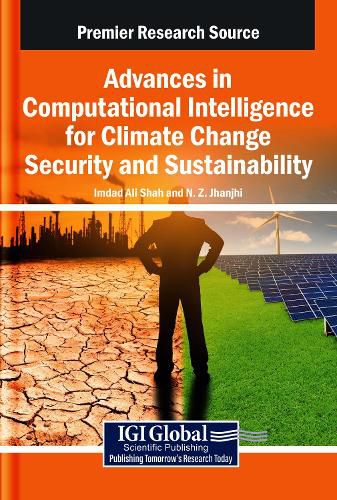
Artificial intelligence (AI) contributes to the fight against climate change. Existing AI systems include tools that predict weather, track icebergs, and identify pollution. Sustainability transitions transform major socio-technical systems of provision and use in areas such as energy, water, mobility, and food towards more sustainable ways of production and consumption. This multi-disciplinary field has inputs from economics, science and technology studies, engineering, computer science, business intelligence, and more. Along with sustainability, systems and security have become integral parts of the infrastructure and economies of various countries. Advances in Computational Intelligence for Climate Change Security and Sustainability serves as a source of innovation, exploring complexities of computational intelligence in energy, water, mobility, pollution, predicting weather, environment, and agriculture. It examines sustainable ways of production and consumption while providing a roadmap for overcoming the limitations posed by small sample sizes. Covering topics such as environmental control, solar mirror durability, performance management, this book is an excellent resource for computer scientists, meteorologists, environmentalists, engineers, economists, researchers, academicians, and more.
$9.00 standard shipping within Australia
FREE standard shipping within Australia for orders over $100.00
Express & International shipping calculated at checkout
Stock availability can be subject to change without notice. We recommend calling the shop or contacting our online team to check availability of low stock items. Please see our Shopping Online page for more details.
This title is printed to order. This book may have been self-published. If so, we cannot guarantee the quality of the content. In the main most books will have gone through the editing process however some may not. We therefore suggest that you be aware of this before ordering this book. If in doubt check either the author or publisher’s details as we are unable to accept any returns unless they are faulty. Please contact us if you have any questions.
Artificial intelligence (AI) contributes to the fight against climate change. Existing AI systems include tools that predict weather, track icebergs, and identify pollution. Sustainability transitions transform major socio-technical systems of provision and use in areas such as energy, water, mobility, and food towards more sustainable ways of production and consumption. This multi-disciplinary field has inputs from economics, science and technology studies, engineering, computer science, business intelligence, and more. Along with sustainability, systems and security have become integral parts of the infrastructure and economies of various countries. Advances in Computational Intelligence for Climate Change Security and Sustainability serves as a source of innovation, exploring complexities of computational intelligence in energy, water, mobility, pollution, predicting weather, environment, and agriculture. It examines sustainable ways of production and consumption while providing a roadmap for overcoming the limitations posed by small sample sizes. Covering topics such as environmental control, solar mirror durability, performance management, this book is an excellent resource for computer scientists, meteorologists, environmentalists, engineers, economists, researchers, academicians, and more.
Search our extensive online catalogue.
