Readings Newsletter
Become a Readings Member to make your shopping experience even easier.
Sign in or sign up for free!
You’re not far away from qualifying for FREE standard shipping within Australia
You’ve qualified for FREE standard shipping within Australia
The cart is loading…


This title is printed to order. This book may have been self-published. If so, we cannot guarantee the quality of the content. In the main most books will have gone through the editing process however some may not. We therefore suggest that you be aware of this before ordering this book. If in doubt check either the author or publisher’s details as we are unable to accept any returns unless they are faulty. Please contact us if you have any questions.
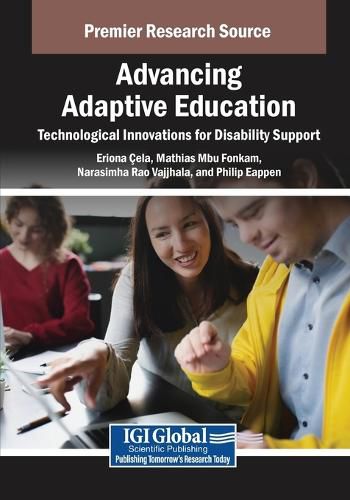
Advancing adaptive education through technological innovations is crucial in creating inclusive learning environments that cater to students with disabilities. With the development of assistive technologies, personalized learning tools, and digital platforms, educators can offer personalized educational experiences to accommodate diverse learning needs. From speech recognition software and text-to-speech applications to AI-powered tutoring systems and virtual classrooms, these innovations enable students with disabilities to access education for which they were previously unable. By harnessing technology, adaptive education supports academic achievement while fostering greater independence and confidence among learners, ensuring all students have the opportunity to succeed. Advancing Adaptive Education: Technological Innovations for Disability Support explores the intersection of education and technology, focusing on how adaptive learning strategies and tools can support students with disabilities. It provides a comprehensive examination of how technologies like artificial intelligence, machine learning, and assistive tools can be leveraged to create inclusive and personalized learning experiences. This book covers topics such as assistive technology, machine learning, and student disability, and is a useful resource for educators, engineers, computer scientists, sociologists, academicians, and researchers.
$9.00 standard shipping within Australia
FREE standard shipping within Australia for orders over $100.00
Express & International shipping calculated at checkout
Stock availability can be subject to change without notice. We recommend calling the shop or contacting our online team to check availability of low stock items. Please see our Shopping Online page for more details.
This title is printed to order. This book may have been self-published. If so, we cannot guarantee the quality of the content. In the main most books will have gone through the editing process however some may not. We therefore suggest that you be aware of this before ordering this book. If in doubt check either the author or publisher’s details as we are unable to accept any returns unless they are faulty. Please contact us if you have any questions.
Advancing adaptive education through technological innovations is crucial in creating inclusive learning environments that cater to students with disabilities. With the development of assistive technologies, personalized learning tools, and digital platforms, educators can offer personalized educational experiences to accommodate diverse learning needs. From speech recognition software and text-to-speech applications to AI-powered tutoring systems and virtual classrooms, these innovations enable students with disabilities to access education for which they were previously unable. By harnessing technology, adaptive education supports academic achievement while fostering greater independence and confidence among learners, ensuring all students have the opportunity to succeed. Advancing Adaptive Education: Technological Innovations for Disability Support explores the intersection of education and technology, focusing on how adaptive learning strategies and tools can support students with disabilities. It provides a comprehensive examination of how technologies like artificial intelligence, machine learning, and assistive tools can be leveraged to create inclusive and personalized learning experiences. This book covers topics such as assistive technology, machine learning, and student disability, and is a useful resource for educators, engineers, computer scientists, sociologists, academicians, and researchers.
Search our extensive online catalogue.
