Readings Newsletter
Become a Readings Member to make your shopping experience even easier.
Sign in or sign up for free!
You’re not far away from qualifying for FREE standard shipping within Australia
You’ve qualified for FREE standard shipping within Australia
The cart is loading…


This title is printed to order. This book may have been self-published. If so, we cannot guarantee the quality of the content. In the main most books will have gone through the editing process however some may not. We therefore suggest that you be aware of this before ordering this book. If in doubt check either the author or publisher’s details as we are unable to accept any returns unless they are faulty. Please contact us if you have any questions.
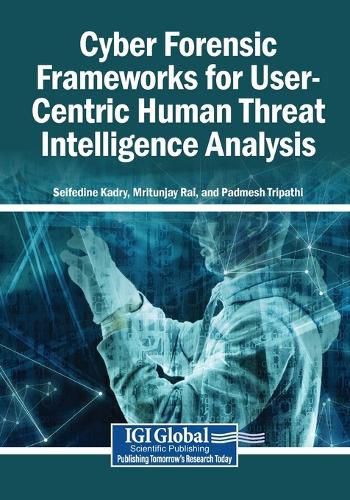
As cyber threats grow in scale, sophistication, and human involvement, traditional technical defenses struggle to protect digital ecosystems. Cyber forensic frameworks evolve toward user-centric human threat intelligence analysis, recognizing that attackers, insiders, and victims are all human actors with distinct behaviors, motivations, and decision patterns. By integrating behavioral analytics, digital trace evidence, and contextual user data, these frameworks enable investigators to move toward proactive threat identification and attribution. Focusing on the human dimension of cyber forensics may further enhance the accuracy of threat intelligence while supporting more adaptive, ethical, and resilient security strategies in complex digital environments. Cyber Forensic Frameworks for User-Centric Human Threat Intelligence Analysis explores the integration of cyber forensic methodologies with human threat intelligence to enhance security and investigative measures against sophisticated cyber threats. It provides a structured framework for analyzing human-driven cyber threats, incorporating behavioral analysis, AI, and forensic technologies. This book covers topics such as cybercrime, social engineering, and privacy rights, and is a useful resource for engineers, security professionals, academicians, researchers, and scientists.
$9.00 standard shipping within Australia
FREE standard shipping within Australia for orders over $100.00
Express & International shipping calculated at checkout
Stock availability can be subject to change without notice. We recommend calling the shop or contacting our online team to check availability of low stock items. Please see our Shopping Online page for more details.
This title is printed to order. This book may have been self-published. If so, we cannot guarantee the quality of the content. In the main most books will have gone through the editing process however some may not. We therefore suggest that you be aware of this before ordering this book. If in doubt check either the author or publisher’s details as we are unable to accept any returns unless they are faulty. Please contact us if you have any questions.
As cyber threats grow in scale, sophistication, and human involvement, traditional technical defenses struggle to protect digital ecosystems. Cyber forensic frameworks evolve toward user-centric human threat intelligence analysis, recognizing that attackers, insiders, and victims are all human actors with distinct behaviors, motivations, and decision patterns. By integrating behavioral analytics, digital trace evidence, and contextual user data, these frameworks enable investigators to move toward proactive threat identification and attribution. Focusing on the human dimension of cyber forensics may further enhance the accuracy of threat intelligence while supporting more adaptive, ethical, and resilient security strategies in complex digital environments. Cyber Forensic Frameworks for User-Centric Human Threat Intelligence Analysis explores the integration of cyber forensic methodologies with human threat intelligence to enhance security and investigative measures against sophisticated cyber threats. It provides a structured framework for analyzing human-driven cyber threats, incorporating behavioral analysis, AI, and forensic technologies. This book covers topics such as cybercrime, social engineering, and privacy rights, and is a useful resource for engineers, security professionals, academicians, researchers, and scientists.
Search our extensive online catalogue.
