Readings Newsletter
Become a Readings Member to make your shopping experience even easier.
Sign in or sign up for free!
You’re not far away from qualifying for FREE standard shipping within Australia
You’ve qualified for FREE standard shipping within Australia
The cart is loading…


This title is printed to order. This book may have been self-published. If so, we cannot guarantee the quality of the content. In the main most books will have gone through the editing process however some may not. We therefore suggest that you be aware of this before ordering this book. If in doubt check either the author or publisher’s details as we are unable to accept any returns unless they are faulty. Please contact us if you have any questions.
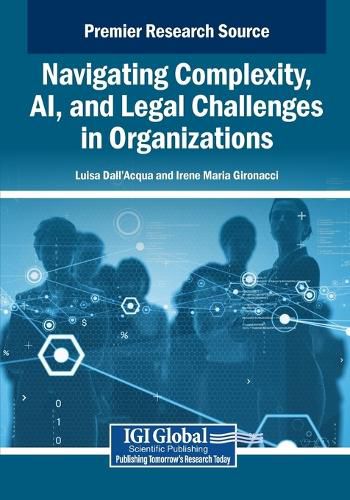
Artificial intelligence (AI) is a strategic asset in global politics, with countries investing heavily in AI research and development to gain competitive advantages. The complexity of AI and its legal implications necessitates collaboration across disciplines such as technology, law, and ethics, fostering a holistic approach to addressing AI-related challenges. Research in AI drives technological advancements, leading to new applications and solutions in various fields, from healthcare to finance. AI and automation are transforming the job market, creating new opportunities, while also displacing certain roles. This shift requires a focus on reskilling and education. Governments are grappling with how to regulate AI to protect citizens while fostering innovation and addressing issues like data privacy, surveillance, and the ethical use of AI. Navigating Complexity, AI, and Legal Challenges in Organizations explores the evolving landscape of modern organizations amidst rapid technological advancements and increasing legal complexities. It examines how AI is transforming organizational structures, decision-making processes, and operational efficiency. Covering topics such as adaptive learning, digital citizenship, and threat assessment, this book is an excellent resource for executives, managers, HR professionals, organizational psychologists, researchers, academicians, and more.
$9.00 standard shipping within Australia
FREE standard shipping within Australia for orders over $100.00
Express & International shipping calculated at checkout
Stock availability can be subject to change without notice. We recommend calling the shop or contacting our online team to check availability of low stock items. Please see our Shopping Online page for more details.
This title is printed to order. This book may have been self-published. If so, we cannot guarantee the quality of the content. In the main most books will have gone through the editing process however some may not. We therefore suggest that you be aware of this before ordering this book. If in doubt check either the author or publisher’s details as we are unable to accept any returns unless they are faulty. Please contact us if you have any questions.
Artificial intelligence (AI) is a strategic asset in global politics, with countries investing heavily in AI research and development to gain competitive advantages. The complexity of AI and its legal implications necessitates collaboration across disciplines such as technology, law, and ethics, fostering a holistic approach to addressing AI-related challenges. Research in AI drives technological advancements, leading to new applications and solutions in various fields, from healthcare to finance. AI and automation are transforming the job market, creating new opportunities, while also displacing certain roles. This shift requires a focus on reskilling and education. Governments are grappling with how to regulate AI to protect citizens while fostering innovation and addressing issues like data privacy, surveillance, and the ethical use of AI. Navigating Complexity, AI, and Legal Challenges in Organizations explores the evolving landscape of modern organizations amidst rapid technological advancements and increasing legal complexities. It examines how AI is transforming organizational structures, decision-making processes, and operational efficiency. Covering topics such as adaptive learning, digital citizenship, and threat assessment, this book is an excellent resource for executives, managers, HR professionals, organizational psychologists, researchers, academicians, and more.
Search our extensive online catalogue.
