Readings Newsletter
Become a Readings Member to make your shopping experience even easier.
Sign in or sign up for free!
You’re not far away from qualifying for FREE standard shipping within Australia
You’ve qualified for FREE standard shipping within Australia
The cart is loading…


This title is printed to order. This book may have been self-published. If so, we cannot guarantee the quality of the content. In the main most books will have gone through the editing process however some may not. We therefore suggest that you be aware of this before ordering this book. If in doubt check either the author or publisher’s details as we are unable to accept any returns unless they are faulty. Please contact us if you have any questions.
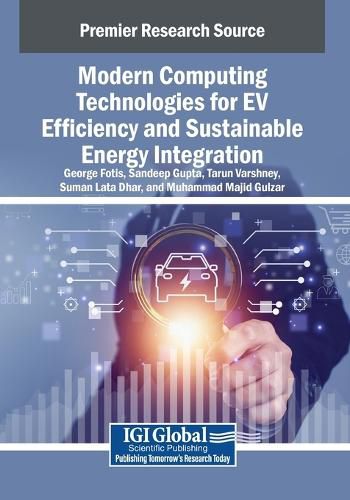
The market for electric vehicles (EVs) and sustainable energy solutions is experiencing exponential growth, driven by increasing environmental concerns and the need for sustainable alternatives to traditional transportation and energy sources. From intelligent energy management systems to autonomous driving algorithms, modern computing technology is shaping the future of transportation and energy. Therefore, modern computing can drive industrial growth and foster sustainable infrastructure that supports both economic development and environmental sustainability. The efficient use of computing technologies to minimize energy waste, optimize EV charging, and promote renewable energy integration offers a clear path to mitigating climate change. Modern Computing Technologies for EV Efficiency and Sustainable Energy Integration explores the intersection of cutting-edge computing technology and the rapidly evolving fields of EVs and renewable energy. It delves into how advancements in computing are driving innovation in these sectors, shaping the future of transportation and energy sustainability. Covering topics such as interoperability, control strategies, and hybrid energy management, this book is an excellent resource for engineers, technologists, environmentalists, sustainability experts, policymakers, professionals, researchers, scholars, academicians, and more.
$9.00 standard shipping within Australia
FREE standard shipping within Australia for orders over $100.00
Express & International shipping calculated at checkout
Stock availability can be subject to change without notice. We recommend calling the shop or contacting our online team to check availability of low stock items. Please see our Shopping Online page for more details.
This title is printed to order. This book may have been self-published. If so, we cannot guarantee the quality of the content. In the main most books will have gone through the editing process however some may not. We therefore suggest that you be aware of this before ordering this book. If in doubt check either the author or publisher’s details as we are unable to accept any returns unless they are faulty. Please contact us if you have any questions.
The market for electric vehicles (EVs) and sustainable energy solutions is experiencing exponential growth, driven by increasing environmental concerns and the need for sustainable alternatives to traditional transportation and energy sources. From intelligent energy management systems to autonomous driving algorithms, modern computing technology is shaping the future of transportation and energy. Therefore, modern computing can drive industrial growth and foster sustainable infrastructure that supports both economic development and environmental sustainability. The efficient use of computing technologies to minimize energy waste, optimize EV charging, and promote renewable energy integration offers a clear path to mitigating climate change. Modern Computing Technologies for EV Efficiency and Sustainable Energy Integration explores the intersection of cutting-edge computing technology and the rapidly evolving fields of EVs and renewable energy. It delves into how advancements in computing are driving innovation in these sectors, shaping the future of transportation and energy sustainability. Covering topics such as interoperability, control strategies, and hybrid energy management, this book is an excellent resource for engineers, technologists, environmentalists, sustainability experts, policymakers, professionals, researchers, scholars, academicians, and more.
Search our extensive online catalogue.
