Readings Newsletter
Become a Readings Member to make your shopping experience even easier.
Sign in or sign up for free!
You’re not far away from qualifying for FREE standard shipping within Australia
You’ve qualified for FREE standard shipping within Australia
The cart is loading…


This title is printed to order. This book may have been self-published. If so, we cannot guarantee the quality of the content. In the main most books will have gone through the editing process however some may not. We therefore suggest that you be aware of this before ordering this book. If in doubt check either the author or publisher’s details as we are unable to accept any returns unless they are faulty. Please contact us if you have any questions.
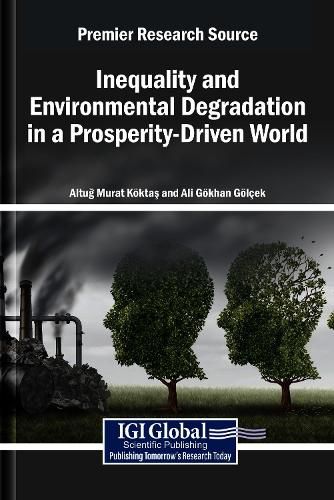
As organizations continue to be driven by economic growth and material prosperity, the consequences of unchecked development become difficult to ignore. While wealth and technological progress have decreased poverty, they have also increased global inequalities and accelerated environmental degradation. The gap between economic status widens, with marginalized communities bearing the brunt of pollution, resource depletion, and climate change. As industries expand and natural ecosystems shrink, current models of prosperity become unsustainable. Addressing these interconnected crises requires a critical rethinking of progress, redefining prosperity and its applications in socio-economic statuses. Inequality and Environmental Degradation in a Prosperity-Driven World addresses the dark side of economic growth concepts. It examines the effects of modern economic policies on social inequality and environmental destruction, highlighting the fundamental differences between economic growth and development. This book covers topics such as disaster management, climatology, and global business, and is a useful resource for business owners, policymakers, government officials, sociologists, economists, academicians, researchers, and environmental scientists.
$9.00 standard shipping within Australia
FREE standard shipping within Australia for orders over $100.00
Express & International shipping calculated at checkout
Stock availability can be subject to change without notice. We recommend calling the shop or contacting our online team to check availability of low stock items. Please see our Shopping Online page for more details.
This title is printed to order. This book may have been self-published. If so, we cannot guarantee the quality of the content. In the main most books will have gone through the editing process however some may not. We therefore suggest that you be aware of this before ordering this book. If in doubt check either the author or publisher’s details as we are unable to accept any returns unless they are faulty. Please contact us if you have any questions.
As organizations continue to be driven by economic growth and material prosperity, the consequences of unchecked development become difficult to ignore. While wealth and technological progress have decreased poverty, they have also increased global inequalities and accelerated environmental degradation. The gap between economic status widens, with marginalized communities bearing the brunt of pollution, resource depletion, and climate change. As industries expand and natural ecosystems shrink, current models of prosperity become unsustainable. Addressing these interconnected crises requires a critical rethinking of progress, redefining prosperity and its applications in socio-economic statuses. Inequality and Environmental Degradation in a Prosperity-Driven World addresses the dark side of economic growth concepts. It examines the effects of modern economic policies on social inequality and environmental destruction, highlighting the fundamental differences between economic growth and development. This book covers topics such as disaster management, climatology, and global business, and is a useful resource for business owners, policymakers, government officials, sociologists, economists, academicians, researchers, and environmental scientists.
Search our extensive online catalogue.
