Readings Newsletter
Become a Readings Member to make your shopping experience even easier.
Sign in or sign up for free!
You’re not far away from qualifying for FREE standard shipping within Australia
You’ve qualified for FREE standard shipping within Australia
The cart is loading…


This title is printed to order. This book may have been self-published. If so, we cannot guarantee the quality of the content. In the main most books will have gone through the editing process however some may not. We therefore suggest that you be aware of this before ordering this book. If in doubt check either the author or publisher’s details as we are unable to accept any returns unless they are faulty. Please contact us if you have any questions.
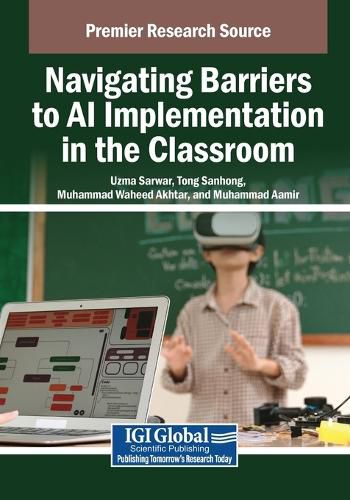
As artificial intelligence (AI) technologies advance, their potential to transform education is promising. From personalized learning to intelligent tutoring systems, AI offers tools that enhance student engagement and streamline administrative tasks. However, implementing AI in the classroom comes with challenges. Educators, administrators, and policymakers must navigate barriers, including limited technical infrastructure, data privacy concerns, lack of teacher training, and equity access across schools. Understanding and addressing these obstacles ensures that AI enhances educational equity rather than increasing existing divides. Further exploration may reveal key challenges and identify strategies for integrating AI into classroom practice. Navigating Barriers to AI Implementation in the Classroom investigates the ways in which AI alters education by streamlining administrative tasks, introducing new individualized learning opportunities, and transforming instructional strategies. It examines the capabilities of AI in education, including intelligent instruction, automated assessments, data-driven insights, adaptive learning systems, and ethical issues related to its employment in classrooms. This book covers topics such as classroom management, policymaking, and student engagement, and is a useful resource for educators, computer engineers, policymakers, academicians, researchers, and scientists.
$9.00 standard shipping within Australia
FREE standard shipping within Australia for orders over $100.00
Express & International shipping calculated at checkout
Stock availability can be subject to change without notice. We recommend calling the shop or contacting our online team to check availability of low stock items. Please see our Shopping Online page for more details.
This title is printed to order. This book may have been self-published. If so, we cannot guarantee the quality of the content. In the main most books will have gone through the editing process however some may not. We therefore suggest that you be aware of this before ordering this book. If in doubt check either the author or publisher’s details as we are unable to accept any returns unless they are faulty. Please contact us if you have any questions.
As artificial intelligence (AI) technologies advance, their potential to transform education is promising. From personalized learning to intelligent tutoring systems, AI offers tools that enhance student engagement and streamline administrative tasks. However, implementing AI in the classroom comes with challenges. Educators, administrators, and policymakers must navigate barriers, including limited technical infrastructure, data privacy concerns, lack of teacher training, and equity access across schools. Understanding and addressing these obstacles ensures that AI enhances educational equity rather than increasing existing divides. Further exploration may reveal key challenges and identify strategies for integrating AI into classroom practice. Navigating Barriers to AI Implementation in the Classroom investigates the ways in which AI alters education by streamlining administrative tasks, introducing new individualized learning opportunities, and transforming instructional strategies. It examines the capabilities of AI in education, including intelligent instruction, automated assessments, data-driven insights, adaptive learning systems, and ethical issues related to its employment in classrooms. This book covers topics such as classroom management, policymaking, and student engagement, and is a useful resource for educators, computer engineers, policymakers, academicians, researchers, and scientists.
Search our extensive online catalogue.
