Readings Newsletter
Become a Readings Member to make your shopping experience even easier.
Sign in or sign up for free!
You’re not far away from qualifying for FREE standard shipping within Australia
You’ve qualified for FREE standard shipping within Australia
The cart is loading…


This title is printed to order. This book may have been self-published. If so, we cannot guarantee the quality of the content. In the main most books will have gone through the editing process however some may not. We therefore suggest that you be aware of this before ordering this book. If in doubt check either the author or publisher’s details as we are unable to accept any returns unless they are faulty. Please contact us if you have any questions.
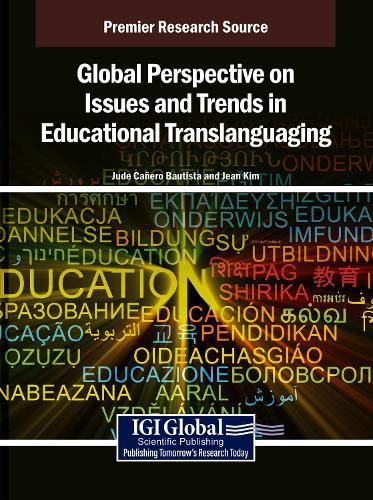
The growing superdiversity around the world now appears to be the norm. In traditional English-speaking inner circle nations, it is becoming increasingly rare to find classrooms with students who come from monocultural and monolingual backgrounds. However, teaching practices remain based on Anglocentric standards and perspectives even when most of the English speakers in the world are no longer just the monolingual speakers of the language. Research in bilingualism and multilingualism reverberate the potential of translanguaging as a pedagogical practice. This is to leverage all the linguistic, cultural, and semiotic resources of learners so that they can actively engage in the language, literacy, and content area learning processes in the classroom. However, even though it has gained ground in theory and research, it has not been upheld in instructional practice, especially in the Anglophone nations. While some regions view translanguaging as a pathway to educational justice, others face barriers such as limited resources, administrative constraints, or lack of teacher training. Despite its promise, concerns remain around the selective use of languages and the risk of reinforcing existing linguistic hierarchies. Global Perspective on Issues and Trends in Educational Translanguaging explores translanguaging pedagogies from both monolingual English-speaking contexts and multilingual and multicultural contexts. It examines a monolingual-multilingual pairing of theoretical, research, and practical perspectives from around the world, assessing how translanguaging pedagogies are practiced and researched worldwide. This book covers topics such as indigenous studies, migrant learners, and pedagogy, and is a useful resource for educators, language experts, academicians, researchers, and scientists.
$9.00 standard shipping within Australia
FREE standard shipping within Australia for orders over $100.00
Express & International shipping calculated at checkout
Stock availability can be subject to change without notice. We recommend calling the shop or contacting our online team to check availability of low stock items. Please see our Shopping Online page for more details.
This title is printed to order. This book may have been self-published. If so, we cannot guarantee the quality of the content. In the main most books will have gone through the editing process however some may not. We therefore suggest that you be aware of this before ordering this book. If in doubt check either the author or publisher’s details as we are unable to accept any returns unless they are faulty. Please contact us if you have any questions.
The growing superdiversity around the world now appears to be the norm. In traditional English-speaking inner circle nations, it is becoming increasingly rare to find classrooms with students who come from monocultural and monolingual backgrounds. However, teaching practices remain based on Anglocentric standards and perspectives even when most of the English speakers in the world are no longer just the monolingual speakers of the language. Research in bilingualism and multilingualism reverberate the potential of translanguaging as a pedagogical practice. This is to leverage all the linguistic, cultural, and semiotic resources of learners so that they can actively engage in the language, literacy, and content area learning processes in the classroom. However, even though it has gained ground in theory and research, it has not been upheld in instructional practice, especially in the Anglophone nations. While some regions view translanguaging as a pathway to educational justice, others face barriers such as limited resources, administrative constraints, or lack of teacher training. Despite its promise, concerns remain around the selective use of languages and the risk of reinforcing existing linguistic hierarchies. Global Perspective on Issues and Trends in Educational Translanguaging explores translanguaging pedagogies from both monolingual English-speaking contexts and multilingual and multicultural contexts. It examines a monolingual-multilingual pairing of theoretical, research, and practical perspectives from around the world, assessing how translanguaging pedagogies are practiced and researched worldwide. This book covers topics such as indigenous studies, migrant learners, and pedagogy, and is a useful resource for educators, language experts, academicians, researchers, and scientists.
Search our extensive online catalogue.
