Readings Newsletter
Become a Readings Member to make your shopping experience even easier.
Sign in or sign up for free!
You’re not far away from qualifying for FREE standard shipping within Australia
You’ve qualified for FREE standard shipping within Australia
The cart is loading…


This title is printed to order. This book may have been self-published. If so, we cannot guarantee the quality of the content. In the main most books will have gone through the editing process however some may not. We therefore suggest that you be aware of this before ordering this book. If in doubt check either the author or publisher’s details as we are unable to accept any returns unless they are faulty. Please contact us if you have any questions.
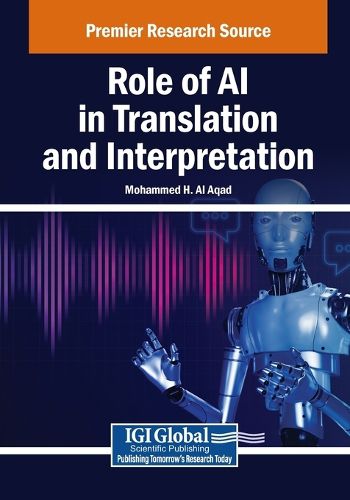
Machine translation tools and AI-powered speech recognition are being integrated into professional workflows. AI has also developed in the fields of translation and interpretation, increasing the ability to communicate with people across different languages. The advancements in AI-driven language technologies have ethical and professional implications regarding changes they have made and their ability to translate accurately in sensitive contexts. Nonetheless, they are crucial for advancing communication across languages and cultures. They are a key tool for greater global collaboration on a personal and professional level. Role of AI in Translation and Interpretation explores the evolving roles of human translators and interpreters as they adapt to work alongside AI, while highlighting the limitations of current technologies and the importance of human expertise in maintaining linguistic and cultural accuracy. It provides a nuanced perspective on the strengths and limitations of AI-driven translation tools, fueling discussions on the future of human-machine collaboration in language services. Covering topics such as translation accuracy, cultural complexities, and quality assessments, this book is an excellent resource for translators, interpreters, language service providers, computational linguists, engineers, researchers, academicians, and more.
$9.00 standard shipping within Australia
FREE standard shipping within Australia for orders over $100.00
Express & International shipping calculated at checkout
Stock availability can be subject to change without notice. We recommend calling the shop or contacting our online team to check availability of low stock items. Please see our Shopping Online page for more details.
This title is printed to order. This book may have been self-published. If so, we cannot guarantee the quality of the content. In the main most books will have gone through the editing process however some may not. We therefore suggest that you be aware of this before ordering this book. If in doubt check either the author or publisher’s details as we are unable to accept any returns unless they are faulty. Please contact us if you have any questions.
Machine translation tools and AI-powered speech recognition are being integrated into professional workflows. AI has also developed in the fields of translation and interpretation, increasing the ability to communicate with people across different languages. The advancements in AI-driven language technologies have ethical and professional implications regarding changes they have made and their ability to translate accurately in sensitive contexts. Nonetheless, they are crucial for advancing communication across languages and cultures. They are a key tool for greater global collaboration on a personal and professional level. Role of AI in Translation and Interpretation explores the evolving roles of human translators and interpreters as they adapt to work alongside AI, while highlighting the limitations of current technologies and the importance of human expertise in maintaining linguistic and cultural accuracy. It provides a nuanced perspective on the strengths and limitations of AI-driven translation tools, fueling discussions on the future of human-machine collaboration in language services. Covering topics such as translation accuracy, cultural complexities, and quality assessments, this book is an excellent resource for translators, interpreters, language service providers, computational linguists, engineers, researchers, academicians, and more.
Search our extensive online catalogue.
