Readings Newsletter
Become a Readings Member to make your shopping experience even easier.
Sign in or sign up for free!
You’re not far away from qualifying for FREE standard shipping within Australia
You’ve qualified for FREE standard shipping within Australia
The cart is loading…


This title is printed to order. This book may have been self-published. If so, we cannot guarantee the quality of the content. In the main most books will have gone through the editing process however some may not. We therefore suggest that you be aware of this before ordering this book. If in doubt check either the author or publisher’s details as we are unable to accept any returns unless they are faulty. Please contact us if you have any questions.
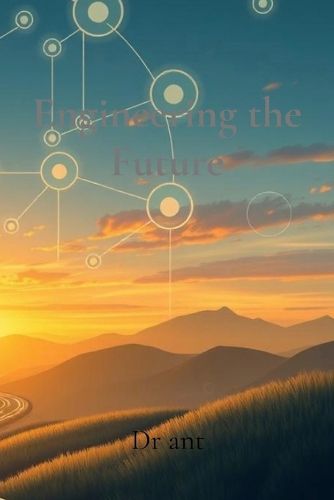
In an era where engineering systems are growing ever more complex, dynamic, and interconnected, the fusion of artificial intelligence with classical control and optimization is redefining what is possible in automation, robotics, and industrial processes. This work is a sweeping, rigorous, and forward-looking exploration of this transformative landscape, offering both a foundational and practical guide for engineers, researchers, and advanced students seeking to master the next generation of intelligent control systems.
The book opens by grounding the reader in the essential principles of optimal control, convex optimization, and system modeling. It revisits the classical paradigms-open-loop and closed-loop control, the calculus of variations, Pontryagin's Minimum Principle, and the Linear Quadratic Regulator (LQR)-not as relics of the past, but as the mathematical bedrock upon which modern AI-augmented strategies are built. Through lucid explanations and illustrative examples, it demonstrates how these time-honored tools remain vital, even as the field pivots toward data-driven and learning-based approaches.
A central theme is the seamless integration of machine learning into the control loop. The text delves into system identification from data, showing how neural networks, Gaussian processes, and other learning algorithms can model complex, nonlinear, or poorly understood dynamics-often outperforming traditional analytical models in real-world scenarios. The reader is guided through the nuances of data acquisition, preprocessing, and validation, emphasizing the importance of robust, high-quality datasets for successful learning.
The narrative then advances to the cutting edge: reinforcement learning (RL) for control. Here, the book demystifies RL fundamentals, Markov Decision Processes, value-based and policy-based methods, and the emergence of deep RL. It explores how RL agents can learn optimal control policies through interaction, even in the absence of explicit system models, and how these agents can be safely deployed in physical systems through the use of safety layers, constraint handling, and robust verification techniques.
Safety and reliability are recurring motifs. The book addresses the critical need for constraint-aware learning, formal verification, and the design of safety shields that guarantee operation within prescribed boundaries-even as controllers adapt and learn online. It presents Model Predictive Control (MPC) as a unifying framework, showing how AI can enhance prediction models, cost functions, and optimization solvers, enabling MPC to tackle previously intractable problems.
Industrial case studies-ranging from vehicle control and autonomous driving to wind turbine optimization-bring the theory to life, illustrating the tangible impact of AI-augmented control in practice. Laboratory exercises and implementation guides empower readers to experiment with real hardware and simulation environments, bridging the gap between theory and application.
Looking to the horizon, the book surveys future trends: explainable AI in control, lifelong learning, multi-agent systems, quantum computing, and the rise of digital twins. It closes with a thoughtful discussion of ethics, societal impact, and the open problems that will shape the next decade of intelligent automation.
Comprehensive yet accessible, is both a roadmap and a manifesto for the future of engineering-where learning, adaptation, and intelligence are at the core of every control system.
$9.00 standard shipping within Australia
FREE standard shipping within Australia for orders over $100.00
Express & International shipping calculated at checkout
Stock availability can be subject to change without notice. We recommend calling the shop or contacting our online team to check availability of low stock items. Please see our Shopping Online page for more details.
This title is printed to order. This book may have been self-published. If so, we cannot guarantee the quality of the content. In the main most books will have gone through the editing process however some may not. We therefore suggest that you be aware of this before ordering this book. If in doubt check either the author or publisher’s details as we are unable to accept any returns unless they are faulty. Please contact us if you have any questions.
In an era where engineering systems are growing ever more complex, dynamic, and interconnected, the fusion of artificial intelligence with classical control and optimization is redefining what is possible in automation, robotics, and industrial processes. This work is a sweeping, rigorous, and forward-looking exploration of this transformative landscape, offering both a foundational and practical guide for engineers, researchers, and advanced students seeking to master the next generation of intelligent control systems.
The book opens by grounding the reader in the essential principles of optimal control, convex optimization, and system modeling. It revisits the classical paradigms-open-loop and closed-loop control, the calculus of variations, Pontryagin's Minimum Principle, and the Linear Quadratic Regulator (LQR)-not as relics of the past, but as the mathematical bedrock upon which modern AI-augmented strategies are built. Through lucid explanations and illustrative examples, it demonstrates how these time-honored tools remain vital, even as the field pivots toward data-driven and learning-based approaches.
A central theme is the seamless integration of machine learning into the control loop. The text delves into system identification from data, showing how neural networks, Gaussian processes, and other learning algorithms can model complex, nonlinear, or poorly understood dynamics-often outperforming traditional analytical models in real-world scenarios. The reader is guided through the nuances of data acquisition, preprocessing, and validation, emphasizing the importance of robust, high-quality datasets for successful learning.
The narrative then advances to the cutting edge: reinforcement learning (RL) for control. Here, the book demystifies RL fundamentals, Markov Decision Processes, value-based and policy-based methods, and the emergence of deep RL. It explores how RL agents can learn optimal control policies through interaction, even in the absence of explicit system models, and how these agents can be safely deployed in physical systems through the use of safety layers, constraint handling, and robust verification techniques.
Safety and reliability are recurring motifs. The book addresses the critical need for constraint-aware learning, formal verification, and the design of safety shields that guarantee operation within prescribed boundaries-even as controllers adapt and learn online. It presents Model Predictive Control (MPC) as a unifying framework, showing how AI can enhance prediction models, cost functions, and optimization solvers, enabling MPC to tackle previously intractable problems.
Industrial case studies-ranging from vehicle control and autonomous driving to wind turbine optimization-bring the theory to life, illustrating the tangible impact of AI-augmented control in practice. Laboratory exercises and implementation guides empower readers to experiment with real hardware and simulation environments, bridging the gap between theory and application.
Looking to the horizon, the book surveys future trends: explainable AI in control, lifelong learning, multi-agent systems, quantum computing, and the rise of digital twins. It closes with a thoughtful discussion of ethics, societal impact, and the open problems that will shape the next decade of intelligent automation.
Comprehensive yet accessible, is both a roadmap and a manifesto for the future of engineering-where learning, adaptation, and intelligence are at the core of every control system.
Search our extensive online catalogue.
