Readings Newsletter
Become a Readings Member to make your shopping experience even easier.
Sign in or sign up for free!
You’re not far away from qualifying for FREE standard shipping within Australia
You’ve qualified for FREE standard shipping within Australia
The cart is loading…


This title is printed to order. This book may have been self-published. If so, we cannot guarantee the quality of the content. In the main most books will have gone through the editing process however some may not. We therefore suggest that you be aware of this before ordering this book. If in doubt check either the author or publisher’s details as we are unable to accept any returns unless they are faulty. Please contact us if you have any questions.
Behind every world-changing discovery lies a story of ambition, genius, and often, unintended consequence.
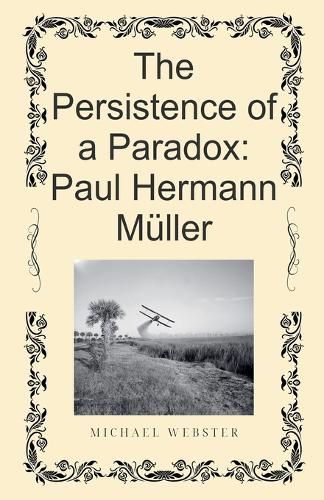
The story of Paul Hermann Mueller is the ultimate twentieth-century paradox. Born in 1899, this quiet, methodical Swiss chemist spent years in the lab, driven by the need to find an effective insecticide. His discovery of DDT was a scientific triumph, earning him the 1948 Nobel Prize in Physiology or Medicine and halting the catastrophic spread of diseases like typhus and malaria, saving millions of lives worldwide. Mueller was hailed as a humanitarian hero, his creation the foundation of modern public health campaigns across the globe.
Yet, the very chemical stability that made DDT a miracle cure also led to its downfall. Its extreme persistence caused it to accumulate and biomagnify up the food chain, leading to the widespread ecological damage documented by Rachel Carson's Silent Spring.
This comprehensive biography delves into the life of the man caught between scientific brilliance and catastrophic unintended consequences. Drawing on detailed analysis, archival research, and a cultural exploration of DDT's global impact, this book presents a nuanced, balanced appraisal of Mueller's character and methodical work. It illuminates the enduring global dilemma posed by his discovery: the tragic, ongoing tension between the immediate necessity of human well-being and the long-term integrity of the environment. Approx.178 pages, 34400 word count
$9.00 standard shipping within Australia
FREE standard shipping within Australia for orders over $100.00
Express & International shipping calculated at checkout
Stock availability can be subject to change without notice. We recommend calling the shop or contacting our online team to check availability of low stock items. Please see our Shopping Online page for more details.
This title is printed to order. This book may have been self-published. If so, we cannot guarantee the quality of the content. In the main most books will have gone through the editing process however some may not. We therefore suggest that you be aware of this before ordering this book. If in doubt check either the author or publisher’s details as we are unable to accept any returns unless they are faulty. Please contact us if you have any questions.
Behind every world-changing discovery lies a story of ambition, genius, and often, unintended consequence.
The story of Paul Hermann Mueller is the ultimate twentieth-century paradox. Born in 1899, this quiet, methodical Swiss chemist spent years in the lab, driven by the need to find an effective insecticide. His discovery of DDT was a scientific triumph, earning him the 1948 Nobel Prize in Physiology or Medicine and halting the catastrophic spread of diseases like typhus and malaria, saving millions of lives worldwide. Mueller was hailed as a humanitarian hero, his creation the foundation of modern public health campaigns across the globe.
Yet, the very chemical stability that made DDT a miracle cure also led to its downfall. Its extreme persistence caused it to accumulate and biomagnify up the food chain, leading to the widespread ecological damage documented by Rachel Carson's Silent Spring.
This comprehensive biography delves into the life of the man caught between scientific brilliance and catastrophic unintended consequences. Drawing on detailed analysis, archival research, and a cultural exploration of DDT's global impact, this book presents a nuanced, balanced appraisal of Mueller's character and methodical work. It illuminates the enduring global dilemma posed by his discovery: the tragic, ongoing tension between the immediate necessity of human well-being and the long-term integrity of the environment. Approx.178 pages, 34400 word count
Search our extensive online catalogue.
