Readings Newsletter
Become a Readings Member to make your shopping experience even easier.
Sign in or sign up for free!
You’re not far away from qualifying for FREE standard shipping within Australia
You’ve qualified for FREE standard shipping within Australia
The cart is loading…


This title is printed to order. This book may have been self-published. If so, we cannot guarantee the quality of the content. In the main most books will have gone through the editing process however some may not. We therefore suggest that you be aware of this before ordering this book. If in doubt check either the author or publisher’s details as we are unable to accept any returns unless they are faulty. Please contact us if you have any questions.
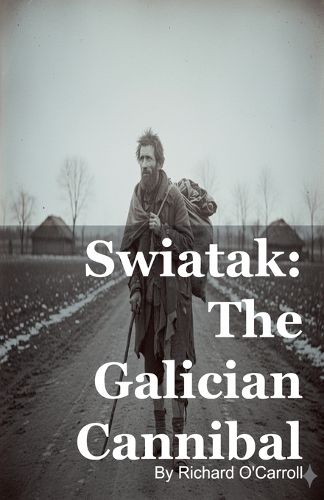
Swiatak: The Galician Cannibal
In 1849, Imperial investigator Hofrat Maximilian Werner von Steinhardt is dispatched to Galicia-the Habsburg Empire's poorest province-to investigate a vagrant accused of murdering and cannibalizing children. What begins as a straightforward criminal case becomes a devastating confrontation with systemic evil.
Swiatek, the accused, is a man without conscience, moral feeling, or even a surname-one of tens of thousands existing outside society in a province where 160,000 die annually from preventable starvation and disease. As von Steinhardt meticulously documents six confirmed murders (and suspects eight more), he discovers that the real crime is not one man's predation but the Empire's deliberate neglect of an entire population.
When Swiatek cheats the gallows through suicide, von Steinhardt's disillusionment is complete. His comprehensive reports documenting both individual and systemic crimes are sanitized, buried, and ultimately mythologized-transformed in popular memory into folklore about werewolves rather than a devastating indictment of imperial policy.
Based on actual conditions in 19th-century Austrian Galicia, this literary historical novel explores how societies create the monsters they then prosecute, how justice becomes complicit in injustice, and how truth is systematically erased by the powerful. It is a meditation on responsibility, complicity, and the limits of individual conscience within irredeemably corrupt systems.
$9.00 standard shipping within Australia
FREE standard shipping within Australia for orders over $100.00
Express & International shipping calculated at checkout
Stock availability can be subject to change without notice. We recommend calling the shop or contacting our online team to check availability of low stock items. Please see our Shopping Online page for more details.
This title is printed to order. This book may have been self-published. If so, we cannot guarantee the quality of the content. In the main most books will have gone through the editing process however some may not. We therefore suggest that you be aware of this before ordering this book. If in doubt check either the author or publisher’s details as we are unable to accept any returns unless they are faulty. Please contact us if you have any questions.
Swiatak: The Galician Cannibal
In 1849, Imperial investigator Hofrat Maximilian Werner von Steinhardt is dispatched to Galicia-the Habsburg Empire's poorest province-to investigate a vagrant accused of murdering and cannibalizing children. What begins as a straightforward criminal case becomes a devastating confrontation with systemic evil.
Swiatek, the accused, is a man without conscience, moral feeling, or even a surname-one of tens of thousands existing outside society in a province where 160,000 die annually from preventable starvation and disease. As von Steinhardt meticulously documents six confirmed murders (and suspects eight more), he discovers that the real crime is not one man's predation but the Empire's deliberate neglect of an entire population.
When Swiatek cheats the gallows through suicide, von Steinhardt's disillusionment is complete. His comprehensive reports documenting both individual and systemic crimes are sanitized, buried, and ultimately mythologized-transformed in popular memory into folklore about werewolves rather than a devastating indictment of imperial policy.
Based on actual conditions in 19th-century Austrian Galicia, this literary historical novel explores how societies create the monsters they then prosecute, how justice becomes complicit in injustice, and how truth is systematically erased by the powerful. It is a meditation on responsibility, complicity, and the limits of individual conscience within irredeemably corrupt systems.
Search our extensive online catalogue.
