Readings Newsletter
Become a Readings Member to make your shopping experience even easier.
Sign in or sign up for free!
You’re not far away from qualifying for FREE standard shipping within Australia
You’ve qualified for FREE standard shipping within Australia
The cart is loading…


This title is printed to order. This book may have been self-published. If so, we cannot guarantee the quality of the content. In the main most books will have gone through the editing process however some may not. We therefore suggest that you be aware of this before ordering this book. If in doubt check either the author or publisher’s details as we are unable to accept any returns unless they are faulty. Please contact us if you have any questions.
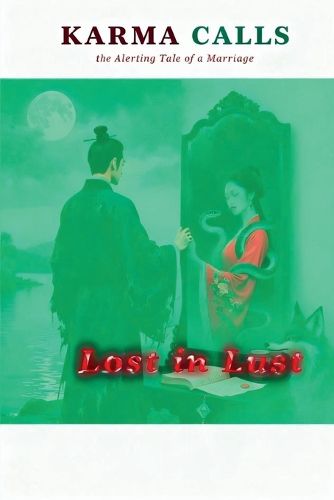
Lost in Lust, Part One of Karma Calls: The Alerting Tale of a Marriage
Lost in Lust, Part One of Karma Calls: The Alerting Tale of a Marriage is a Chu Dongwei production. This volume presents the first thirty-three chapters of the grand, one-million-word classical Chinese novel, Xingshi Yinyuan Zhuan. Originally authored by Xi Zhou Sheng, this translation was produced by Chu Dongwei with assistance from UniVerse Robo, an AI-powered drafting program. The title, Karma Calls: The Alerting Tale of a Marriage, reflects the core moral and cosmological framework of the novel.
Themes and Narrative
The novel is a recognized masterpiece offering a vivid portrayal of the intricacies of human relationships, the fickleness of officialdom, and the machinations of court politics. It carries a profound didactic tone, aiming solely to exhort goodness and deter wickedness and serve as a mirror of warning. Drawing on Confucian, Buddhist, and Daoist concepts of virtue, the text urges the reader to recognize cosmic justice and stop a bad thought before it grows into a bad deed.
The central narrative is rooted in karmic themes: a couple bound by a grudge from a past life are reincarnated to marry and torment each other. This volume plunges into the moral descent of Chao Yuan, the Elder Young Lord Chao. Chao Yuan, introduced as a character of wild dissipation with an unbridled disposition, ruthlessly preys upon the weak. His descent is catalyzed by a sense of karmic retribution as he mistreats his lawful wife, Lady Ji, the reincarnation of a woman he wronged previously. Driven by his obsession with the courtesan Zhen'ge-who is portrayed as a demoness intent on vengeance-Chao Yuan slanders Lady Ji, forcing her into such humiliation that she commits suicide by hanging. This tragic act immediately sets off a chain reaction of divine and legal reprisal, confirming that "Grudges from past lives now manifest as clear retribution".
Translation Methodology and Style
This translation adheres to the rigorous Chu Dongwei Style. The methodology employs a literary and elevated tone, leaning toward archaic yet readable English, and favoring long, flowing sentences to mirror the rhythm and cadence of classical Chinese prose. The aim is to deliver a unique blend of literary elegance and historical fidelity, preserving the archaic beauty, moral tone, and philosophical depth of the source text.
The work represents a crucial case study in contemporary hybrid translation methodology. The project leveraged initial drafting by the AI-powered program, UniVerse Robo, which provided speed and structural consistency. However, the discerning eye of the human translator-Chu Dongwei-remained absolutely indispensable. Human judgment was required to correct deep cultural and moral nuances; for example, rejecting the direct AI translation of lian as "pity" and revising it to emphasize "respect" for the character's diligence, or ensuring philosophical precision by selecting the neutral diction "due" over the misleading "reward" when translating bao (inevitable consequence). This rigorous human oversight ensures fidelity to the spirit rather than merely the mechanics of the original text.
$9.00 standard shipping within Australia
FREE standard shipping within Australia for orders over $100.00
Express & International shipping calculated at checkout
Stock availability can be subject to change without notice. We recommend calling the shop or contacting our online team to check availability of low stock items. Please see our Shopping Online page for more details.
This title is printed to order. This book may have been self-published. If so, we cannot guarantee the quality of the content. In the main most books will have gone through the editing process however some may not. We therefore suggest that you be aware of this before ordering this book. If in doubt check either the author or publisher’s details as we are unable to accept any returns unless they are faulty. Please contact us if you have any questions.
Lost in Lust, Part One of Karma Calls: The Alerting Tale of a Marriage
Lost in Lust, Part One of Karma Calls: The Alerting Tale of a Marriage is a Chu Dongwei production. This volume presents the first thirty-three chapters of the grand, one-million-word classical Chinese novel, Xingshi Yinyuan Zhuan. Originally authored by Xi Zhou Sheng, this translation was produced by Chu Dongwei with assistance from UniVerse Robo, an AI-powered drafting program. The title, Karma Calls: The Alerting Tale of a Marriage, reflects the core moral and cosmological framework of the novel.
Themes and Narrative
The novel is a recognized masterpiece offering a vivid portrayal of the intricacies of human relationships, the fickleness of officialdom, and the machinations of court politics. It carries a profound didactic tone, aiming solely to exhort goodness and deter wickedness and serve as a mirror of warning. Drawing on Confucian, Buddhist, and Daoist concepts of virtue, the text urges the reader to recognize cosmic justice and stop a bad thought before it grows into a bad deed.
The central narrative is rooted in karmic themes: a couple bound by a grudge from a past life are reincarnated to marry and torment each other. This volume plunges into the moral descent of Chao Yuan, the Elder Young Lord Chao. Chao Yuan, introduced as a character of wild dissipation with an unbridled disposition, ruthlessly preys upon the weak. His descent is catalyzed by a sense of karmic retribution as he mistreats his lawful wife, Lady Ji, the reincarnation of a woman he wronged previously. Driven by his obsession with the courtesan Zhen'ge-who is portrayed as a demoness intent on vengeance-Chao Yuan slanders Lady Ji, forcing her into such humiliation that she commits suicide by hanging. This tragic act immediately sets off a chain reaction of divine and legal reprisal, confirming that "Grudges from past lives now manifest as clear retribution".
Translation Methodology and Style
This translation adheres to the rigorous Chu Dongwei Style. The methodology employs a literary and elevated tone, leaning toward archaic yet readable English, and favoring long, flowing sentences to mirror the rhythm and cadence of classical Chinese prose. The aim is to deliver a unique blend of literary elegance and historical fidelity, preserving the archaic beauty, moral tone, and philosophical depth of the source text.
The work represents a crucial case study in contemporary hybrid translation methodology. The project leveraged initial drafting by the AI-powered program, UniVerse Robo, which provided speed and structural consistency. However, the discerning eye of the human translator-Chu Dongwei-remained absolutely indispensable. Human judgment was required to correct deep cultural and moral nuances; for example, rejecting the direct AI translation of lian as "pity" and revising it to emphasize "respect" for the character's diligence, or ensuring philosophical precision by selecting the neutral diction "due" over the misleading "reward" when translating bao (inevitable consequence). This rigorous human oversight ensures fidelity to the spirit rather than merely the mechanics of the original text.
Search our extensive online catalogue.
