Readings Newsletter
Become a Readings Member to make your shopping experience even easier.
Sign in or sign up for free!
You’re not far away from qualifying for FREE standard shipping within Australia
You’ve qualified for FREE standard shipping within Australia
The cart is loading…


This title is printed to order. This book may have been self-published. If so, we cannot guarantee the quality of the content. In the main most books will have gone through the editing process however some may not. We therefore suggest that you be aware of this before ordering this book. If in doubt check either the author or publisher’s details as we are unable to accept any returns unless they are faulty. Please contact us if you have any questions.
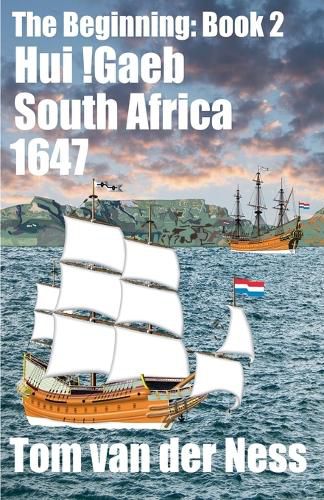
Under the apartheid regime, and the British before them, up until today, with the inclusion of the current government, the widely accepted curricula taught by all, are aligned to the fact that the colonisation of the Cape by the Dutch in sixteen-fifty-two, is the supposed beginning of the port. This account debunks that theory and corrects the largely as yet untold facts. Long before Holland's involvement, for more than half-a-century, well over a thousand ships with their scurvy-ridden crews entered the proto-port and were nursed back to health, and were victualled with fresh supplies by the indigenous Khoikhoi tribe. Although they have almost been lost to history, this story focuses on the life of the indigene 'Harry' and his niece 'Kratoa' as the Dutch called them - both famous figures known by all of the Cape's international maritime trade in the mid seventeenth century. Prior to the annexation by the Dutch, Kratoa's rich tapestry of events while living solely in harmony with nature, is a fascinating and historically accurate tale and sets the record straight about how the indigenous people in the region actually lived. The story is based on researched facts and is historically accurate.
$9.00 standard shipping within Australia
FREE standard shipping within Australia for orders over $100.00
Express & International shipping calculated at checkout
Stock availability can be subject to change without notice. We recommend calling the shop or contacting our online team to check availability of low stock items. Please see our Shopping Online page for more details.
This title is printed to order. This book may have been self-published. If so, we cannot guarantee the quality of the content. In the main most books will have gone through the editing process however some may not. We therefore suggest that you be aware of this before ordering this book. If in doubt check either the author or publisher’s details as we are unable to accept any returns unless they are faulty. Please contact us if you have any questions.
Under the apartheid regime, and the British before them, up until today, with the inclusion of the current government, the widely accepted curricula taught by all, are aligned to the fact that the colonisation of the Cape by the Dutch in sixteen-fifty-two, is the supposed beginning of the port. This account debunks that theory and corrects the largely as yet untold facts. Long before Holland's involvement, for more than half-a-century, well over a thousand ships with their scurvy-ridden crews entered the proto-port and were nursed back to health, and were victualled with fresh supplies by the indigenous Khoikhoi tribe. Although they have almost been lost to history, this story focuses on the life of the indigene 'Harry' and his niece 'Kratoa' as the Dutch called them - both famous figures known by all of the Cape's international maritime trade in the mid seventeenth century. Prior to the annexation by the Dutch, Kratoa's rich tapestry of events while living solely in harmony with nature, is a fascinating and historically accurate tale and sets the record straight about how the indigenous people in the region actually lived. The story is based on researched facts and is historically accurate.
Search our extensive online catalogue.
