Readings Newsletter
Become a Readings Member to make your shopping experience even easier.
Sign in or sign up for free!
You’re not far away from qualifying for FREE standard shipping within Australia
You’ve qualified for FREE standard shipping within Australia
The cart is loading…


This title is printed to order. This book may have been self-published. If so, we cannot guarantee the quality of the content. In the main most books will have gone through the editing process however some may not. We therefore suggest that you be aware of this before ordering this book. If in doubt check either the author or publisher’s details as we are unable to accept any returns unless they are faulty. Please contact us if you have any questions.
When Rupert Brooke died of blood poisoning on his way to fight the Turkish forces at Gallipoli in 1915, his friends in England were quick to turn him into a national hero–a patriotic symbol of the many young men of England going to war. That Brooke had recently published five sonnets glorifying patriotic sacrifice did much to promote his legend. That his friends included Winston Churchill, Anthony Asquith, and General Ian Hamilton did even more. To maintain the patriotic legend after the war, Brook’s biography was altered beyond recognition. In this volume, that misinformation is corrected, leaving Brooke’s poetry and prose to be read through a new lens.
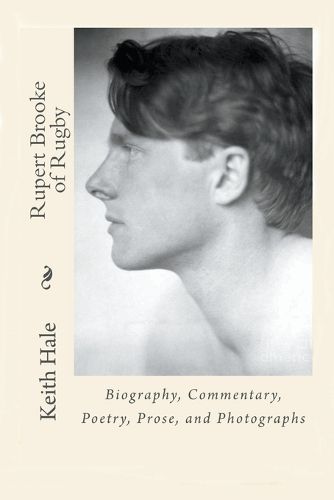
Rupert Brooke was a man of his time, just not the man that Winston Churchill and the early Brooke Trustees made him out to be. He was delivered a serious disservice by being labeled a war poet, and was dealt further injustice when critics dismissed his poetry as detached from his life experience. This volume details the bowdlerization of Brooke by his early biographers, discusses Brooke’s sexuality, and ties Brooke’s early poems to the romantic friendships he developed at Rugby School. Brooke’s poetry is then presented, followed by his travel writing, complete with the stunning tribute by Henry James. Photographs of Brooke appear throughout the book and tell a story of their own.
$9.00 standard shipping within Australia
FREE standard shipping within Australia for orders over $100.00
Express & International shipping calculated at checkout
Stock availability can be subject to change without notice. We recommend calling the shop or contacting our online team to check availability of low stock items. Please see our Shopping Online page for more details.
This title is printed to order. This book may have been self-published. If so, we cannot guarantee the quality of the content. In the main most books will have gone through the editing process however some may not. We therefore suggest that you be aware of this before ordering this book. If in doubt check either the author or publisher’s details as we are unable to accept any returns unless they are faulty. Please contact us if you have any questions.
When Rupert Brooke died of blood poisoning on his way to fight the Turkish forces at Gallipoli in 1915, his friends in England were quick to turn him into a national hero–a patriotic symbol of the many young men of England going to war. That Brooke had recently published five sonnets glorifying patriotic sacrifice did much to promote his legend. That his friends included Winston Churchill, Anthony Asquith, and General Ian Hamilton did even more. To maintain the patriotic legend after the war, Brook’s biography was altered beyond recognition. In this volume, that misinformation is corrected, leaving Brooke’s poetry and prose to be read through a new lens.
Rupert Brooke was a man of his time, just not the man that Winston Churchill and the early Brooke Trustees made him out to be. He was delivered a serious disservice by being labeled a war poet, and was dealt further injustice when critics dismissed his poetry as detached from his life experience. This volume details the bowdlerization of Brooke by his early biographers, discusses Brooke’s sexuality, and ties Brooke’s early poems to the romantic friendships he developed at Rugby School. Brooke’s poetry is then presented, followed by his travel writing, complete with the stunning tribute by Henry James. Photographs of Brooke appear throughout the book and tell a story of their own.
Search our extensive online catalogue.
