Readings Newsletter
Become a Readings Member to make your shopping experience even easier.
Sign in or sign up for free!
You’re not far away from qualifying for FREE standard shipping within Australia
You’ve qualified for FREE standard shipping within Australia
The cart is loading…


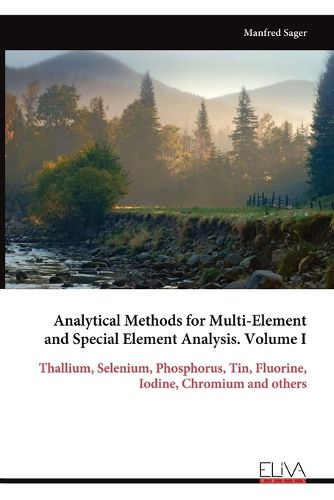
As a special analytical chemist, and soon head of an analytical department, the author had to ensure both the quality control of routine work, as well as to broaden the scope of parameters to be offered. The first volume of his selected papers is focused on chemical analytical procedures which have been developed in addition to usual operations. Whereas in organic analysis, separation and subsequent substance identification have been main tasks, inorganic trace analysis has to tackle mainly to reach sufficient detection limits, and to avoid contaminations. Compared with the determination of main components, analysis of traces might be less precise, but more sensitive, and selectivity and ruggedness towards cross-interferences has to be validated, e.g. by recovery, standard addition or various sample weight - reagent proportions. In addition, blanks from the entire procedure, including reagents, vessels and atmospheric immission, have to be prepared in every batch. The validity of data can be easily checked, if different procedures yield similar results. As this is not possible in many cases, regular participation in ring tests is essential. Here, the same homogenized sample is sent to various labs, and the results statistically treated by the sender, yielding the most probable result. The use of certified reference materials to prove an analytical procedure has brought great progress of validity within the last decades. But the number of certified parameters is limited to those which are often requested for, and problems of transferring something collected in the environment to a homogenous sample ready for weighing, are omitted. In trace element analysis, precision and systematic errors have to be considered, starting from drying, milling and cutting, till suitable digestion methods, which are suitable for multi-element determination methods. Some elements, however, have to be treated in a special way, because of volatilization, incomplete solubility, interference in the final determination method, or incomplete detection limits.
$9.00 standard shipping within Australia
FREE standard shipping within Australia for orders over $100.00
Express & International shipping calculated at checkout
Stock availability can be subject to change without notice. We recommend calling the shop or contacting our online team to check availability of low stock items. Please see our Shopping Online page for more details.
As a special analytical chemist, and soon head of an analytical department, the author had to ensure both the quality control of routine work, as well as to broaden the scope of parameters to be offered. The first volume of his selected papers is focused on chemical analytical procedures which have been developed in addition to usual operations. Whereas in organic analysis, separation and subsequent substance identification have been main tasks, inorganic trace analysis has to tackle mainly to reach sufficient detection limits, and to avoid contaminations. Compared with the determination of main components, analysis of traces might be less precise, but more sensitive, and selectivity and ruggedness towards cross-interferences has to be validated, e.g. by recovery, standard addition or various sample weight - reagent proportions. In addition, blanks from the entire procedure, including reagents, vessels and atmospheric immission, have to be prepared in every batch. The validity of data can be easily checked, if different procedures yield similar results. As this is not possible in many cases, regular participation in ring tests is essential. Here, the same homogenized sample is sent to various labs, and the results statistically treated by the sender, yielding the most probable result. The use of certified reference materials to prove an analytical procedure has brought great progress of validity within the last decades. But the number of certified parameters is limited to those which are often requested for, and problems of transferring something collected in the environment to a homogenous sample ready for weighing, are omitted. In trace element analysis, precision and systematic errors have to be considered, starting from drying, milling and cutting, till suitable digestion methods, which are suitable for multi-element determination methods. Some elements, however, have to be treated in a special way, because of volatilization, incomplete solubility, interference in the final determination method, or incomplete detection limits.
Search our extensive online catalogue.
