Readings Newsletter
Become a Readings Member to make your shopping experience even easier.
Sign in or sign up for free!
You’re not far away from qualifying for FREE standard shipping within Australia
You’ve qualified for FREE standard shipping within Australia
The cart is loading…


This title is printed to order. This book may have been self-published. If so, we cannot guarantee the quality of the content. In the main most books will have gone through the editing process however some may not. We therefore suggest that you be aware of this before ordering this book. If in doubt check either the author or publisher’s details as we are unable to accept any returns unless they are faulty. Please contact us if you have any questions.
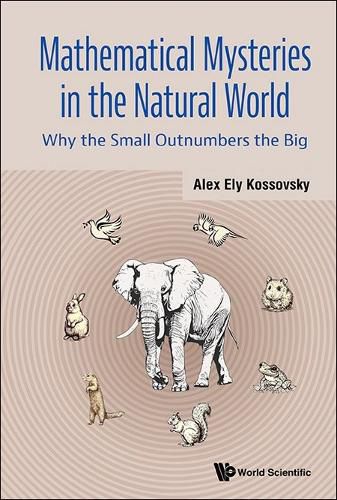
Why are there more poor people with small bank accounts than rich people with big bank accounts? Why are there more small planets and stars than big ones in the cosmos? And why are there more small rivers than big rivers, and more harmless tremors than devastating earthquakes? Empirical examinations of real-life data overwhelmingly confirm the existence of such uneven size proportions in favor of the small, leaving us only the question: Why?This law of nature carries through a vast list of topics and disciplines, confirming it to be nearly universal. In the biological world there are only approximately two million whales and over three hundred billion birds; in number theory there are more small prime numbers than there are big ones; in census data there are more villages than towns, more towns than cities, and more cities than metropolises; in history there have been more minor conflicts than great wars.In a landmark, first-ever study on the distribution of relative sizes, this book discusses several real-life case studies such as those above in extensive detail, and presents three distinct explanations for the phenomenon. Readers of all disciplines and levels of expertise will find an easily accessible yet original exploration that concludes with a numerical quantification demonstrating precisely by how much the relatively small is more numerous than the relatively big.
$9.00 standard shipping within Australia
FREE standard shipping within Australia for orders over $100.00
Express & International shipping calculated at checkout
Stock availability can be subject to change without notice. We recommend calling the shop or contacting our online team to check availability of low stock items. Please see our Shopping Online page for more details.
This title is printed to order. This book may have been self-published. If so, we cannot guarantee the quality of the content. In the main most books will have gone through the editing process however some may not. We therefore suggest that you be aware of this before ordering this book. If in doubt check either the author or publisher’s details as we are unable to accept any returns unless they are faulty. Please contact us if you have any questions.
Why are there more poor people with small bank accounts than rich people with big bank accounts? Why are there more small planets and stars than big ones in the cosmos? And why are there more small rivers than big rivers, and more harmless tremors than devastating earthquakes? Empirical examinations of real-life data overwhelmingly confirm the existence of such uneven size proportions in favor of the small, leaving us only the question: Why?This law of nature carries through a vast list of topics and disciplines, confirming it to be nearly universal. In the biological world there are only approximately two million whales and over three hundred billion birds; in number theory there are more small prime numbers than there are big ones; in census data there are more villages than towns, more towns than cities, and more cities than metropolises; in history there have been more minor conflicts than great wars.In a landmark, first-ever study on the distribution of relative sizes, this book discusses several real-life case studies such as those above in extensive detail, and presents three distinct explanations for the phenomenon. Readers of all disciplines and levels of expertise will find an easily accessible yet original exploration that concludes with a numerical quantification demonstrating precisely by how much the relatively small is more numerous than the relatively big.
Search our extensive online catalogue.
