Readings Newsletter
Become a Readings Member to make your shopping experience even easier.
Sign in or sign up for free!
You’re not far away from qualifying for FREE standard shipping within Australia
You’ve qualified for FREE standard shipping within Australia
The cart is loading…


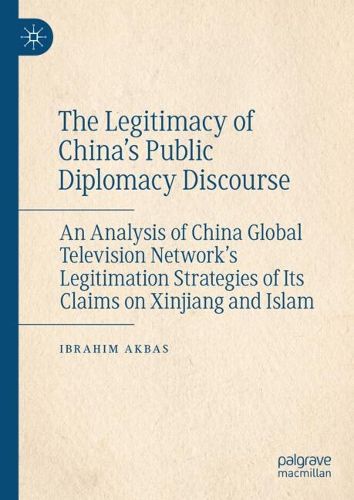
This book explores the public diplomacy discourse of Chinese state media on ethnic minorities in Xinjiang. China's minority policies towards Muslims in the Xinjiang Uyghur Autonomous Region have become an issue of contention in global politics that could further damage China's global reputation. Many states and prominent individuals position themselves by reacting either in support of or in opposition to the treatment of the Muslim minority in Xinjiang. Examining 54 English language Videos about Xinjiang and Islam produced by and broadcast on the China Global Television Network's (CGTN) YouTube Channel, this book analyzes how the Chinese state makes truth-claims about Xinjiang and Islam to discursively legitimise its official positions. The book argues that CGTN narrates the monolithic state perspective rather than seeking to establish a common ground of shared norms and values to acquire legitimacy. One key finding arising from CGTN's narratives is the notion of harmony as a prerequisite for economic development. By examining China's discursive legitimising narratives around Xinjiang, the thesis contributes to the research literature on China's public diplomacy and provides a novel framework for understanding the role of (de)legitimation strategies in public diplomacy practice.
$9.00 standard shipping within Australia
FREE standard shipping within Australia for orders over $100.00
Express & International shipping calculated at checkout
Stock availability can be subject to change without notice. We recommend calling the shop or contacting our online team to check availability of low stock items. Please see our Shopping Online page for more details.
This book explores the public diplomacy discourse of Chinese state media on ethnic minorities in Xinjiang. China's minority policies towards Muslims in the Xinjiang Uyghur Autonomous Region have become an issue of contention in global politics that could further damage China's global reputation. Many states and prominent individuals position themselves by reacting either in support of or in opposition to the treatment of the Muslim minority in Xinjiang. Examining 54 English language Videos about Xinjiang and Islam produced by and broadcast on the China Global Television Network's (CGTN) YouTube Channel, this book analyzes how the Chinese state makes truth-claims about Xinjiang and Islam to discursively legitimise its official positions. The book argues that CGTN narrates the monolithic state perspective rather than seeking to establish a common ground of shared norms and values to acquire legitimacy. One key finding arising from CGTN's narratives is the notion of harmony as a prerequisite for economic development. By examining China's discursive legitimising narratives around Xinjiang, the thesis contributes to the research literature on China's public diplomacy and provides a novel framework for understanding the role of (de)legitimation strategies in public diplomacy practice.
Search our extensive online catalogue.
