Readings Newsletter
Become a Readings Member to make your shopping experience even easier.
Sign in or sign up for free!
You’re not far away from qualifying for FREE standard shipping within Australia
You’ve qualified for FREE standard shipping within Australia
The cart is loading…


This title is printed to order. This book may have been self-published. If so, we cannot guarantee the quality of the content. In the main most books will have gone through the editing process however some may not. We therefore suggest that you be aware of this before ordering this book. If in doubt check either the author or publisher’s details as we are unable to accept any returns unless they are faulty. Please contact us if you have any questions.
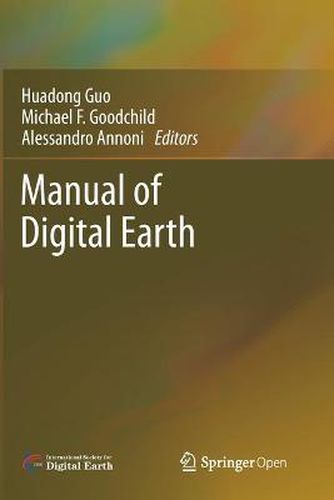
This open access book offers a summary of the development of Digital Earth over the past twenty years. By reviewing the initial vision of Digital Earth, the evolution of that vision, the relevant key technologies, and the role of Digital Earth in helping people respond to global challenges, this publication reveals how and why Digital Earth is becoming vital for acquiring, processing, analysing and mining the rapidly growing volume of global data sets about the Earth.
The main aspects of Digital Earth covered here include: Digital Earth platforms, remote sensing and navigation satellites, processing and visualizing geospatial information, geospatial information infrastructures, big data and cloud computing, transformation and zooming, artificial intelligence, Internet of Things, and social media. Moreover, the book covers in detail the multi-layered/multi-faceted roles of Digital Earth in response to sustainable development goals, climate changes, and mitigating disasters, the applications of Digital Earth (such as digital city and digital heritage), the citizen science in support of Digital Earth, the economic value of Digital Earth, and so on. This book also reviews the regional and national development of Digital Earth around the world, and discusses the role and effect of education and ethics. Lastly, it concludes with a summary of the challenges and forecasts the future trends of Digital Earth.
By sharing case studies and a broad range of general and scientific insights into the science and technology of Digital Earth, this book offers an essential introduction for an ever-growing international audience.
$9.00 standard shipping within Australia
FREE standard shipping within Australia for orders over $100.00
Express & International shipping calculated at checkout
Stock availability can be subject to change without notice. We recommend calling the shop or contacting our online team to check availability of low stock items. Please see our Shopping Online page for more details.
This title is printed to order. This book may have been self-published. If so, we cannot guarantee the quality of the content. In the main most books will have gone through the editing process however some may not. We therefore suggest that you be aware of this before ordering this book. If in doubt check either the author or publisher’s details as we are unable to accept any returns unless they are faulty. Please contact us if you have any questions.
This open access book offers a summary of the development of Digital Earth over the past twenty years. By reviewing the initial vision of Digital Earth, the evolution of that vision, the relevant key technologies, and the role of Digital Earth in helping people respond to global challenges, this publication reveals how and why Digital Earth is becoming vital for acquiring, processing, analysing and mining the rapidly growing volume of global data sets about the Earth.
The main aspects of Digital Earth covered here include: Digital Earth platforms, remote sensing and navigation satellites, processing and visualizing geospatial information, geospatial information infrastructures, big data and cloud computing, transformation and zooming, artificial intelligence, Internet of Things, and social media. Moreover, the book covers in detail the multi-layered/multi-faceted roles of Digital Earth in response to sustainable development goals, climate changes, and mitigating disasters, the applications of Digital Earth (such as digital city and digital heritage), the citizen science in support of Digital Earth, the economic value of Digital Earth, and so on. This book also reviews the regional and national development of Digital Earth around the world, and discusses the role and effect of education and ethics. Lastly, it concludes with a summary of the challenges and forecasts the future trends of Digital Earth.
By sharing case studies and a broad range of general and scientific insights into the science and technology of Digital Earth, this book offers an essential introduction for an ever-growing international audience.
Search our extensive online catalogue.
