Readings Newsletter
Become a Readings Member to make your shopping experience even easier.
Sign in or sign up for free!
You’re not far away from qualifying for FREE standard shipping within Australia
You’ve qualified for FREE standard shipping within Australia
The cart is loading…


This title is printed to order. This book may have been self-published. If so, we cannot guarantee the quality of the content. In the main most books will have gone through the editing process however some may not. We therefore suggest that you be aware of this before ordering this book. If in doubt check either the author or publisher’s details as we are unable to accept any returns unless they are faulty. Please contact us if you have any questions.
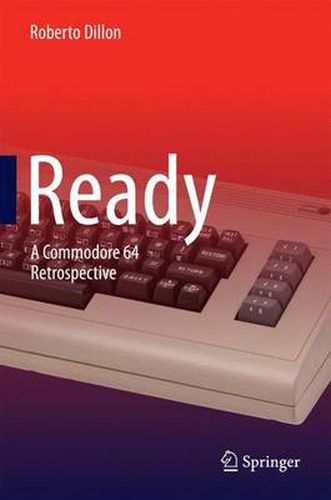
How did the Commodore 64 conquer the hearts of millions and become a platform people still actively develop for even today? What made it so special?
This book will appeal to both those who like tinkering with old technology as a hobby and nostalgic readers who simply want to enjoy a trip down memory lane. It discusses in a concise but rigorous format the different areas of home gaming and personal computing where the C64 managed to innovate and push forward existing boundaries.
Starting from Jack Tramiel’s vision of designing computers for the masses, not the classes, the book introduces the 6510, VIC-II and SID chips that made the C64 unique. It briefly discusses its Basic programming language and then proceeds to illustrate not only many of the games that are still so fondly remembered but also the first generation of game engines that made game development more approachable
among other topics that are often neglected but are necessary to provide a comprehensive overview of how far reaching theC64 influence was.
Written in a straightforward and accessible style, readers will relive the dawn of modern technology and gain a better understanding of the legacy that was built, bit by bit, in those pioneering days by computers that had only a tiny fraction of the power modern machines have and, yet, were used to create the technological world we are now living in.
With a foreword by Michael Tomczyk
$9.00 standard shipping within Australia
FREE standard shipping within Australia for orders over $100.00
Express & International shipping calculated at checkout
Stock availability can be subject to change without notice. We recommend calling the shop or contacting our online team to check availability of low stock items. Please see our Shopping Online page for more details.
This title is printed to order. This book may have been self-published. If so, we cannot guarantee the quality of the content. In the main most books will have gone through the editing process however some may not. We therefore suggest that you be aware of this before ordering this book. If in doubt check either the author or publisher’s details as we are unable to accept any returns unless they are faulty. Please contact us if you have any questions.
How did the Commodore 64 conquer the hearts of millions and become a platform people still actively develop for even today? What made it so special?
This book will appeal to both those who like tinkering with old technology as a hobby and nostalgic readers who simply want to enjoy a trip down memory lane. It discusses in a concise but rigorous format the different areas of home gaming and personal computing where the C64 managed to innovate and push forward existing boundaries.
Starting from Jack Tramiel’s vision of designing computers for the masses, not the classes, the book introduces the 6510, VIC-II and SID chips that made the C64 unique. It briefly discusses its Basic programming language and then proceeds to illustrate not only many of the games that are still so fondly remembered but also the first generation of game engines that made game development more approachable
among other topics that are often neglected but are necessary to provide a comprehensive overview of how far reaching theC64 influence was.
Written in a straightforward and accessible style, readers will relive the dawn of modern technology and gain a better understanding of the legacy that was built, bit by bit, in those pioneering days by computers that had only a tiny fraction of the power modern machines have and, yet, were used to create the technological world we are now living in.
With a foreword by Michael Tomczyk
Search our extensive online catalogue.
