Readings Newsletter
Become a Readings Member to make your shopping experience even easier.
Sign in or sign up for free!
You’re not far away from qualifying for FREE standard shipping within Australia
You’ve qualified for FREE standard shipping within Australia
The cart is loading…


This title is printed to order. This book may have been self-published. If so, we cannot guarantee the quality of the content. In the main most books will have gone through the editing process however some may not. We therefore suggest that you be aware of this before ordering this book. If in doubt check either the author or publisher’s details as we are unable to accept any returns unless they are faulty. Please contact us if you have any questions.
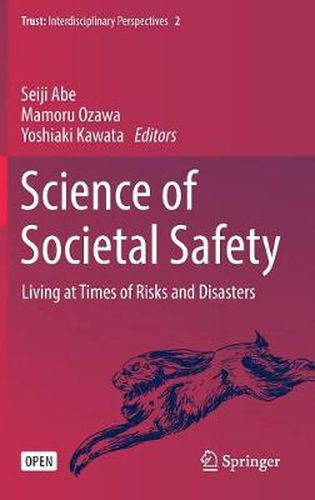
This open access book covers comprehensive but fundamental principles and concepts of disaster and accident prevention and mitigation, countermeasures, and recovery from disasters or accidents including treatment and care of the victims. Safety and security problems in our society involve not only engineering but also social, legal, economic, cultural, and psychological issues. The enhancement needed for societal safety includes comprehensive activities of all aspects from precaution to recovery, not only of people but also of governments. In this context, the authors, members of the Faculty of Societal Safety Science, Kansai University, conducted many discussions and concluded that the major strategy is consistent independently of the type and magnitude of disaster or accident, being also the principle of the foundation of our faculty.
The topics treated in this book are rather widely distributed but are well organized sequentially to provide a clear understanding of the principles of societal safety. In the first part the fundamental concepts of safety are discussed. The second part deals with risks in the societal and natural environment. Then follows, in the third part, a description of the quantitative estimation of risk and its assessment and management. The fourth part is devoted to disaster prevention, mitigation, and recovery systems. The final, fifth part presents a future perspective of societal safety science.
Thorough reading of this introductory volume of societal safety science provides a clear image of the issues. This is largely because the Japanese have suffered often from natural disasters and not only have gained much valuable information about disasters but also have accumulated a store of experience. We are still in the process of reconstruction from the Great East Japan earthquake and the Fukushima nuclear power plant accident. This book is especially valuable therefore in studying the safety and security of people and their societies.
$9.00 standard shipping within Australia
FREE standard shipping within Australia for orders over $100.00
Express & International shipping calculated at checkout
Stock availability can be subject to change without notice. We recommend calling the shop or contacting our online team to check availability of low stock items. Please see our Shopping Online page for more details.
This title is printed to order. This book may have been self-published. If so, we cannot guarantee the quality of the content. In the main most books will have gone through the editing process however some may not. We therefore suggest that you be aware of this before ordering this book. If in doubt check either the author or publisher’s details as we are unable to accept any returns unless they are faulty. Please contact us if you have any questions.
This open access book covers comprehensive but fundamental principles and concepts of disaster and accident prevention and mitigation, countermeasures, and recovery from disasters or accidents including treatment and care of the victims. Safety and security problems in our society involve not only engineering but also social, legal, economic, cultural, and psychological issues. The enhancement needed for societal safety includes comprehensive activities of all aspects from precaution to recovery, not only of people but also of governments. In this context, the authors, members of the Faculty of Societal Safety Science, Kansai University, conducted many discussions and concluded that the major strategy is consistent independently of the type and magnitude of disaster or accident, being also the principle of the foundation of our faculty.
The topics treated in this book are rather widely distributed but are well organized sequentially to provide a clear understanding of the principles of societal safety. In the first part the fundamental concepts of safety are discussed. The second part deals with risks in the societal and natural environment. Then follows, in the third part, a description of the quantitative estimation of risk and its assessment and management. The fourth part is devoted to disaster prevention, mitigation, and recovery systems. The final, fifth part presents a future perspective of societal safety science.
Thorough reading of this introductory volume of societal safety science provides a clear image of the issues. This is largely because the Japanese have suffered often from natural disasters and not only have gained much valuable information about disasters but also have accumulated a store of experience. We are still in the process of reconstruction from the Great East Japan earthquake and the Fukushima nuclear power plant accident. This book is especially valuable therefore in studying the safety and security of people and their societies.
Search our extensive online catalogue.
