Readings Newsletter
Become a Readings Member to make your shopping experience even easier.
Sign in or sign up for free!
You’re not far away from qualifying for FREE standard shipping within Australia
You’ve qualified for FREE standard shipping within Australia
The cart is loading…


This title is printed to order. This book may have been self-published. If so, we cannot guarantee the quality of the content. In the main most books will have gone through the editing process however some may not. We therefore suggest that you be aware of this before ordering this book. If in doubt check either the author or publisher’s details as we are unable to accept any returns unless they are faulty. Please contact us if you have any questions.
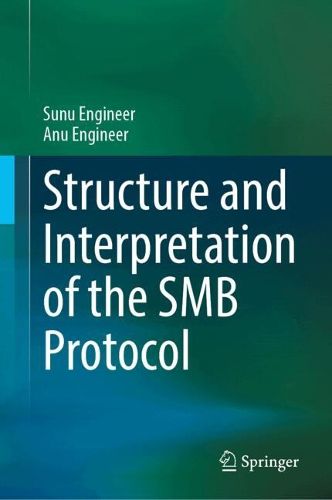
This book discusses the current status of the Server Message Block (SMB) protocol and its relevance, use and applications in the data storage world at present. Starting from the origin of the protocol, this book traces the evolution of the protocol through the dark ages, when the protocol was proprietary and its transition into a being an open protocol. It discusses the current applications that use the SMB protocol as well as possible applications in the future. The analysis of the protocol in this book captures the detailed structure as well as the rationale behind the design. It illustrates the relationship between SMB protocol and other protocols in the context of the Microsoft Windows ecosystem and the assimilation of SMB into other operating system environments such as Linux (Unix), Mac OS, Android, iOS etc.
The questions of performance, scaling and largescale use especially in cloud environments, weaknesses and security issues in the current set of implementations of the protocol are discussed in this book. It also examines the question of interoperability of SMB with other popular NAS protocols exposing distributed file system semantics such as NFSv3 and v4.
This book targets data storage system engineers, computer scientists and researchers working in this field. Advanced-level students studying engineering and computer science will also find this book useful as a secondary text.
$9.00 standard shipping within Australia
FREE standard shipping within Australia for orders over $100.00
Express & International shipping calculated at checkout
Stock availability can be subject to change without notice. We recommend calling the shop or contacting our online team to check availability of low stock items. Please see our Shopping Online page for more details.
This title is printed to order. This book may have been self-published. If so, we cannot guarantee the quality of the content. In the main most books will have gone through the editing process however some may not. We therefore suggest that you be aware of this before ordering this book. If in doubt check either the author or publisher’s details as we are unable to accept any returns unless they are faulty. Please contact us if you have any questions.
This book discusses the current status of the Server Message Block (SMB) protocol and its relevance, use and applications in the data storage world at present. Starting from the origin of the protocol, this book traces the evolution of the protocol through the dark ages, when the protocol was proprietary and its transition into a being an open protocol. It discusses the current applications that use the SMB protocol as well as possible applications in the future. The analysis of the protocol in this book captures the detailed structure as well as the rationale behind the design. It illustrates the relationship between SMB protocol and other protocols in the context of the Microsoft Windows ecosystem and the assimilation of SMB into other operating system environments such as Linux (Unix), Mac OS, Android, iOS etc.
The questions of performance, scaling and largescale use especially in cloud environments, weaknesses and security issues in the current set of implementations of the protocol are discussed in this book. It also examines the question of interoperability of SMB with other popular NAS protocols exposing distributed file system semantics such as NFSv3 and v4.
This book targets data storage system engineers, computer scientists and researchers working in this field. Advanced-level students studying engineering and computer science will also find this book useful as a secondary text.
Search our extensive online catalogue.
