Readings Newsletter
Become a Readings Member to make your shopping experience even easier.
Sign in or sign up for free!
You’re not far away from qualifying for FREE standard shipping within Australia
You’ve qualified for FREE standard shipping within Australia
The cart is loading…


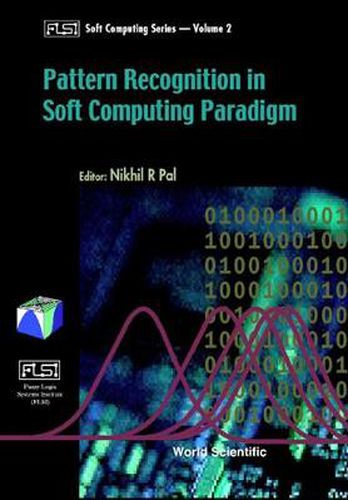
Pattern recognition (PR) consists of three important tasks: feature analysis, clustering and classification. Image analysis can also be viewed as a PR task. Feature analysis is a very important step in designing any useful PR system because its effectiveness depends heavily on the set of features used to realize the system. A distinguishing feature of this volume is that it deals with all three aspects of PR, namely feature analysis, clustering and classifier design. It also encompasses image processing methodologies and image retrieval with subject information. The other interesting aspect of the volume is that it covers all three major facets of soft computing: fuzzy logic, neural networks and evolutionary computing.
$9.00 standard shipping within Australia
FREE standard shipping within Australia for orders over $100.00
Express & International shipping calculated at checkout
Stock availability can be subject to change without notice. We recommend calling the shop or contacting our online team to check availability of low stock items. Please see our Shopping Online page for more details.
Pattern recognition (PR) consists of three important tasks: feature analysis, clustering and classification. Image analysis can also be viewed as a PR task. Feature analysis is a very important step in designing any useful PR system because its effectiveness depends heavily on the set of features used to realize the system. A distinguishing feature of this volume is that it deals with all three aspects of PR, namely feature analysis, clustering and classifier design. It also encompasses image processing methodologies and image retrieval with subject information. The other interesting aspect of the volume is that it covers all three major facets of soft computing: fuzzy logic, neural networks and evolutionary computing.
Search our extensive online catalogue.
