Readings Newsletter
Become a Readings Member to make your shopping experience even easier.
Sign in or sign up for free!
You’re not far away from qualifying for FREE standard shipping within Australia
You’ve qualified for FREE standard shipping within Australia
The cart is loading…


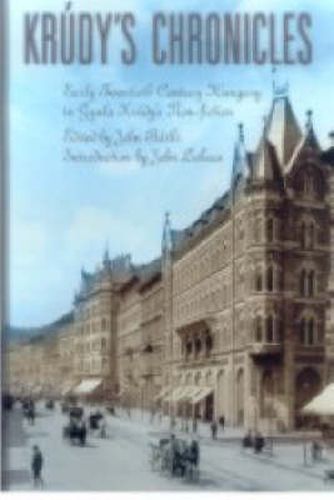
As one of the most prolific writers of Hungarian literature, Gyula Krudy provides us with a collection of articles that display his intimate knowledge of Hungarian society. Written during the 1910s, “20s and "30s, Krudy provides us with a wistful and nostalgic image of the waning years of the Austro-Hungarian empire, with portraits of the Habsburgs, culminating in first hand reports in 1916, from Vienna on the funeral of Emperor Francis Joseph I, and from Budapest on the coronation of Charles IV, the last king of Hungary. Krudy’s reports follow the bloodless democratic revolution of 1918, the Karolyi government and the short lived Soviet Republic, and present cameos of the leading political figures of the day such as Ferenc Kossuth, Mihaly Karolyi and Bela Kun.
$9.00 standard shipping within Australia
FREE standard shipping within Australia for orders over $100.00
Express & International shipping calculated at checkout
Stock availability can be subject to change without notice. We recommend calling the shop or contacting our online team to check availability of low stock items. Please see our Shopping Online page for more details.
As one of the most prolific writers of Hungarian literature, Gyula Krudy provides us with a collection of articles that display his intimate knowledge of Hungarian society. Written during the 1910s, “20s and "30s, Krudy provides us with a wistful and nostalgic image of the waning years of the Austro-Hungarian empire, with portraits of the Habsburgs, culminating in first hand reports in 1916, from Vienna on the funeral of Emperor Francis Joseph I, and from Budapest on the coronation of Charles IV, the last king of Hungary. Krudy’s reports follow the bloodless democratic revolution of 1918, the Karolyi government and the short lived Soviet Republic, and present cameos of the leading political figures of the day such as Ferenc Kossuth, Mihaly Karolyi and Bela Kun.
Search our extensive online catalogue.
