Readings Newsletter
Become a Readings Member to make your shopping experience even easier.
Sign in or sign up for free!
You’re not far away from qualifying for FREE standard shipping within Australia
You’ve qualified for FREE standard shipping within Australia
The cart is loading…


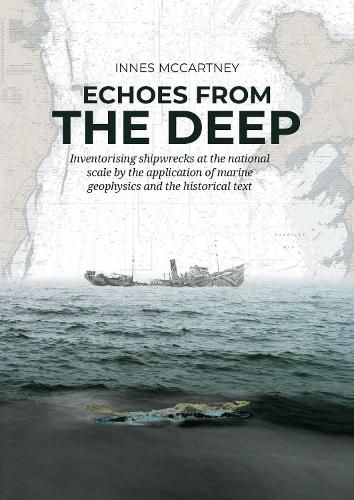
In a process analogous with the impact of aerial photography on landscape archaeology, marine geophysics is locating the remains of thousands of shipwrecks across the seabed of the globe. This research project set out to establish whether all of the shipwrecks in a given geographic region could be identified by name through the mutual study of the 3D models of the shipwrecks, alongside the historic text of shipping losses in the same area.
All of the 273 shipwrecks in a 7,500sqm study area in the Irish Sea were surveyed using multibeam echosounder. The methodologies subsequently developed to identify the wrecks enabled names to be given to 80% of the unknown ships, verified by their dimensions, their geographic position, and archival descriptions of the sinking of each ship. In all 87% of the ships in the study are now identified.
In historic terms, the newly identified wrecks included myriad vessels from trawlers, cargo vessels, submarines, through to the largest ocean liners and tankers. They include rare ship designs, losses of national importance, and naval graves. Several of the wrecks uncovered have potential environmental concerns. The accurate dating of so many wrecks in one area has a major impact on the study of seabed dynamics and site formation processes, creating better models for the placement of windfarms and tidal generators.
This research is important because the seabed of the world is being increasingly mapped in detail, and shipwrecks are being located in large numbers. This research developed a low-cost means of inventorising shipwreck datasets across entire national zones without costly physical interaction with each wreck site. It should be of key interest to marine scientists, environmental agencies, hydrographers, heritage managers, maritime archaeologists, and historians around the world.
$9.00 standard shipping within Australia
FREE standard shipping within Australia for orders over $100.00
Express & International shipping calculated at checkout
Stock availability can be subject to change without notice. We recommend calling the shop or contacting our online team to check availability of low stock items. Please see our Shopping Online page for more details.
In a process analogous with the impact of aerial photography on landscape archaeology, marine geophysics is locating the remains of thousands of shipwrecks across the seabed of the globe. This research project set out to establish whether all of the shipwrecks in a given geographic region could be identified by name through the mutual study of the 3D models of the shipwrecks, alongside the historic text of shipping losses in the same area.
All of the 273 shipwrecks in a 7,500sqm study area in the Irish Sea were surveyed using multibeam echosounder. The methodologies subsequently developed to identify the wrecks enabled names to be given to 80% of the unknown ships, verified by their dimensions, their geographic position, and archival descriptions of the sinking of each ship. In all 87% of the ships in the study are now identified.
In historic terms, the newly identified wrecks included myriad vessels from trawlers, cargo vessels, submarines, through to the largest ocean liners and tankers. They include rare ship designs, losses of national importance, and naval graves. Several of the wrecks uncovered have potential environmental concerns. The accurate dating of so many wrecks in one area has a major impact on the study of seabed dynamics and site formation processes, creating better models for the placement of windfarms and tidal generators.
This research is important because the seabed of the world is being increasingly mapped in detail, and shipwrecks are being located in large numbers. This research developed a low-cost means of inventorising shipwreck datasets across entire national zones without costly physical interaction with each wreck site. It should be of key interest to marine scientists, environmental agencies, hydrographers, heritage managers, maritime archaeologists, and historians around the world.
Search our extensive online catalogue.
