Readings Newsletter
Become a Readings Member to make your shopping experience even easier.
Sign in or sign up for free!
You’re not far away from qualifying for FREE standard shipping within Australia
You’ve qualified for FREE standard shipping within Australia
The cart is loading…


This title is printed to order. This book may have been self-published. If so, we cannot guarantee the quality of the content. In the main most books will have gone through the editing process however some may not. We therefore suggest that you be aware of this before ordering this book. If in doubt check either the author or publisher’s details as we are unable to accept any returns unless they are faulty. Please contact us if you have any questions.
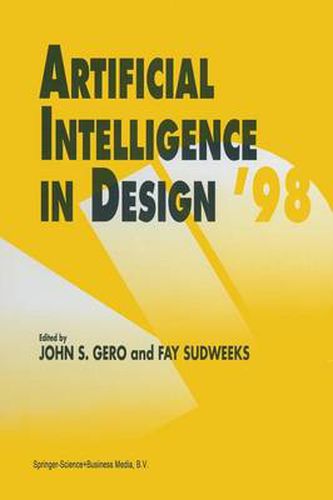
The development of computational models of design founded on the artificial intelligenceparadigm has provided an impetus for muchofcurrentdesign research. As artificial intelligence has matured and developed new approaches so the impact ofthese new approaches on design research has been felt. This can be seen in the wayconcepts from cognitive science has found theirway into artificial intelligence and hence into design research. And, also in the way in which agent-based systems arebeingincorporated into design systems. In design research there is an increasing blurring between notions drawn from artificial intelligence and those drawn from cognitive science. Whereas a number of years ago the focus was largely on applying artificial intelligence to designing as an activity, thus treating designing as a form ofproblem solving, today we are seeing a much wider variety ofconceptions of the role of artificial intelligence in helping to model and comprehend designing as a process. Thus, we see papers in this volume which have as their focus the development or implementationofframeworks for artificial intelligence in design - attempting to determine a unique locus for these ideas. We see papers which attempt to find foundations for the development of tools based on the artificial intelligence paradigm; often the foundations come from cognitive studiesofhuman designers.
$9.00 standard shipping within Australia
FREE standard shipping within Australia for orders over $100.00
Express & International shipping calculated at checkout
Stock availability can be subject to change without notice. We recommend calling the shop or contacting our online team to check availability of low stock items. Please see our Shopping Online page for more details.
This title is printed to order. This book may have been self-published. If so, we cannot guarantee the quality of the content. In the main most books will have gone through the editing process however some may not. We therefore suggest that you be aware of this before ordering this book. If in doubt check either the author or publisher’s details as we are unable to accept any returns unless they are faulty. Please contact us if you have any questions.
The development of computational models of design founded on the artificial intelligenceparadigm has provided an impetus for muchofcurrentdesign research. As artificial intelligence has matured and developed new approaches so the impact ofthese new approaches on design research has been felt. This can be seen in the wayconcepts from cognitive science has found theirway into artificial intelligence and hence into design research. And, also in the way in which agent-based systems arebeingincorporated into design systems. In design research there is an increasing blurring between notions drawn from artificial intelligence and those drawn from cognitive science. Whereas a number of years ago the focus was largely on applying artificial intelligence to designing as an activity, thus treating designing as a form ofproblem solving, today we are seeing a much wider variety ofconceptions of the role of artificial intelligence in helping to model and comprehend designing as a process. Thus, we see papers in this volume which have as their focus the development or implementationofframeworks for artificial intelligence in design - attempting to determine a unique locus for these ideas. We see papers which attempt to find foundations for the development of tools based on the artificial intelligence paradigm; often the foundations come from cognitive studiesofhuman designers.
Search our extensive online catalogue.
