Readings Newsletter
Become a Readings Member to make your shopping experience even easier.
Sign in or sign up for free!
You’re not far away from qualifying for FREE standard shipping within Australia
You’ve qualified for FREE standard shipping within Australia
The cart is loading…


This title is printed to order. This book may have been self-published. If so, we cannot guarantee the quality of the content. In the main most books will have gone through the editing process however some may not. We therefore suggest that you be aware of this before ordering this book. If in doubt check either the author or publisher’s details as we are unable to accept any returns unless they are faulty. Please contact us if you have any questions.
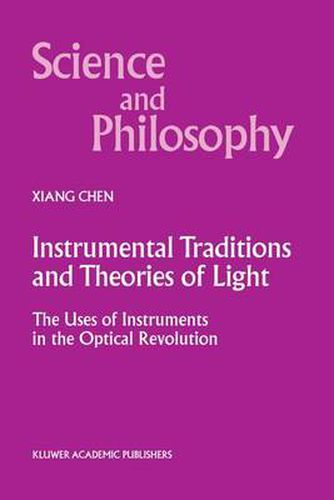
An analysis of the optical revolution in the context of early 19th century Britain. Far from merely involving the replacement of one optical theory by another, the revolution also involved substantial changes in instruments and the practices that surrounded them. People’s judgements about classification, explanation and evaluation were affected by the way they used such optical instruments as spectroscopes, telescopes, polarisers, photometers, gratings, prisms and apertures. There were two instrumental traditions in this historical period, each of which nurtured a body of practice that exemplified how optical instruments should be operated, and especially how the eye should be used. These traditions functioned just like paradigms, shaping perspectives and even world views.
Readership: Scholars and graduate students in the history of science, history of instrument, philosophy of science and science studies. Can also be used as a textbook in graduate courses on 19th century physics.
$9.00 standard shipping within Australia
FREE standard shipping within Australia for orders over $100.00
Express & International shipping calculated at checkout
Stock availability can be subject to change without notice. We recommend calling the shop or contacting our online team to check availability of low stock items. Please see our Shopping Online page for more details.
This title is printed to order. This book may have been self-published. If so, we cannot guarantee the quality of the content. In the main most books will have gone through the editing process however some may not. We therefore suggest that you be aware of this before ordering this book. If in doubt check either the author or publisher’s details as we are unable to accept any returns unless they are faulty. Please contact us if you have any questions.
An analysis of the optical revolution in the context of early 19th century Britain. Far from merely involving the replacement of one optical theory by another, the revolution also involved substantial changes in instruments and the practices that surrounded them. People’s judgements about classification, explanation and evaluation were affected by the way they used such optical instruments as spectroscopes, telescopes, polarisers, photometers, gratings, prisms and apertures. There were two instrumental traditions in this historical period, each of which nurtured a body of practice that exemplified how optical instruments should be operated, and especially how the eye should be used. These traditions functioned just like paradigms, shaping perspectives and even world views.
Readership: Scholars and graduate students in the history of science, history of instrument, philosophy of science and science studies. Can also be used as a textbook in graduate courses on 19th century physics.
Search our extensive online catalogue.
