Readings Newsletter
Become a Readings Member to make your shopping experience even easier.
Sign in or sign up for free!
You’re not far away from qualifying for FREE standard shipping within Australia
You’ve qualified for FREE standard shipping within Australia
The cart is loading…


This title is printed to order. This book may have been self-published. If so, we cannot guarantee the quality of the content. In the main most books will have gone through the editing process however some may not. We therefore suggest that you be aware of this before ordering this book. If in doubt check either the author or publisher’s details as we are unable to accept any returns unless they are faulty. Please contact us if you have any questions.
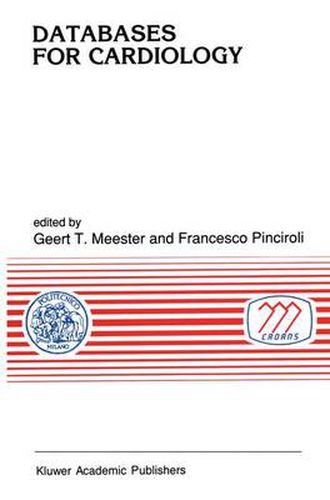
A database is in principle just a large collection of related or separate data, systematically stored in a computer. It should be possible for the data to be easily entered into the database-structure and afterwards also easily read, corrected and processed. The later analysis of data from such a database is greatly enhanced by the availability of special query languages and statistical analysis programs, not only for serial items but also for large combinations of data. Query languages, such as SQL (Structured Query Language) developed especially for these purposes, make databases easily accessible, also to researchers who may not be very well versed in computer programming. The cardiological/medical clinician and researcher of today is of necessity confronted more and more with computer-based data storage. Interest is of course focused primarily on the clinical use of such databases more than on the technical design itself, except for some very specific, personalized applications. For the latter approach, there are at present many software packages commercially available, especially designed for use in the personal computer environment. This book is comprised out of a number of contributions by various authors with differing backgrounds and from many different countries. The editors, being a cardiologist and an information scientist, have strived to achieve an equilibrium between these two fields. The chapters in this book form a cross-section of the many approaches to database design and implementation in the area of cardiology.
$9.00 standard shipping within Australia
FREE standard shipping within Australia for orders over $100.00
Express & International shipping calculated at checkout
Stock availability can be subject to change without notice. We recommend calling the shop or contacting our online team to check availability of low stock items. Please see our Shopping Online page for more details.
This title is printed to order. This book may have been self-published. If so, we cannot guarantee the quality of the content. In the main most books will have gone through the editing process however some may not. We therefore suggest that you be aware of this before ordering this book. If in doubt check either the author or publisher’s details as we are unable to accept any returns unless they are faulty. Please contact us if you have any questions.
A database is in principle just a large collection of related or separate data, systematically stored in a computer. It should be possible for the data to be easily entered into the database-structure and afterwards also easily read, corrected and processed. The later analysis of data from such a database is greatly enhanced by the availability of special query languages and statistical analysis programs, not only for serial items but also for large combinations of data. Query languages, such as SQL (Structured Query Language) developed especially for these purposes, make databases easily accessible, also to researchers who may not be very well versed in computer programming. The cardiological/medical clinician and researcher of today is of necessity confronted more and more with computer-based data storage. Interest is of course focused primarily on the clinical use of such databases more than on the technical design itself, except for some very specific, personalized applications. For the latter approach, there are at present many software packages commercially available, especially designed for use in the personal computer environment. This book is comprised out of a number of contributions by various authors with differing backgrounds and from many different countries. The editors, being a cardiologist and an information scientist, have strived to achieve an equilibrium between these two fields. The chapters in this book form a cross-section of the many approaches to database design and implementation in the area of cardiology.
Search our extensive online catalogue.
