Readings Newsletter
Become a Readings Member to make your shopping experience even easier.
Sign in or sign up for free!
You’re not far away from qualifying for FREE standard shipping within Australia
You’ve qualified for FREE standard shipping within Australia
The cart is loading…


This title is printed to order. This book may have been self-published. If so, we cannot guarantee the quality of the content. In the main most books will have gone through the editing process however some may not. We therefore suggest that you be aware of this before ordering this book. If in doubt check either the author or publisher’s details as we are unable to accept any returns unless they are faulty. Please contact us if you have any questions.
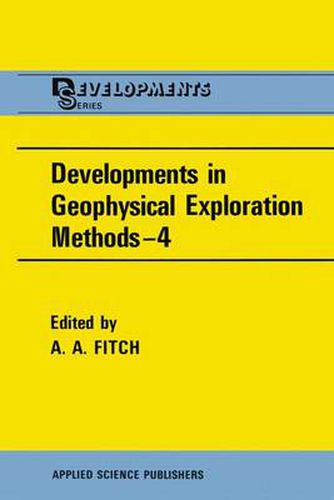
Geophysical prospecting is an applied science and the range of scientific principles to be applied is very wide. In this collection of original papers, the application of many different principles is described in the search for sulphides, other metallic ores and radioactive deposits. The papers are all concerned with surface observations and cover both the theory and the practice of the methods used. In all cases the advan tages and disadvantages of the methods are described and their role in the detection of mineral deposits is discussed and placed in context. Electromagnetic methods are covered in detail, involving the use of both electric and magnetic field effects. Techniques are described involv ing observations both at a number of discrete frequencies and with continuously changing frequency. In spite of the diversity of method it is interesting to note the strong links between the papers; two chapters, for example, start from the same fundamental illustration, first published by Won, of the basic relationship between source frequency, ground con ductivity and depth of penetration. The all-important economic aspects are not forgotten and the first chapter assesses the statistics of performance and describes their use in the shaping and management of an exploration programme. The editor takes this opportunity to thank the busy men who have set aside time to write these contributions.
$9.00 standard shipping within Australia
FREE standard shipping within Australia for orders over $100.00
Express & International shipping calculated at checkout
Stock availability can be subject to change without notice. We recommend calling the shop or contacting our online team to check availability of low stock items. Please see our Shopping Online page for more details.
This title is printed to order. This book may have been self-published. If so, we cannot guarantee the quality of the content. In the main most books will have gone through the editing process however some may not. We therefore suggest that you be aware of this before ordering this book. If in doubt check either the author or publisher’s details as we are unable to accept any returns unless they are faulty. Please contact us if you have any questions.
Geophysical prospecting is an applied science and the range of scientific principles to be applied is very wide. In this collection of original papers, the application of many different principles is described in the search for sulphides, other metallic ores and radioactive deposits. The papers are all concerned with surface observations and cover both the theory and the practice of the methods used. In all cases the advan tages and disadvantages of the methods are described and their role in the detection of mineral deposits is discussed and placed in context. Electromagnetic methods are covered in detail, involving the use of both electric and magnetic field effects. Techniques are described involv ing observations both at a number of discrete frequencies and with continuously changing frequency. In spite of the diversity of method it is interesting to note the strong links between the papers; two chapters, for example, start from the same fundamental illustration, first published by Won, of the basic relationship between source frequency, ground con ductivity and depth of penetration. The all-important economic aspects are not forgotten and the first chapter assesses the statistics of performance and describes their use in the shaping and management of an exploration programme. The editor takes this opportunity to thank the busy men who have set aside time to write these contributions.
Search our extensive online catalogue.
