Readings Newsletter
Become a Readings Member to make your shopping experience even easier.
Sign in or sign up for free!
You’re not far away from qualifying for FREE standard shipping within Australia
You’ve qualified for FREE standard shipping within Australia
The cart is loading…


This title is printed to order. This book may have been self-published. If so, we cannot guarantee the quality of the content. In the main most books will have gone through the editing process however some may not. We therefore suggest that you be aware of this before ordering this book. If in doubt check either the author or publisher’s details as we are unable to accept any returns unless they are faulty. Please contact us if you have any questions.
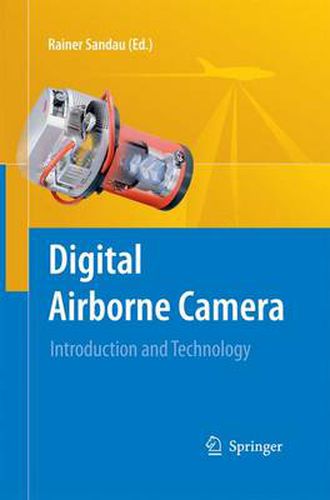
Digital airborne cameras are now penetrating the fields of photogrammetry and remote sensing. Due to the last decade’s results in research and development in the fields of for instance detector technology, computing power, memory capacity position and orientation measurement it is now possible to generate with this new generation of airborne cameras different sets of geometric and spectral data with high geometric and radiometric resolutions within a single flight. This is a decisive advantage as compared to film based airborne cameras. The linear characteristic of the opto-electronic converters is the basis for the transition from an imaging camera to an images generating measuring instrument. Because of the direct digital processing chain from the airborne camera to the data products there is no need for the processes of chemical film development and digitising the film information. Failure sources as well as investments and staff costs are avoided. But the effective use of this new technology requires the knowledge of the features of the image and information generation, its possibilities and its restrictions.
This book describes all components of a digital airborne camera from the object to be imaged to the mass memory device. So the image quality influencing processes in nature are described, as for instance the reflection of the electromagnetic sun spectrum at the objects to be imaged and the influence of the atmosphere. Also, the essential features of the new digital sensor system, their characteristics and parameters, are addressed and put into the system context. The complexity of the cooperation of all camera components, as for instance optics, filters, detector elements, analogue and digital electronics, software and so forth, becomes transparent. The book includes also the description of example systems.
$9.00 standard shipping within Australia
FREE standard shipping within Australia for orders over $100.00
Express & International shipping calculated at checkout
Stock availability can be subject to change without notice. We recommend calling the shop or contacting our online team to check availability of low stock items. Please see our Shopping Online page for more details.
This title is printed to order. This book may have been self-published. If so, we cannot guarantee the quality of the content. In the main most books will have gone through the editing process however some may not. We therefore suggest that you be aware of this before ordering this book. If in doubt check either the author or publisher’s details as we are unable to accept any returns unless they are faulty. Please contact us if you have any questions.
Digital airborne cameras are now penetrating the fields of photogrammetry and remote sensing. Due to the last decade’s results in research and development in the fields of for instance detector technology, computing power, memory capacity position and orientation measurement it is now possible to generate with this new generation of airborne cameras different sets of geometric and spectral data with high geometric and radiometric resolutions within a single flight. This is a decisive advantage as compared to film based airborne cameras. The linear characteristic of the opto-electronic converters is the basis for the transition from an imaging camera to an images generating measuring instrument. Because of the direct digital processing chain from the airborne camera to the data products there is no need for the processes of chemical film development and digitising the film information. Failure sources as well as investments and staff costs are avoided. But the effective use of this new technology requires the knowledge of the features of the image and information generation, its possibilities and its restrictions.
This book describes all components of a digital airborne camera from the object to be imaged to the mass memory device. So the image quality influencing processes in nature are described, as for instance the reflection of the electromagnetic sun spectrum at the objects to be imaged and the influence of the atmosphere. Also, the essential features of the new digital sensor system, their characteristics and parameters, are addressed and put into the system context. The complexity of the cooperation of all camera components, as for instance optics, filters, detector elements, analogue and digital electronics, software and so forth, becomes transparent. The book includes also the description of example systems.
Search our extensive online catalogue.
