Readings Newsletter
Become a Readings Member to make your shopping experience even easier.
Sign in or sign up for free!
You’re not far away from qualifying for FREE standard shipping within Australia
You’ve qualified for FREE standard shipping within Australia
The cart is loading…


This title is printed to order. This book may have been self-published. If so, we cannot guarantee the quality of the content. In the main most books will have gone through the editing process however some may not. We therefore suggest that you be aware of this before ordering this book. If in doubt check either the author or publisher’s details as we are unable to accept any returns unless they are faulty. Please contact us if you have any questions.
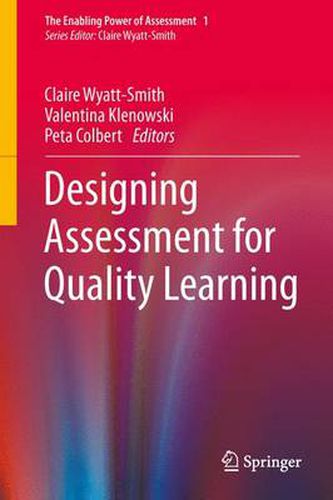
This book brings together internationally recognised scholars with an interest in how to use the power of assessment to improve student learning and to engage with accountability priorities at both national and global levels. It includes distinguished writers who have worked together for some two decades to shift the assessment paradigm from a dominant focus on assessment as measurement towards assessment as central to efforts to improve learning. These writers have worked with the teaching profession and, in so doing, have researched and generated key insights into different ways of understanding assessment and its relationship to learning.
The volume contributes to the theorising of assessment in contexts characterised by heightened accountability requirements and constant change. The book’s structure and content reflect already significant and growing international interest in assessment as contextualised practice, as well as theories of learning and teaching that underpin and drive particular assessment approaches. Learning theories and practices, assessment literacies, teachers’ responsibilities in assessment, the role of leadership, and assessment futures are the organisers within the book’s structure and content.
The contributors to this book have in common the view that quality assessment, and quality learning and teaching are integrally related. Another shared view is that the alignment of assessment with curriculum, teaching and learning is linchpin to efforts to improve both learning opportunities and outcomes for all. Essentially, the book presents new perspectives on the enabling power of assessment. In so doing, the writers recognise that validity and reliability - the traditional canons of assessment - remain foundational and therefore necessary. However, they are not of themselves sufficient for quality education. The book argues that assessment needs to be radically reconsidered in the context of unprecedented societal change. Increasingly, communities are segregating more by wealth, with clear signs of social, political, economic and environmental instability. These changes raise important issues relating to ethics and equity, taken to be core dimensions in enabling the power of assessment to contribute to quality learning for all. This book offers readers new knowledge about how assessment can be used to re/engage learners across all phases of education.
$9.00 standard shipping within Australia
FREE standard shipping within Australia for orders over $100.00
Express & International shipping calculated at checkout
Stock availability can be subject to change without notice. We recommend calling the shop or contacting our online team to check availability of low stock items. Please see our Shopping Online page for more details.
This title is printed to order. This book may have been self-published. If so, we cannot guarantee the quality of the content. In the main most books will have gone through the editing process however some may not. We therefore suggest that you be aware of this before ordering this book. If in doubt check either the author or publisher’s details as we are unable to accept any returns unless they are faulty. Please contact us if you have any questions.
This book brings together internationally recognised scholars with an interest in how to use the power of assessment to improve student learning and to engage with accountability priorities at both national and global levels. It includes distinguished writers who have worked together for some two decades to shift the assessment paradigm from a dominant focus on assessment as measurement towards assessment as central to efforts to improve learning. These writers have worked with the teaching profession and, in so doing, have researched and generated key insights into different ways of understanding assessment and its relationship to learning.
The volume contributes to the theorising of assessment in contexts characterised by heightened accountability requirements and constant change. The book’s structure and content reflect already significant and growing international interest in assessment as contextualised practice, as well as theories of learning and teaching that underpin and drive particular assessment approaches. Learning theories and practices, assessment literacies, teachers’ responsibilities in assessment, the role of leadership, and assessment futures are the organisers within the book’s structure and content.
The contributors to this book have in common the view that quality assessment, and quality learning and teaching are integrally related. Another shared view is that the alignment of assessment with curriculum, teaching and learning is linchpin to efforts to improve both learning opportunities and outcomes for all. Essentially, the book presents new perspectives on the enabling power of assessment. In so doing, the writers recognise that validity and reliability - the traditional canons of assessment - remain foundational and therefore necessary. However, they are not of themselves sufficient for quality education. The book argues that assessment needs to be radically reconsidered in the context of unprecedented societal change. Increasingly, communities are segregating more by wealth, with clear signs of social, political, economic and environmental instability. These changes raise important issues relating to ethics and equity, taken to be core dimensions in enabling the power of assessment to contribute to quality learning for all. This book offers readers new knowledge about how assessment can be used to re/engage learners across all phases of education.
Search our extensive online catalogue.
