Readings Newsletter
Become a Readings Member to make your shopping experience even easier.
Sign in or sign up for free!
You’re not far away from qualifying for FREE standard shipping within Australia
You’ve qualified for FREE standard shipping within Australia
The cart is loading…


This title is printed to order. This book may have been self-published. If so, we cannot guarantee the quality of the content. In the main most books will have gone through the editing process however some may not. We therefore suggest that you be aware of this before ordering this book. If in doubt check either the author or publisher’s details as we are unable to accept any returns unless they are faulty. Please contact us if you have any questions.
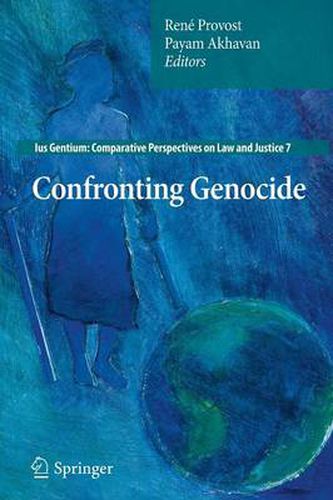
Never again stands as one the central pledges of the international community following the end of the Second World War, upon full realization of the massive scale of the Nazi extermination programme. Genocide stands as an intolerable assault on a sense of common humanity embodied in the Universal Declaration of Human Rights and other fundamental international instruments, including the Convention on the Prevention and Punishment of the Crime of Genocide and the United Nations Charter. And yet, since the Second World War, the international community has proven incapable of effectively preventing the occurrence of more genocides in places like Cambodia, Yugoslavia, Rwanda and Sudan. Is genocide actually preventable, or is ever again a more accurate catchphrase to capture the reality of this phenomenon? The essays in this volume explore the complex nature of genocide and the relative promise of various avenues identified by the international community to attempt to put a definitive end to its occurrence. Essays focus on a conceptualization of genocide as a social and political phenomenon, on the identification of key actors (Governments, international institutions, the media, civil society, individuals), and on an exploration of the relative promise of different means to prevent genocide (criminal accountability, civil disobedience, shaming, intervention).
$9.00 standard shipping within Australia
FREE standard shipping within Australia for orders over $100.00
Express & International shipping calculated at checkout
Stock availability can be subject to change without notice. We recommend calling the shop or contacting our online team to check availability of low stock items. Please see our Shopping Online page for more details.
This title is printed to order. This book may have been self-published. If so, we cannot guarantee the quality of the content. In the main most books will have gone through the editing process however some may not. We therefore suggest that you be aware of this before ordering this book. If in doubt check either the author or publisher’s details as we are unable to accept any returns unless they are faulty. Please contact us if you have any questions.
Never again stands as one the central pledges of the international community following the end of the Second World War, upon full realization of the massive scale of the Nazi extermination programme. Genocide stands as an intolerable assault on a sense of common humanity embodied in the Universal Declaration of Human Rights and other fundamental international instruments, including the Convention on the Prevention and Punishment of the Crime of Genocide and the United Nations Charter. And yet, since the Second World War, the international community has proven incapable of effectively preventing the occurrence of more genocides in places like Cambodia, Yugoslavia, Rwanda and Sudan. Is genocide actually preventable, or is ever again a more accurate catchphrase to capture the reality of this phenomenon? The essays in this volume explore the complex nature of genocide and the relative promise of various avenues identified by the international community to attempt to put a definitive end to its occurrence. Essays focus on a conceptualization of genocide as a social and political phenomenon, on the identification of key actors (Governments, international institutions, the media, civil society, individuals), and on an exploration of the relative promise of different means to prevent genocide (criminal accountability, civil disobedience, shaming, intervention).
Search our extensive online catalogue.
