Readings Newsletter
Become a Readings Member to make your shopping experience even easier.
Sign in or sign up for free!
You’re not far away from qualifying for FREE standard shipping within Australia
You’ve qualified for FREE standard shipping within Australia
The cart is loading…


This title is printed to order. This book may have been self-published. If so, we cannot guarantee the quality of the content. In the main most books will have gone through the editing process however some may not. We therefore suggest that you be aware of this before ordering this book. If in doubt check either the author or publisher’s details as we are unable to accept any returns unless they are faulty. Please contact us if you have any questions.
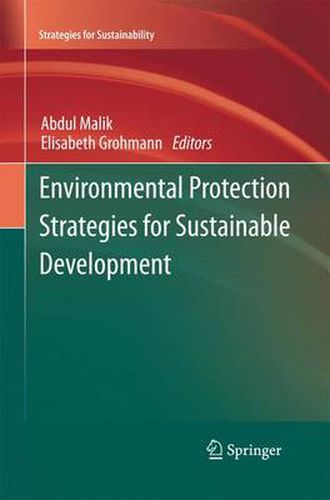
The environment of our planet is degrading at an alarming rate because of non-sustainable urbanization, industrialization and agriculture. Unsustainable trends in relation to climate change and energy use, threats to public health, poverty and social exclusion, demographic pressure and ageing, management of natural resources, biodiversity loss, land use and transport still persist and new challenges are arising. Since these negative trends bring about a sense of urgency, short term action is required, whilst maintaining a longer term perspective. The main challenge is to gradually change our current unsustainable consumption and production patterns and the nonintegrated approach to policy-making.
This book covers the broad area including potential of rhizospheric microorganisms in the sustainable plant development in anthropogenic polluted soils, bioremediation of pesticides from soil and waste water, toxic metals from soil, biological treatment of pulp and paper industry wastewater, sustainable solutions for agro processing waste management, solid waste management on climate change and human health, environmental impact of dyes and its remediation. Various methods for genotoxicity testing of environmental pollutants are also discussed and chapters on molecular detection of resistance and transfer genes in the environmental samples, biofilm formation by the environmental bacteria, biochemical attributes to assess soil ecosystem sustainability, application of rhizobacteria in biotechnology, role of peroxidases as a tool for the decolorization and removal of dyes and potential of biopesticides in sustainable agriculture.
It offers a unique treatment of the subject, linking various protection strategies for sustainable development, describing the inter-relationships between the laboratory and field eco-toxicologist, the biotechnology consultant, environmental engineers and different international environmental regulatory and protection agencies.
$9.00 standard shipping within Australia
FREE standard shipping within Australia for orders over $100.00
Express & International shipping calculated at checkout
Stock availability can be subject to change without notice. We recommend calling the shop or contacting our online team to check availability of low stock items. Please see our Shopping Online page for more details.
This title is printed to order. This book may have been self-published. If so, we cannot guarantee the quality of the content. In the main most books will have gone through the editing process however some may not. We therefore suggest that you be aware of this before ordering this book. If in doubt check either the author or publisher’s details as we are unable to accept any returns unless they are faulty. Please contact us if you have any questions.
The environment of our planet is degrading at an alarming rate because of non-sustainable urbanization, industrialization and agriculture. Unsustainable trends in relation to climate change and energy use, threats to public health, poverty and social exclusion, demographic pressure and ageing, management of natural resources, biodiversity loss, land use and transport still persist and new challenges are arising. Since these negative trends bring about a sense of urgency, short term action is required, whilst maintaining a longer term perspective. The main challenge is to gradually change our current unsustainable consumption and production patterns and the nonintegrated approach to policy-making.
This book covers the broad area including potential of rhizospheric microorganisms in the sustainable plant development in anthropogenic polluted soils, bioremediation of pesticides from soil and waste water, toxic metals from soil, biological treatment of pulp and paper industry wastewater, sustainable solutions for agro processing waste management, solid waste management on climate change and human health, environmental impact of dyes and its remediation. Various methods for genotoxicity testing of environmental pollutants are also discussed and chapters on molecular detection of resistance and transfer genes in the environmental samples, biofilm formation by the environmental bacteria, biochemical attributes to assess soil ecosystem sustainability, application of rhizobacteria in biotechnology, role of peroxidases as a tool for the decolorization and removal of dyes and potential of biopesticides in sustainable agriculture.
It offers a unique treatment of the subject, linking various protection strategies for sustainable development, describing the inter-relationships between the laboratory and field eco-toxicologist, the biotechnology consultant, environmental engineers and different international environmental regulatory and protection agencies.
Search our extensive online catalogue.
