Readings Newsletter
Become a Readings Member to make your shopping experience even easier.
Sign in or sign up for free!
You’re not far away from qualifying for FREE standard shipping within Australia
You’ve qualified for FREE standard shipping within Australia
The cart is loading…


This title is printed to order. This book may have been self-published. If so, we cannot guarantee the quality of the content. In the main most books will have gone through the editing process however some may not. We therefore suggest that you be aware of this before ordering this book. If in doubt check either the author or publisher’s details as we are unable to accept any returns unless they are faulty. Please contact us if you have any questions.
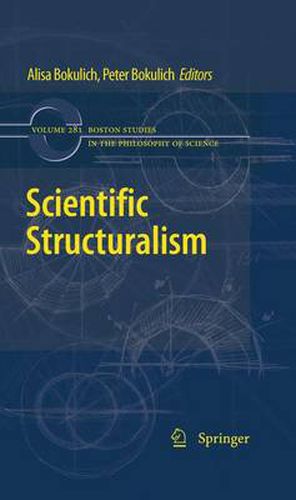
Recently there has been a revival of interest in structuralist approaches to science. Taking their lead from scientific structuralists such as Henri Poincare, Ernst Cassirer, and Bertrand Russell, some contemporary philosophers and scientists have argued that the most fruitful approach to solving many problems in the philosophy of science lies in focusing on the structural features of our scientific theories. Much of the work in scientific structuralism to date has been focused on the problem of scientific realism, where it has been argued that even in cases of radical theory change the most important structural features of predecessor theories are preserved. These structural realists argue that what our most successful theories get right about the world is these abstract structural features, rather than any particular ontological claims. More recently, philosophers of science have adopted structuralist approaches to many other issues in the philosophy of science, such as scientific explanation and intertheory relations. The nine articles collected in this volume, written by the leading researchers in scientific structuralism, represent some of the most important directions of research in this field. This book will be of particular interest to those philosophers, scientists, and mathematicians who are interested in the foundations of science.
$9.00 standard shipping within Australia
FREE standard shipping within Australia for orders over $100.00
Express & International shipping calculated at checkout
Stock availability can be subject to change without notice. We recommend calling the shop or contacting our online team to check availability of low stock items. Please see our Shopping Online page for more details.
This title is printed to order. This book may have been self-published. If so, we cannot guarantee the quality of the content. In the main most books will have gone through the editing process however some may not. We therefore suggest that you be aware of this before ordering this book. If in doubt check either the author or publisher’s details as we are unable to accept any returns unless they are faulty. Please contact us if you have any questions.
Recently there has been a revival of interest in structuralist approaches to science. Taking their lead from scientific structuralists such as Henri Poincare, Ernst Cassirer, and Bertrand Russell, some contemporary philosophers and scientists have argued that the most fruitful approach to solving many problems in the philosophy of science lies in focusing on the structural features of our scientific theories. Much of the work in scientific structuralism to date has been focused on the problem of scientific realism, where it has been argued that even in cases of radical theory change the most important structural features of predecessor theories are preserved. These structural realists argue that what our most successful theories get right about the world is these abstract structural features, rather than any particular ontological claims. More recently, philosophers of science have adopted structuralist approaches to many other issues in the philosophy of science, such as scientific explanation and intertheory relations. The nine articles collected in this volume, written by the leading researchers in scientific structuralism, represent some of the most important directions of research in this field. This book will be of particular interest to those philosophers, scientists, and mathematicians who are interested in the foundations of science.
Search our extensive online catalogue.
